
Read time :
Introducing Buyer Journey Analytics: How to See Which Paths Actually Lead to Revenue
Buyer journeys are rarely linear. Yet most attribution reports still treat them that way. Journey Analytics lets you uncover the actual paths your customers take—from first touch to closed-won—and identify the journeys that convert best.



Marketing just closed a record quarter. Pipeline is surging. Revenue is on the rise. The CRO asks a simple question: “Which campaigns got us here?”
Everyone has an idea of which campaign led to revenue. Sales credits the demo request. Demand gen points to the LinkedIn campaign. Content swears the webinar series moved the needle. Your CRM shows “form fill” for 80% of conversions, leaving you none the wiser.
This is the attribution gap that Buyer Journey Analytics was built to close by mapping the entire path buyers take before they result in a closed win in your CRM.
Introducing Buyer Journey Analytics
The new Heeet feature tracks and analyzes every engagement a buyer has with your brand, from the first ad click to the signed contract. Instead of isolating individual touchpoints, it connects them into a sequence that reveals how deals progress through your funnel.
For B2B companies, this distinction matters. A B2B buying committee can involve up to 6 to 10 decision-makers, each following a unique series of touchpoints. A single-touch model can’t capture that complexity. Journey analytics can.
The output is concrete:
- You see which sequences of campaigns and channels consistently appear in deals that close.
- You get a dedicated view for content that shows which pages, blog articles, and resources led to the closed deal.
- You also see where journeys stall, where prospects drop off, and which paths waste budget without generating pipeline.
To visualize the journeys you can analyze theSankey view to get an inital gauge for oppotunity volumes and dominate channels.
.png)
For a more detailed view, you'll find the table view below where you can see all key metrics per journey such as:
- Opportunity cost
- Number and percentage of closed won opportunities
- Win rate
- Numer of lost pportunities and lose rate
- Average closing time
- Converted deal amount
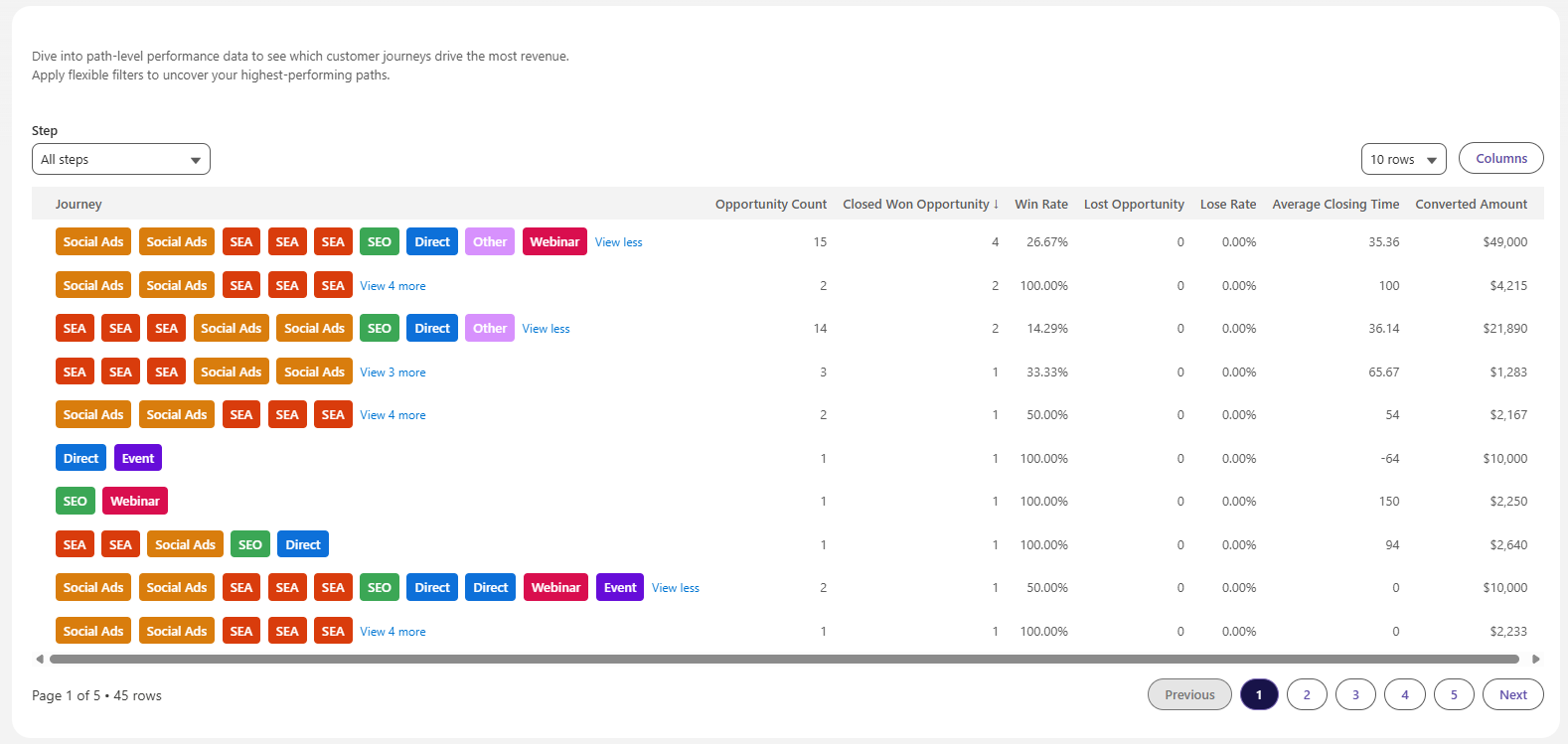
You can also drill down to filter through journeys that only include certain channels so you can focus on the efficacy of specific strategies in your marketing.
.png)
We also added a dedicated table with all the same metrics for content along the journey. The table shows you which categories of content such as product pages, landing pages, blog posts or resources your clients interacted with before closing.
.png)
What separates effective Buyer Journey Analytics software from basic tools?
Not every tool labelled “Buyer Journey Analytics” provides the same level of detail. Some visualize website behaviour at the session-level (click paths). Others focus on product usage. For B2B marketing teams trying to connect campaigns to revenue, there are specific capabilities that matter most.
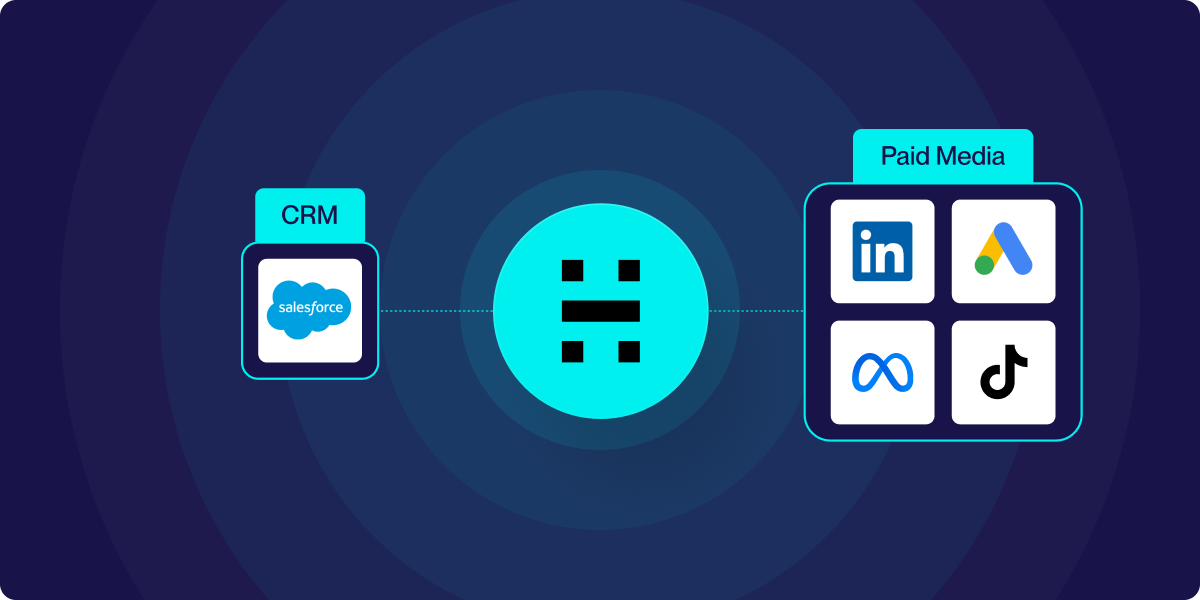
Having a CRM-native integration makes all the difference. Since your revenue data is stored in Salesforce or HubSpot, your journey analytics tool should work directly within your CRM. Heeet ensures seamless access to journey insights, without exporting data or managing separate platforms, cutting friction and eliminating data silos. Teams can then analyze, act, and align using real-time journey data in the tool that the entire org uses every day.
Full buyer journey visibility means seeing every step from anonymous visit to closed deal, which includes paid ads, content, webinars, events, and outreach. Tools that only track digital clicks miss key parts of the B2B journey.
With a view of the entire path you can:
- Prioritize revenue-linked metrics: choose tools that tie journey patterns to actual deals and revenue, helping you confidently prioritize expenditures.
- Seek content-level detail. The best tools show which specific content pieces appear in winning journeys, making analytics useful for content strategy, not only reporting.
That means taking action inside the CRM. Findings that live in a separate dashboard get forgotten. Findings that appear in Salesforce or HubSpot, where teams make daily decisions about campaigns and budgets, are acted on.
How Teams Use Journey Analytics to Drive Smarter Decisions
Knowing which paths lead to revenue is powerful. But the value of journey analytics only becomes real when teams translate those patterns into action. Here are two use cases that show how this works in practice.
Use Case 1: Finding Your Highest-Converting Buyer Journeys
Let’s set the scene. You’re a Head of Marketing with campaigns across multiple channels like LinkedIn Ads, Google Search Ads, webinars, Reddit Ads, and organic blog content. Your CRM shows the total number of closed deals, but you can’t tell which sequence of touchpoints is driving results.
Buyer Journey Analytics instantly gives you a view of the path most taken by won clients, along with the percentage it represents.
That’s not intuition. That’s a repeatable revenue driver you can now double down on. Whether it's the blog topics that start journeys or increasing LinkedIn retargeting budgets for webinar attendees, you now have the insight to brief your sales team on which leads they should focus on.
Let’s flip the same use case on its head to pinpoint longer paths that can be sped up. With every route to revenue laid out, you see another common path, for example, paid search → demo request with no nurture in between, has a 60% lower win rate. Instead of cutting paid search, you place a nurture step between the click and the demo ask. Conversion rate improves within a quarter.
This is the shift journey analytics enables: from “which channel performs best” to “which sequence of interactions builds the most revenue.”
Use Case 2: Optimizing Your Content Strategy with Journey Data
Your content team produces blog posts, white papers, case studies, and webinar recordings every month. Traffic reports show which pages get visited. But traffic doesn’t tell you which content is showing up in deals that close.
Journey analytics with a content view solves this. You filter your journey data by content interactions, together with discovering something surprising: your most-visited blog post (a beginner’s guide to attribution models) appears in fewer than 5% of won deals. Meanwhile, a less familiar case study about a customer in financial services shows up in 22% of winning journeys.
With the data in hand, you can shift resources to promote the case study more in nurture sequences and start creating use cases for other industries. This move, coupled with a new internal linking strategy that sends visitors of high-traffic blog posts to the case studies, bridges the gap between awareness and conversion content.
This allows you to produce what actually converts, not blindly pump out more content. Quality over Quantity. That’s the efficiency talking point every stakeholder takes note of.
How Journey Analytics Works in Heeet
Heeet’s new Journey Analytics feature was built for exactly these scenarios. It connects natively to Salesforce, so you don’t need to export data, learn a new platform, or wait weeks for implementation.
Here’s what you get:
Highest-converting journey paths
Heeet maps every touchpoint in your own deals and groups them into journey patterns. You see which sequences of campaigns, channels, and content consistently lead to revenue, along with the percentage of total won deals and total revenue each path represents.
Repeatable patterns across deals
Instead of treating each deal as unique, Heeet identifies what your best deals have in common. Where do winning journeys share touchpoints? Where do losing journeys diverge? This turns anecdotal sales feedback into structured data you can act on.
Content-level journey views
A dedicated content view shows which website pages, blog posts, webinars, and white papers prospects interacted with on their path to becoming customers. You can see exactly which content assets accelerate deals and which ones don’t appear in winning journeys at all.
Action inside Salesforce
With Heeet embedded directly in your CRM, you get instant access to journey insights where your revenue data already resides. This lets you translate insights from a single source of truth into immediate campaign, budget, and sales actions in Salesforce.
Frequently Asked Questions
How is Buyer journey analytics different from multi-touch attribution?
Multi-touch attribution distributes credit across individual touchpoints using weighted models (linear, time-decay, W-shaped). Buyer journey analytics takes this data and displays the full sequence of interactions. It shows which touchpoints matter and the sequence of events a client took from first click to close.
Both are valuable, and Buyer Journey Analytics builds on top of attribution data to add journey-level insight.
Do I need a data warehouse or BI tools to use Buyer Journey Analytics?
Not with CRM-native tools. Solutions like Heeet keep journey data inside Salesforce, eliminating the requirement for separate data warehouses, ETL pipelines, or BI platforms. This means faster implementation and faster access to insights for marketing and sales teams without requiring a data engineering team.
What types of touchpoints does journey analytics track?
Heeet’s comprehensive Buyer Journey Analytics covers paid ads (Google, LinkedIn, Meta), organic search visits, blog and content page views, webinar attendance, event attendance, email engagement, and product page interactions. The goal is full-funnel coverage, so you see every interaction that influences a deal, not just those that occur in a single channel.
How long does it take to see meaningful journey patterns?
Journey patterns become meaningful once you have enough closed deals for the data to show repeatable trends. For most B2B companies, this means 30 to 90 days of tracked data, depending on your sales cycle length and deal volume. Teams with shorter sales cycles and higher deal velocity will see patterns emerge faster.
Can journey analytics work without cookies?
Yes. Heeet’s CRM-native Buyer Journey Analytics tool, which uses first-party data and server-side tracking, is not dependent on third-party cookies. Heeet uses cookieless tracking to maintain visibility regardless of browser settings or privacy regulations, ensuring your journey data remains complete even as the privacy landscape evolves.
Stop Guessing. Start Seeing the Full Path to Revenue.
The gap between “we think this campaign works” and “we know this journey drives revenue” could be worth millions in misallocated budget. Buyer Journey Analytics closes that gap by showing you not just which touchpoints matter, but how they connect into repeatable winning patterns.
If you’ve been making budget decisions based on single-touch reports or weighted percentages that still feel like guesswork, journey analytics offers a clearer picture. One that lives inside your CRM, speaks the language of revenue, and helps you invest in what’s proven to work.
Other articles

.svg)
Êtes-vous prêt à suivre les prospects du lead à la clôture avec Heeet ?
Heet permet aux spécialistes du marketing et des ventes des entreprises informatiques et de sécurité de transformer leurs conjections en décisions éclairées qui génèrent des revenus tout en respectant les mêmes normes techniques de sécurité que celles que vous offrez à vos clients.