
Read time :
11 Best B2B Revenue Attribution Tools (2027): Pricing & Reviews
Compare the 11 best revenue attribution software platforms for B2B teams in 2026. Detailed reviews with pricing, CRM integrations, pros/cons, and expert recommendations.

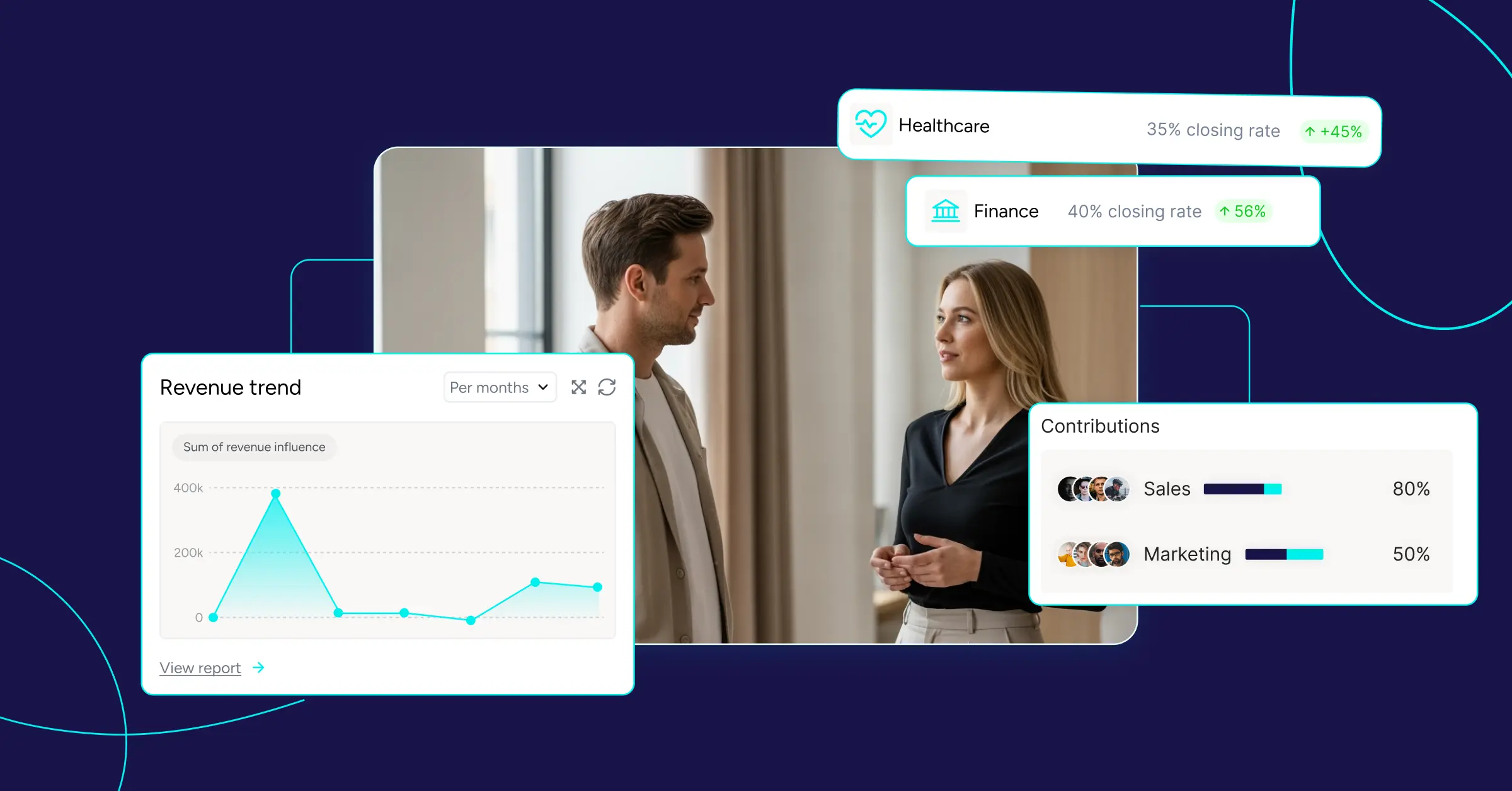

Revenue attribution software connects every marketing touchpoint to pipeline and closed deals inside your CRM. Instead of guessing which LinkedIn campaign or webinar contributed to that six-figure contract, you get data.
This guide breaks down the 11 best revenue attribution platforms for B2B teams. Each tool is evaluated on its depth of CRM integration, flexibility of attribution models, pricing transparency, and real-world fit for teams that need to tie marketing spend to revenue outcomes.
What is revenue attribution software?
Revenue attribution software tracks and assigns credit to marketing touchpoints that contribute to closed-won revenue. It connects advertising, content, events, and other channels to actual deals in your CRM, showing which campaigns generated pipeline and which drove measurable business outcomes.
Most B2B buyers interact with 7 to 13 touchpoints before making a purchase decision (Forrester). A prospect might click a Google Ad, attend a webinar three weeks later, download a case study, then respond to a sales email before finally signing. Without attribution software, your CRM records one touchpoint at best. The rest of that journey disappears.
Revenue attribution platforms capture these interactions and distribute credit across the full buyer journey using models like first-touch, last-touch, linear, time-decay, U-shaped, W-shaped, or data-driven attribution. The goal isn't just tracking leads. It's understanding which investments produce revenue.
This matters because marketing teams increasingly face pressure to justify budgets with revenue metrics, not vanity metrics like impressions or MQLs. A 2024 Demand Gen Report found that 58% of B2B marketers rank "connecting marketing activity to revenue" as their top measurement challenge. Revenue attribution software is the infrastructure that closes this gap.
Why do B2B teams need revenue attribution?
B2B teams need revenue attribution because complex buying journeys, long sales cycles, and multi-stakeholder decisions make it nearly impossible to understand marketing's impact using standard CRM reporting alone.
Here's what typically happens without it. Marketing runs campaigns across Google Ads, LinkedIn, organic search, webinars, and trade shows. Leads enter Salesforce or HubSpot. Sales works them. Some convert. But when leadership asks "Which campaigns drove this quarter's pipeline?", the marketing team scrambles to pull fragmented reports from five different tools and stitch together a story that may or may not be accurate.
This isn't a minor inconvenience. It creates real business consequences.
Budget misallocation is the biggest risk. Without attribution data, teams over-invest in channels that look good on paper (high volume, low quality) and under-invest in channels that quietly drive six-figure deals. According to HubSpot's State of Marketing Report (2024), companies with robust attribution report 15-20% improvements in marketing ROI simply because they redirect spend toward what works.
Sales and marketing alignment suffers. When marketing can't prove which campaigns influenced specific opportunities, sales teams lose confidence in lead quality. RevOps leaders spend hours reconciling conflicting reports. Heeet customer Sara Slater, Business Analyst and Salesforce Admin at Nel Hydrogen, described the state before implementing attribution: the team had gone six years without trusting their marketing data. Six years of decisions based on incomplete information.
Budget defense becomes a quarterly crisis. Every planning cycle, marketers without attribution data find themselves defending spend with engagement metrics. Click-through rates and webinar attendance don't carry weight in a boardroom conversation about revenue targets. Revenue attribution gives marketing the same language finance and sales already speak: pipeline contribution, deal influence, and ROI.
Which revenue attribution platforms are best for B2B teams in 2026?
The best revenue attribution platform depends on your CRM ecosystem, team size, budget, and the complexity of your buyer journey. Below, we compare 11 platforms across pricing, CRM integration, attribution models, and ideal use cases.
Quick comparison: 11 revenue attribution tools at a glance
1. Heeet
Best for: CRM-native B2B revenue attribution in Salesforce and HubSpot
If you've spent months trying to build attribution reporting inside Salesforce or HubSpot using native tools, you already know the limitations. Campaign member tracking is clunky. Cross-channel visibility requires manual workarounds. And the reports you do pull never seem to match what happened in the real buyer journey.
Heeet solves this by operating natively inside your CRM. It's available on both the Salesforce AppExchange and HubSpot Marketplace, meaning your attribution data lives where your sales and revenue data already lives. No external databases. No API syncing. No waiting for data to transfer between platforms.
The platform uses server-side cookieless tracking, so you get accurate touchpoint data regardless of browser privacy settings, ad blockers, or GDPR constraints. Every lead, every page visit, every ad interaction gets tracked and attributed to pipeline and revenue inside your CRM in real time.
What real teams are seeing with Heeet:
Ringover, a cloud communications platform, achieved a 24% increase in marketing-generated revenue attribution accuracy and a 14% improvement in Google Ads ROAS after implementing Heeet. "Thanks to Heeet, we get full-funnel visibility: tracking every lead, analyzing campaign performance, monitoring customer acquisition, and measuring ROI across Google, LinkedIn, and Meta," said Vincent Coulondres, Head of Growth at Ringover.
Driver Defense Team, a legal services firm where 95% of leads come through phone calls rather than forms, used Heeet to achieve a 3x increase in ROAS with page-level attribution for every campaign in Salesforce. "It helps you sleep better at night," said Derek Martin. "Knowing that each of those campaigns are net positive, and driving ROI."
Nel Hydrogen's digital team had gone six years without trusting their marketing data. After deploying Heeet, they could directly attribute million-dollar opportunities to specific Google Ads campaigns for the first time.
Key features:
- Multi-touch attribution models (first, last, linear, U-shaped, W-shaped, custom)
- Server-side cookieless tracking with GDPR compliance by design
- Native Salesforce and HubSpot marketplace integration (data never leaves your CRM)
- Pre-built and customizable revenue dashboards
- Automatic campaign creation and member status syncing
- Cross-channel tracking for Google Ads, LinkedIn, Meta, webinars, organic content, and events
- Implementation in hours, not weeks or months
Pricing: Custom pricing based on CRM and usage. Book a demo for a personalized walkthrough.
Pros: Data stays in your CRM with no external storage. Cookieless tracking solves privacy compliance. Setup takes hours rather than the weeks required by competitors. Hands-on implementation support included.
Cons: Not designed for organizations outside the Salesforce/HubSpot ecosystem. Custom pricing requires a demo conversation.
2. HockeyStack
Best for: Full-funnel B2B analytics and attribution
HockeyStack has built a strong reputation as an all-in-one analytics and attribution platform for B2B marketing teams. It combines website analytics, attribution, and revenue reporting in a single tool, which appeals to teams that want to consolidate their measurement stack.
The platform tracks the complete buyer journey across paid ads, organic content, and sales interactions, then attributes revenue using multi-touch and data-driven models. Its account-level tracking is particularly useful for ABM-focused teams that need to understand how multiple stakeholders within a target account engage with campaigns over time.
HockeyStack connects to Salesforce and HubSpot via API integrations, pulling CRM data into its own analytics environment. This is a key architectural difference from CRM-native tools: your attribution data lives in HockeyStack's platform rather than inside your CRM.
Key features:
- Multi-touch and data-driven attribution models
- Account-level journey tracking for ABM
- Unified analytics combining website, ads, and CRM data
- No-code dashboard builder
- Lift analysis and incrementality reporting
- Integrations with major ad platforms and marketing tools
Pricing: Starts around $1,200/month. Custom enterprise pricing available.
Pros: Comprehensive analytics beyond just attribution. Strong visualization and dashboard capabilities. Good ABM support.
Cons: Data lives outside your CRM, which creates security review friction for enterprise buyers. API-based CRM sync can introduce latency. Higher price point for smaller teams.
3. Dreamdata
Best for: B2B revenue attribution with account-based focus
Dreamdata is a B2B-focused attribution platform that maps the entire account journey from first anonymous visit to closed deal. The platform excels at connecting fragmented touchpoints across long, complex sales cycles and multiple decision-makers.
Its data model is built around the B2B buying group concept, stitching together individual contacts into account-level journeys. This gives RevOps teams a clearer picture of how campaigns influence accounts rather than just individual leads.
Dreamdata integrates with Salesforce and HubSpot via API connections and pulls data from ad platforms, website analytics, and marketing automation tools. Like HockeyStack, it hosts attribution data in its own environment.
Key features:
- Account-based journey mapping across all touchpoints
- B2B-specific data-driven attribution
- Content attribution showing which pages influence pipeline
- ROI reporting by channel, campaign, and content
- Integration with Google Ads, LinkedIn, G2, and other B2B channels
- Historical data backfill during onboarding
Pricing: Free plan available with limited features. Paid plans start from approximately $999/month.
Pros: Strong B2B-specific approach to attribution. Good account journey visualization. Content attribution capabilities.
Cons: Can be complex to configure for teams without dedicated ops resources. Data resides outside CRM. Cookie-based tracking faces limitations with privacy changes.
4. Ruler Analytics
Best for: Connecting offline conversions to digital marketing
Ruler Analytics specializes in connecting online marketing efforts to offline revenue. If your sales process involves phone calls, form submissions, and live chat interactions that ultimately close offline, Ruler bridges that gap by passing conversion data back to your ad platforms and CRM.
The platform tracks which campaigns, keywords, and channels generated each lead, then follows that lead through to revenue in your CRM. This closed-loop reporting lets you see exactly which Google Ads keyword or LinkedIn campaign produced a specific deal.
Ruler is particularly popular with agencies and mid-market companies that run significant paid search budgets and need to optimize toward revenue rather than leads.
Key features:
- Closed-loop attribution connecting ads to revenue
- Phone call tracking and attribution
- Form and live chat conversion tracking
- Revenue data sent back to Google Ads, Meta, and LinkedIn
- Salesforce and HubSpot integration via connectors
- Visitor-level tracking across sessions
Pricing: From approximately $400/month depending on traffic volume.
Pros: Strong at connecting offline conversions to online spend. Good ad platform feedback loops. Competitive pricing for mid-market.
Cons: Less sophisticated multi-touch models compared to dedicated B2B attribution platforms. Connector-based CRM integration rather than native. Cookie-dependent tracking.
5. Adobe Marketo Measure (formerly Bizible)
Best for: Enterprise teams in the Adobe/Marketo ecosystem
Marketo Measure (the product Adobe acquired as Bizible) is an enterprise-grade attribution tool built for organizations already invested in the Adobe marketing ecosystem. It creates touchpoint records directly in Salesforce, giving revenue teams attribution data alongside their existing opportunity and pipeline records.
The platform's strength lies in its depth: it tracks online and offline touchpoints, supports custom attribution model weighting, and integrates deeply with Marketo Engage for campaign-level attribution. For large organizations running complex, multi-channel programs through Marketo, this integration is difficult to replicate with standalone tools.
However, Marketo Measure comes with enterprise complexity. Implementation typically takes weeks to months, requiring dedicated admin resources. And the cost is significant, as it's bundled with Marketo Engage rather than sold standalone.
Key features:
- Touchpoint records created natively in Salesforce
- Custom weighted multi-touch attribution models
- Online and offline touchpoint tracking
- Deep Marketo Engage integration
- ABM attribution at the account level
- Standard and custom reporting in Salesforce
Pricing: Bundled with Marketo Engage subscriptions. Expect enterprise-level pricing (typically $25,000+/year depending on database size and feature tier).
Pros: Deep Salesforce native integration. Powerful custom model configuration. Strong for teams already using Marketo.
Cons: Extremely expensive. Complex implementation requiring dedicated resources. Overkill for teams outside the Adobe ecosystem. Cookie-based tracking.
6. HubSpot Attribution Reporting
Best for: Teams fully embedded in HubSpot Marketing Hub Enterprise
HubSpot's built-in attribution reporting is available for Marketing Hub Enterprise customers. It provides multi-touch attribution within HubSpot's ecosystem, allowing teams to see which interactions influenced contacts, deals, and revenue without purchasing a separate tool.
The reports support multiple attribution models including first interaction, last interaction, linear, U-shaped, time-decay, and full-path. Because attribution happens natively inside HubSpot, there's no data transfer lag or integration configuration required.
The limitation is scope. HubSpot Attribution works best when your entire marketing and sales motion runs through HubSpot. If you're running campaigns through external platforms, using a separate CRM for certain teams, or need to track touchpoints outside HubSpot's tracking capabilities, you'll hit walls quickly.
Key features:
- Built-in multi-touch attribution models (six options)
- Contact-level and deal-level attribution
- Revenue attribution tied to HubSpot deals
- Content attribution for HubSpot-hosted content
- Custom report builder
- No additional setup for HubSpot Marketing Hub Enterprise users
Pricing: Included with HubSpot Marketing Hub Enterprise (starting at $3,600/month).
Pros: No additional tool to purchase if you're already on Enterprise. Zero integration complexity. Clean user interface.
Cons: Only available at Enterprise tier ($3,600/mo minimum). Limited to HubSpot-tracked interactions. Struggles with complex B2B journeys involving touchpoints outside HubSpot. No cookieless tracking.
7. Salesforce CRM Analytics (formerly Datorama)
Best for: Enterprise Salesforce-native reporting and AI-driven insights
Salesforce CRM Analytics (which absorbed Datorama's marketing intelligence capabilities) is the analytics layer for organizations running their entire revenue operation on Salesforce. It provides pre-built and customizable dashboards, AI-powered insights through Einstein Analytics, and the ability to blend Salesforce data with external marketing data sources.
For attribution specifically, Einstein Attribution uses machine learning to analyze which campaigns and touchpoints contribute most to conversions. This data-driven approach can surface patterns that rule-based models miss, but it requires significant data volume to produce reliable results.
The platform's biggest advantage is that everything lives inside Salesforce. For enterprises that won't approve data leaving their CRM environment, this matters. The downside is cost and complexity. CRM Analytics is an add-on to Salesforce, and configuring it for multi-touch attribution requires Salesforce admin expertise.
Key features:
- Einstein AI-powered attribution modeling
- Pre-built revenue and pipeline dashboards
- Data blending across Salesforce and external sources
- Predictive analytics and forecasting
- Native Salesforce integration (no data leaves the platform)
- Role-based access control and enterprise security
Pricing: From $75/user/month as a Salesforce add-on. Enterprise pricing varies significantly.
Pros: Completely native to Salesforce. AI-driven attribution models. Enterprise-grade security and compliance.
Cons: Expensive add-on to an already expensive CRM. Requires Salesforce admin expertise to configure. Can be overkill for teams that only need attribution. Not available for HubSpot users.
8. Terminus
Best for: Account-based marketing attribution
Terminus is an ABM platform that includes attribution capabilities focused on account-level engagement and revenue impact. If your go-to-market strategy is built around target account lists rather than individual lead generation, Terminus provides attribution in the context of account-based programs.
The platform tracks how target accounts engage with your advertising, website, email, and events, then connects those interactions to pipeline and revenue in Salesforce. Its attribution reporting shows which ABM tactics influence specific accounts through the buying journey.
Terminus is less of a standalone attribution tool and more of an ABM execution platform with attribution built in. Teams that run broad demand generation alongside ABM may find its attribution scope limiting compared to dedicated multi-touch platforms.
Key features:
- Account-level engagement tracking and attribution
- Multi-channel ABM campaign orchestration
- Target account identification and scoring
- Account-based advertising across display, LinkedIn, and connected TV
- Salesforce and HubSpot integration
- Pipeline and revenue reporting by account segment
Pricing: Custom pricing. Typically mid-market to enterprise pricing tiers.
Pros: Strong ABM attribution for account-focused teams. Combines execution and measurement. Good account engagement scoring.
Cons: Attribution is secondary to ABM execution features. Less flexible for non-ABM attribution needs. Can be expensive relative to attribution-specific tools. Cookie-dependent display advertising.
9. CaliberMind
Best for: Mid-market B2B pipeline attribution
CaliberMind focuses on connecting marketing activity to pipeline and revenue for mid-market B2B companies. The platform consolidates data from your CRM, marketing automation, ad platforms, and website to create unified customer journey maps, then applies multi-touch attribution to identify which activities drive pipeline.
Its journey analytics capabilities let you see how cohorts of leads and accounts move through funnel stages, and where they stall or accelerate. This is useful for RevOps teams trying to optimize the full funnel rather than just measuring top-of-funnel marketing metrics.
CaliberMind also offers predictive analytics features, using historical patterns to forecast which leads and accounts are most likely to convert. This combines well with attribution data to help teams focus both spend and sales effort.
Key features:
- Multi-touch revenue attribution with custom models
- Unified customer journey mapping
- Predictive lead and account scoring
- Funnel analytics showing stage-to-stage conversion
- Salesforce and HubSpot integration
- Cohort analysis and trend reporting
Pricing: Custom pricing. Positioned for mid-market B2B.
Pros: Good balance of attribution and predictive analytics. Unified journey view. Mid-market positioning means less enterprise complexity.
Cons: Smaller vendor compared to enterprise alternatives. Fewer integrations than larger platforms. May require implementation support for complex setups.
10. Segment (by Twilio)
Best for: Customer data infrastructure that powers attribution tools
Segment isn't an attribution tool. It's a customer data platform (CDP) that collects, cleans, and routes behavioral data across your marketing and analytics stack. It appears in this list because many B2B teams use Segment as the data foundation that feeds their attribution tools.
If you're collecting data from multiple sources (website, product, mobile app, marketing platforms) and need to unify that data before it reaches your attribution or BI layer, Segment provides the plumbing. It tracks user interactions, stitches identities across devices and sessions, then sends structured data to hundreds of downstream tools including CRMs, analytics platforms, and data warehouses.
The key distinction: Segment doesn't calculate attribution. It ensures the data your attribution tool needs is complete, consistent, and available. Teams with complex data architectures often pair Segment with a dedicated attribution platform.
Key features:
- Real-time data collection from websites, apps, and servers
- Identity resolution across devices and sessions
- 400+ pre-built integrations with marketing and analytics tools
- Data governance and privacy controls
- Audience segmentation and activation
- Protocols for data quality enforcement
Pricing: Free tier available. Teams plan from $120/month. Business plan custom pricing.
Pros: Best-in-class data infrastructure. Massive integration library. Strong identity resolution. Good data governance features.
Cons: Not an attribution tool. Requires a separate platform for attribution modeling and reporting. Can become expensive at scale. Adds complexity to the stack rather than simplifying it.
11. Funnel.io
Best for: Marketing data aggregation and normalization
Funnel.io is a marketing data hub that pulls performance data from 500+ advertising and marketing platforms, normalizes it into consistent formats, and pushes it to your data warehouse, BI tools, or dashboards. Like Segment, Funnel.io is not an attribution platform. It's the data layer that ensures your attribution tool or BI system receives clean, unified marketing data.
The platform excels at solving a specific pain point: marketers who spend hours manually pulling reports from Google Ads, LinkedIn, Meta, and other platforms, then trying to reconcile inconsistent metrics in spreadsheets. Funnel automates this collection and standardization.
For teams that build attribution models in a data warehouse or BI tool like Looker, Tableau, or Power BI, Funnel provides the data pipeline. It doesn't assign credit or model touchpoints, but it ensures the raw data feeding those models is complete and accurate.
Key features:
- 500+ pre-built connectors to marketing platforms
- Automated data collection and normalization
- Data transformation and mapping rules
- Push to data warehouses (BigQuery, Snowflake, Redshift)
- Dashboard and BI tool integrations
- Spend, performance, and conversion data unification
Pricing: From approximately $380/month. Enterprise pricing custom.
Pros: Massive connector library eliminates manual data pulls. Strong normalization cleans messy platform data. Saves significant analyst time.
Cons: Not an attribution tool. Doesn't model or assign credit. Requires a separate attribution or BI layer. Adds cost to the stack as a supporting tool rather than a standalone solution.
What features should you look for in revenue attribution software?
The right attribution platform for your team depends on six core capabilities. Missing even one can undermine the accuracy and usefulness of your attribution data.
Native CRM integration
This is the most important differentiator. Attribution software that integrates natively with your CRM (Salesforce or HubSpot) keeps data where your revenue team already works. Native integrations create attribution records directly inside your CRM, eliminating the need to switch between platforms or reconcile data across systems.
Connector-based or API-synced integrations introduce latency, potential data loss, and security concerns. When attribution data lives outside the CRM, it requires separate access permissions, adds vendor risk, and creates a dependency on external syncing schedules.
For teams evaluating options, ask: Does this tool push attribution data into my CRM records, or does it pull CRM data into its own environment? The direction matters for adoption, security, and long-term reliability.
Cookieless tracking
Third-party cookies are disappearing. Safari and Firefox have already blocked them. Google Chrome has changed its approach multiple times but the direction is clear: cookie-dependent tracking becomes less reliable every year.
Server-side, cookieless tracking captures touchpoint data without relying on browser cookies. This means your attribution accuracy doesn't degrade when users enable privacy settings, use ad blockers, or browse in incognito mode. For B2B teams where each lead is high-value, losing even 10-15% of touchpoint data to cookie degradation distorts attribution models.
For a comprehensive look at how cookieless tracking works in practice, see our guide on cookieless attribution for B2B.
Offline touchpoint tracking
B2B buying doesn't happen entirely online. Trade shows, conferences, sales calls, direct mail campaigns, and partner referrals all influence deals. Your attribution tool needs to capture these offline interactions alongside digital touchpoints to reflect the real buyer journey.
Look for platforms that can ingest offline event attendance data, track phone call conversions, and integrate with tools that capture non-digital interactions. Without offline tracking, your attribution model systematically under-credits field marketing and relationship-driven activities.
Multi-touch model flexibility
Different attribution questions require different models. You need a platform that supports multiple models and lets you switch between them without reconfiguring your setup.
At minimum, look for first-touch, last-touch, linear, time-decay, and position-based (U-shaped/W-shaped) models. Ideally, the platform should also offer custom model building and data-driven attribution for teams ready to move beyond rule-based approaches.
Real-time dashboards and reporting
Attribution insights lose value when they arrive weeks after campaigns run. Your platform should provide real-time or near-real-time dashboards that show pipeline influence, revenue attribution, and campaign ROI as deals progress.
Pre-built dashboards that work immediately after implementation save time. Customizable reporting ensures the tool adapts to your specific KPIs and stakeholder requirements. The best tools deliver both.
Integration breadth
Revenue attribution requires data from across your marketing ecosystem. Evaluate how each platform connects with your ad platforms (Google Ads, LinkedIn Ads, Meta), marketing automation, webinar tools, event platforms, and content systems. Gaps in integration coverage become gaps in attribution accuracy.
How do you choose the right revenue attribution platform?
Choosing attribution software isn't just a feature comparison. It's a decision that affects how your marketing team proves its value to the business. Follow this six-step framework to make a decision that sticks.
Step 1: Audit your current attribution gaps
Before evaluating tools, document what's broken. Where does touchpoint data disappear? Which channels lack visibility? What questions can't you answer with current reporting? This audit shapes your requirements.
Step 2: Define your CRM ecosystem constraints
Your CRM is non-negotiable. If you're on Salesforce, narrow your evaluation to tools with deep Salesforce integration. HubSpot teams should do the same. The depth of CRM integration determines how much value your team extracts from attribution data.
Ask specifically: Does the tool require data to leave my CRM? Enterprise security teams increasingly reject solutions that export CRM data to external platforms. This single requirement eliminates several options.
Step 3: Map your buyer journey complexity
A SaaS company with a 30-day sales cycle and two-touchpoint journey has different attribution needs than an enterprise hardware company with 18-month cycles and 20+ touchpoints across multiple buying committee members.
Match the tool's sophistication to your journey complexity. Over-engineering attribution for simple sales motions wastes budget. Under-engineering it for complex journeys produces unreliable data.
Step 4: Calculate total cost of ownership
Don't compare sticker prices. Calculate the full cost including the tool itself, implementation time, ongoing admin resources, training, and any supporting tools required (data infrastructure, BI platforms, connectors).
A $400/month tool that requires a $1,200/month data platform plus 20 hours of monthly admin time costs more than a $1,500/month platform that runs natively in your CRM with minimal maintenance.
Step 5: Evaluate implementation timeline
Some platforms go live in hours. Others take months of schema mapping, data validation, and custom development. If you need attribution data for next quarter's planning cycle, implementation speed matters.
Ask for implementation timelines from actual customers, not just the vendor's sales team. The gap between "typical" and "real" implementation duration can be significant.
Step 6: Test with a proof of concept
The best way to evaluate attribution software is to run it against known data. Pick a closed-won deal where you know the touchpoints. Configure the tool and see if it captures the journey accurately. Any platform confident in its tracking will support this kind of validation.
For more context on building the business case for attribution investment, see our guide on how to defend your marketing budget in revenue planning season.
Other articles
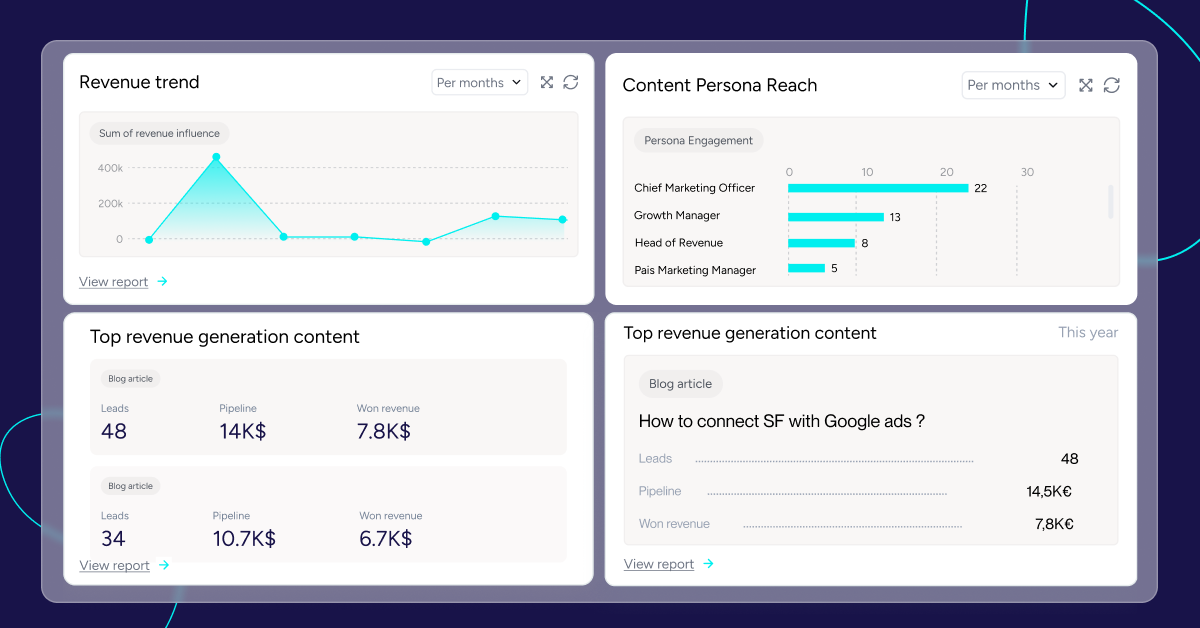
10 Best Content ROI Tools to Prove Content Drives Revenue
Compare 10 tools that connect blog posts and assets to pipeline. Features, pricing and how each handles multi-touch attribution for content teams.
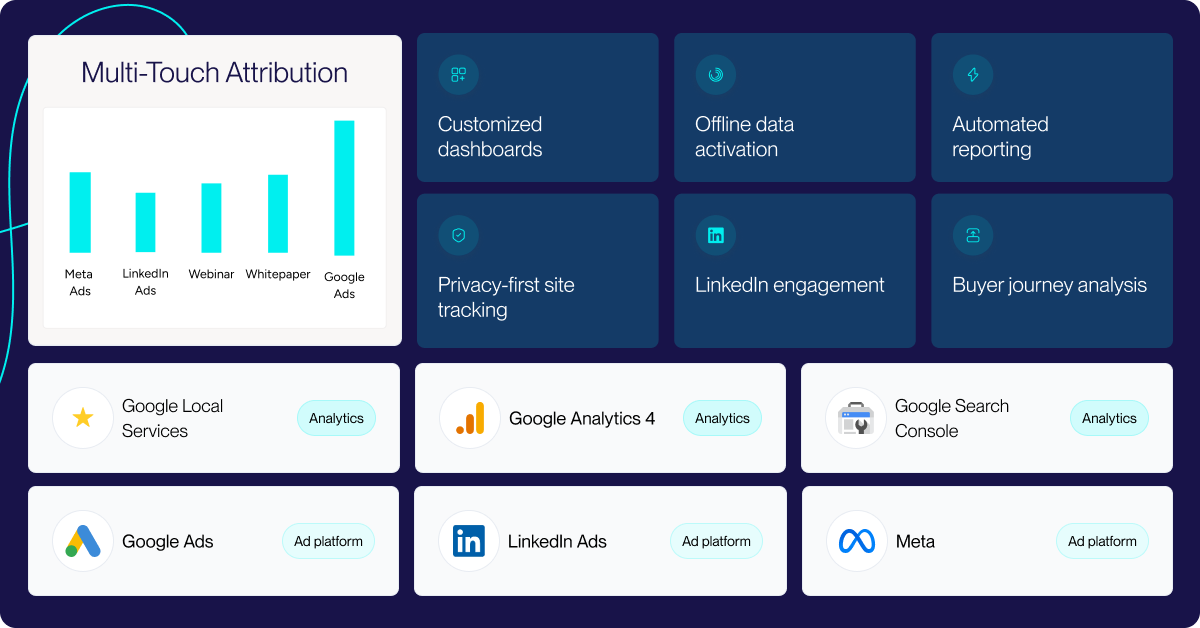
15 Marketing Attribution Tools for B2B Teams (2027)
Compare 15 marketing attribution tools for B2B teams. Review CRM workflows, product fit and the questions to ask before buying.
AI Search Visibility: How to track the revenue impact of brand mentions
Learn to track and measure AI search ROI with proven GEO strategies. Complete guide to LLM mentions attribution, revenue tracking tools, and conversion optimization for B2B success.
.svg)
Ready to track prospects from lead to close with Heeet?
Heeet gives marketers and sales professionals at IT & Security firms turn geuss work intro informed decisions that drive revenue while meeting the same secruity technical standards you provide your clients.