

Read time :
Content Marketing ROI Analytics: The Complete Guide to measure and show content ROI in 2026
Content marketing analytics is the systematic tracking and analysis of how audiences interact with your content to measure performance and business impact. It connects consumption metrics, such as pageviews, to engagement signals and, ultimately, to pipeline and revenue outcomes.


Most content teams report traffic and engagement while leadership asks about ROI. That disconnect puts content budgets at risk every quarter. And in 2026, the disconnect is widening because a growing share of content is read in AI-generated answers that don’t result in a click. This guide covers the metrics that matter, the attribution models that work for B2B, how to measure content that surfaces in AI search and LLMs, and how to build reporting that proves content drives revenue.
What is content marketing analytics?
Content marketing analytics is the systematic process of collecting, measuring, and analyzing how audiences interact with your content. The goal goes beyond counting pageviews. You’re connecting content efforts to business outcomes, such as pipeline and revenue.
Think of it as the difference between “we published 50 blog posts” and “our content influenced $2.3 million in closed deals.” Consumption metrics tell you who’s reading. Engagement signals reveal how deeply people interact. Conversion data shows what business actions follow. The real value lies in connecting all three throughout the entire buyer journey.
As Romain Blanc, Co-founder of Heeet and a Salesforce ecosystem specialist with 20+ years in B2B data solutions, puts it: “The only way to accurately calculate the cost and value of content in B2B is to capture engagement throughout the buyer journey, which conventional analytics setups don’t credit.”
The disconnect happens because engagement data lives in one system and revenue data lives in another. Google Analytics tracks sessions; your CRM tracks opportunities. Without a bridge between the two, content teams defend budgets with metrics that don’t resonate in meetings with leadership.
Measuring content marketing ROI manually, which requires stitching together Google Analytics, spreadsheets, and CRM exports, only gets you so far. Heeet's content marketing ROI feature connects every article, landing page, and asset directly to pipeline and closed-won revenue inside Salesforce and HubSpot. No spreadsheets, no guesswork.
Why content marketing analytics matters for revenue teams
Content teams often struggle to justify budgets. Leadership asks for ROI numbers and gets traffic reports instead. That disconnect puts content programs at risk during every budget cycle.
Analytics changes the conversation entirely. When you can show that a specific whitepaper influenced 23 opportunities worth $1.8 million, budget discussions shift from “why are we spending this?” to “how do we scale this?”
- Budget justification: Concrete revenue data replaces vague engagement metrics in executive presentations. When attribution lives inside your CRM, you can tell your CFO exactly how much you spent on every content type and how much pipeline each generated.
- Strategy optimization: You can double down on content formats and topics that generate pipeline while cutting what doesn’t perform. For example, Heeet’s own content team found that their Salesforce-specific attribution content consistently moved the needle on pipeline, so they kept refreshing and expanding that cluster rather than chasing new topics.
- Sales alignment: Sales teams gain visibility into which content prospects consumed before booking demos. In Heeet’s demo calls, sales reps regularly see which blog posts, pricing pages, and case studies a prospect engaged with, allowing them to personalize conversations based on actual behavior rather than guesswork.
How content analytics differs from web analytics
Web analytics and content analytics overlap but serve different purposes. Web analytics tells you that 10,000 people visited your site last month. Content analytics shows that your comparison guide influenced 23 opportunities, and your product overview page contributed $450,000 in closed revenue.
Both matter. But to prove content ROI, you need a content-specific lens.
Here’s what makes content analytics fundamentally different: it requires connecting content engagement data to your CRM, where revenue lives. In Heeet demos with B2B companies, the same gap surfaces repeatedly. Marketing teams can see traffic and engagement in Google Analytics, but they can’t connect those numbers to pipeline or closed-won revenue without a CRM-native attribution layer. That bridge is what transforms content analytics from a reporting exercise into a revenue intelligence system.
Essential content marketing metrics to track
Metrics fall into distinct categories, each revealing different aspects of content performance. The trick is tracking all of them while focusing your reporting on what leadership cares about.
Consumption metrics
Consumption metrics tell you whether content gets seen. Pageviews show raw volume. Unique visitors reveal reach. Scroll depth indicates whether people read past the headline or bounce immediately. On their own, consumption metrics answer “did anyone show up?” but say nothing about business impact.
Here’s the uncomfortable truth: because AI is reshaping how B2B buyers research, the click-through traffic your content earns is most likely shrinking. Ahrefs measured a 58% lower click-through rate on the top-ranking page when a Google AI Overview is present (300,000 keywords, December 2023 vs. December 2025). More recent data, from a working study reported on by Search Engine Journal, showed that Google’s AI Overviews reduce organic clicks to external websites by 38% on queries where it appears. So the clicks may be slightly increasing, but the zero-click influence is still seriously stiffling traffic.
Buyers are getting answers from ChatGPT, Perplexity, and Google’s AI Overviews, rather than clicking through to your blog. If you’re still measuring traffic alone, you’re shooting yourself in the foot. Even if you did manage a 2x increase in blog visitors, that visitor count doesn’t translate into the pipeline or revenue that leadership wants to hear about, and it's now an incomplete picture of how many people actually read your work.
Engagement metrics
Engagement signals deeper interest. Social shares suggest the content resonated enough to recommend. Comments indicate active thinking. Video completion rates indicate whether your tutorial held viewers' attention or lost them at the two-minute mark. High engagement often correlates with quality, though the connection to revenue isn’t automatic.
Content engagement tracking becomes a powerful sales enablement tool when connected to your CRM. As Heeet demonstrates in client demos, tracking which specific pages a prospect visited during their buyer journey helps sales teams identify patterns. For example, if a prospect hasn’t visited the pricing page, that can be a red flag regarding engagement level. If they’ve read four blog posts and downloaded a case study, sales knows they’re seriously evaluating.
Lead generation metrics
Here’s where content starts connecting to pipeline. Form fills are attributed to specific blog posts. Newsletter signups from particular landing pages. Gated content downloads tracked by source. Lead generation metrics bridge the gap between “people liked this” and “people took action because of this.”
But heavy gating creates friction. When every asset requires a form, you lose anonymous engagement data and frustrate buyers who aren’t ready to identify themselves. Consider ungating more content and tracking influence differently. A prospect who reads five ungated blog posts signals intent even without filling out a form. CRM-native attribution platforms with cookiless tracking can track this ungated engagement and connect it to the pipeline when the prospect eventually converts. That way you see how your content helped create a winning customer journey
Sales and revenue metrics
Sales and revenue metrics matter most to leadership. Here are the standout numbers that show impact throughout the funnel, whether it is creating pipeline, moving it forward, and finally attributing revenue:
- Content-influenced pipeline: Total opportunity value where content was a touchpoint. For example: “Our comparison guide influenced $1.2 million in pipeline last quarter.” That statement holds weight in budget conversations.
- Content-attributed revenue: Closed deals where content played a role. This requires connecting content analytics to closed-won opportunities in your CRM. Without that connection, you’re guessing.
- Deal velocity impact: Whether content engagement correlates with faster sales cycles. If content-engaged deals close 20% faster than non-engaged deals, you have quantifiable proof that content accelerates revenue.
Cost and ROI metrics
Content costs money to produce. Understanding return on that investment requires tracking cost per piece, cost per lead by content type, and overall content ROI. A $5,000 ebook that generates $500,000 in attributed revenue looks very different from one that generates $5,000.
Compare investment in different content types against the pipeline generated. Blog posts might cost less to produce than webinars but generate comparable pipeline influence. This data directly informs resource allocation and helps you build what Heeet calls a “revenue-driven content flywheel,” where each winning piece of content fuels the next.
Content attribution models for B2B marketing
Attribution determines how credit for conversions gets distributed across touchpoints. B2B buying journeys involve multiple interactions over months. Choosing the right model matters.
As Romain Blanc explains: “Attribution model selection comes down to one question: what are you trying to optimize?” Use models in combination, not in isolation. First-touch reveals what creates awareness. Last-touch reveals what closes deals. Multi-touch shows the full picture. With the influence of AI still difficult to track, including self-attribution and customer interviews to fully understand the journey, is a must as well.
First-touch attribution
All credit goes to the first content interaction. Simple to implement, but ignores everything that happened after initial awareness. That nurture sequence? The case study before the demo? Invisible.
Standard attribution tools often use 30 or 90-day windows. Enterprise B2B deals rarely close that fast. A prospect discovers your brand through organic search in January, becomes an MQL in April, gets qualified in June, and the deal closes in October. A 90-day window captures none of the early influence on content. Without the right tools to document the journey, the first-touch blog posts are entirely absent from the data when that lead finally becomes a paying customer.
Last-touch attribution
All credit goes to the final touchpoint before conversion. This model overlooks the content that builds awareness and consideration. The blog post that started the journey six months ago gets zero credit.
Linear attribution
Equal credit is distributed across all touchpoints. Distributes credit to every piece of content, but may overweight low-impact interactions. A casual blog skim shouldn’t get the same credit as an in-depth product comparison. Unfortunately, this model will weight both touchpoints equally.
W-shaped and U-shaped attribution
Weighted models emphasize key moments. W-shaped typically allocates 30% to first touch, 30% to lead creation, 30% to opportunity creation, with 10% spread across middle interactions. For B2B content measurement, weighted models often perform best because they account for distinct journey phases.
W-shaped attribution works particularly well for content analytics because it credits the content that created awareness, the content that converted a visitor into a lead, and the content that influenced opportunity creation. This maps directly to the content funnel stages most teams already think in. CRM-native platforms like Heeet let you configure these weightings directly inside Salesforce or HubSpot and adjust them as your understanding matures.
Data-driven attribution
Machine learning determines credit distribution based on actual conversion patterns. Requires significant data volume to produce accurate models. Promising but not practical for smaller teams looking to get a multi-touch model in place, especially if you’re not dealing with hundreds of leads coming in every month. The critical need here is the data.
How to measure content performance data across the buyer journey
Different content serves different purposes. Measuring a top-of-funnel blog post the same way you measure a bottom-of-funnel case study misses the point entirely.
Awareness stage content metrics
Focus on reach and discovery. Blog traffic, organic search visibility, social impressions, and increasingly, how often your content gets cited inside AI answers. Awareness content introduces your brand to prospects. Don’t expect direct conversions from awareness content.
Problem-focused content outperforms feature-focused content at this stage. For instance, writing content around “How to prove marketing ROI to your CFO” attracts more qualified visitors than “Marketing attribution software features.” The difference is quantifiable: problem-focused keywords not only drive better engagement but often result in higher-value pipeline actions.
Consideration stage content metrics
Track deeper engagement. Whitepaper downloads, webinar registrations, comparison page visits, and return visits. Prospects in consideration mode want substance. Multiple content touches during consideration often signal serious buying intent.
This is also where your sales and demo calls become a goldmine of content intelligence. What are the recurring questions prospects ask? What misconceptions can you dispel before the call that might otherwise become objections? Heeet’s analysis of 20+ demo transcripts revealed that the #1 question prospects ask is: “How does attribution work natively inside my CRM?” That insight directly shapes what consideration-stage content to create. A recurring sales objection like “We can’t prove ROI to finance” becomes a detailed ROI calculation guide that both educates leads and qualifies them.
Decision stage content metrics
Measure conversion influence. Demo requests influenced by content, case-study engagement before closed deals, and pricing page attribution. Decision-stage content closes confidence gaps and connects most directly to revenue.
How to measure content performance in AI search and LLMs
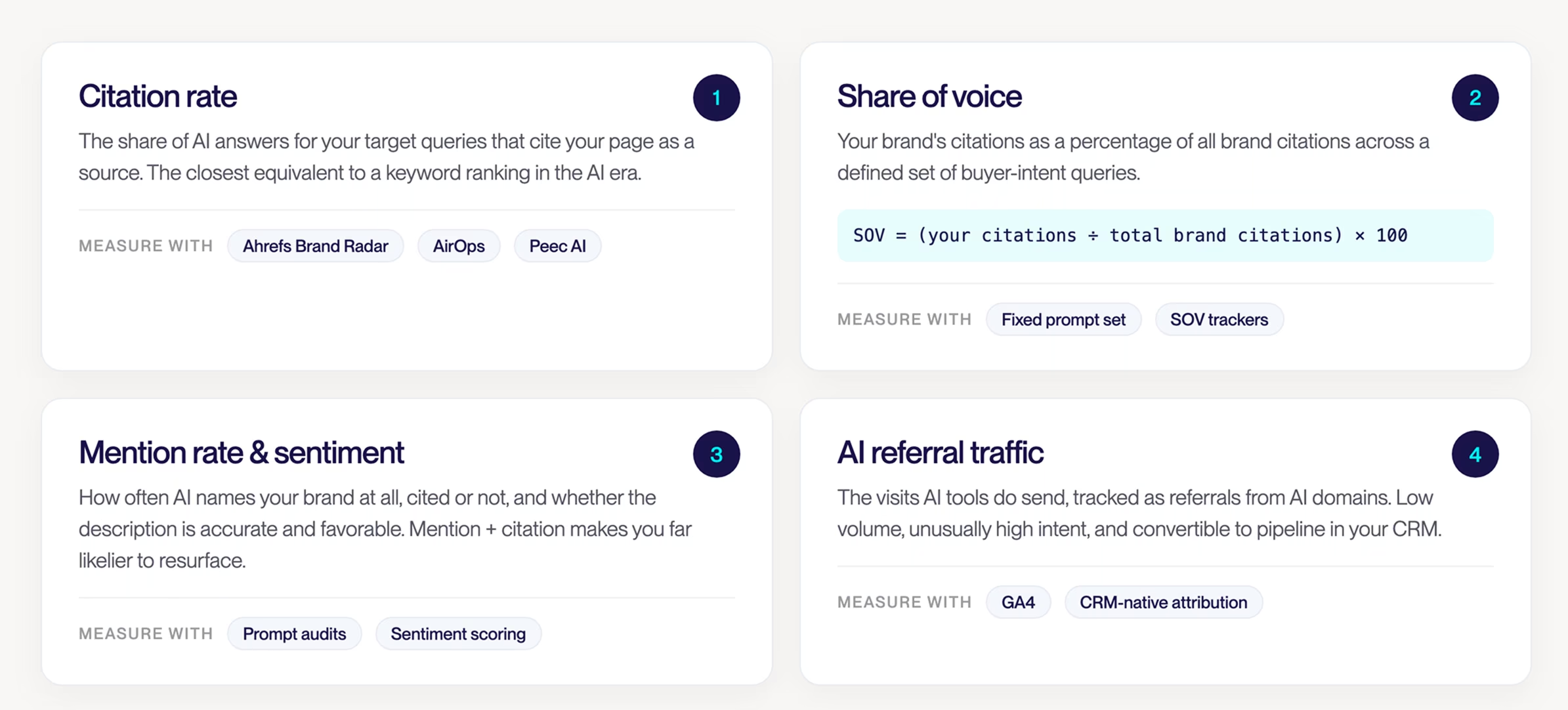
Measuring content visibility in AI search means tracking how often AI answers surface your content, how often they mention your brand, and whether the people who arrive from AI tools become pipeline. Citation rate, share of voice, mention rate, and AI referral traffic are the four metrics that replace the pageview as the unit of awareness in 2026.
For most of the last decade, a published page earned a ranking, the ranking earned clicks, and clicks served as a proxy for influence. That chain is breaking. A large and growing share of buyer research now happens inside ChatGPT, Perplexity, Gemini, and Google’s AI Overviews, where your content can be read, summarized, and acted on without a single visit to your site. Measuring content the old way undercounts it, sometimes badly.
The fix isn’t to abandon traffic metrics. It’s to add a measurement layer for the AI surfaces, then connect that layer back to pipeline. Here’s what to track and how.
Why traditional traffic metrics undercut content in 2026
AI answers absorb the clicks that your content used to earn. Your content can do its job of informing the buyer without ever registering as a session.
This is why a falling traffic chart can be misleading. Some of that “lost” traffic represents content that’s working harder than ever, just on a surface your analytics doesn’t see. Being the cited source in an AI Overview is the new page-one ranking. The question is whether you can measure it.
The AI visibility metrics that matter
Four metrics turn AI visibility from a vibe into a number:
- Citation rate: The percentage of AI answers for your target queries that cite your page as a source. This is the closest equivalent to a keyword ranking in the AI era.
- Share of voice: Your brand’s citations as a percentage of all brand citations across a defined set of buyer-intent queries. The formula is simple: (your brand’s citations across the query set) ÷ (total brand citations across that set) × 100.
- Mention rate: How often AI answers name your brand at all, whether or not they link to you. Brands that earn both a mention and a citation are far more likely to resurface in later answers.
- AI referral traffic: The visits that AI tools do send, tracked in analytics as referrals from chatgpt.com, perplexity.ai, gemini.google.com, and similar domains. Small in volume, but unusually high in intent.
Sentiment belongs here, too. It’s not enough to know that an AI answer mentions your brand; you want to know whether it describes you accurately and favourably. A confident, correct mention is an asset. A wrong one is a liability you can only fix if you’re measuring it.
One warning about coverage: AI engines cite very different sources from one another. A 2026 per-engine audit found that only 11% of the domains cited by ChatGPT overlapped with those cited by Perplexity. Measure each engine separately. A strong citation rate in Perplexity tells you almost nothing about your standing in ChatGPT or Google AI Mode.
A simple protocol to benchmark AI visibility
You don’t need an enterprise platform or an AI visibility tool to start. You need a fixed prompt set and a calendar reminder.
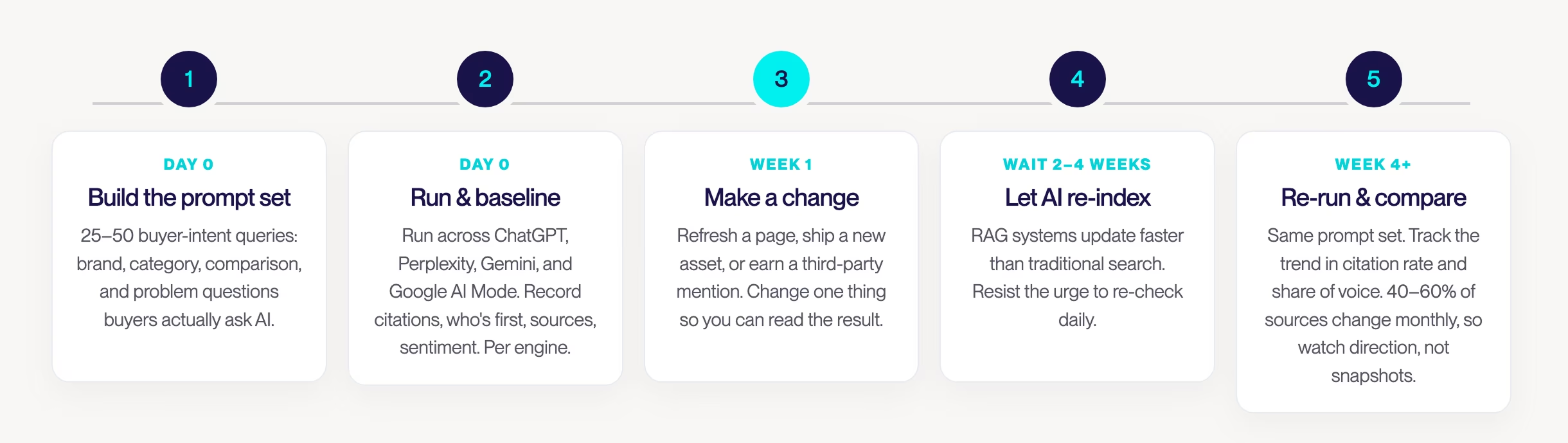
- Build a prompt set of 25 to 50 queries that mirror how buyers in your category actually ask AI tools. Include brand queries (“what does x do”), category queries (“best content attribution tools 2026”), comparison queries (“your brand vs. competitor”), and problem queries (“how to prove content ROI to a CFO”).
- Run the set across ChatGPT, Perplexity, Gemini, and Google AI Mode. For each answer, record whether your brand is mentioned, whether your page is cited, who appears first, which sources are cited, and the sentiment.
- Calculate your baseline: citation rate, share of voice, and mention rate per engine.
- Make a change (refresh a page, publish a new asset, earn a third-party mention), then wait two to four weeks. RAG-based AI systems re-index faster than traditional search, so changes show up sooner than you’d expect.
- Re-run the same prompt set and compare. Track how the numbers move, and remember that 40% to 60% of cited sources change month to month, or even week to week, so measure the trend, not a single snapshot.
Specialized tools automate this loop. Ahrefs Brand Radar, Peec AI, Profound, and AirOps all track brand mentions and citations across the major AI engines with competitive benchmarking. They’re worth it once you’ve proven the workflow manually and want to monitor continuously rather than quarterly.
However, be wary of tools that claim to create great content at scale. Content has been commoditized by AI, and the current quality-over-quantity strategy could backfire, leading you to cannibalize certain keywords. Google’s last few core updates have had a real effect on traffic on sites that publish:
- content that doesn’t match search intent
- pages with thin content with little to no value
- content covering topics outside of your expertise (think HubSpot and ClickUp’s widely reported drop)
These are just a few factors we’ve observed across the industry, that SEO experts across LinkedIn and X have documented.
What Google Search Console’s AI Overview reports show
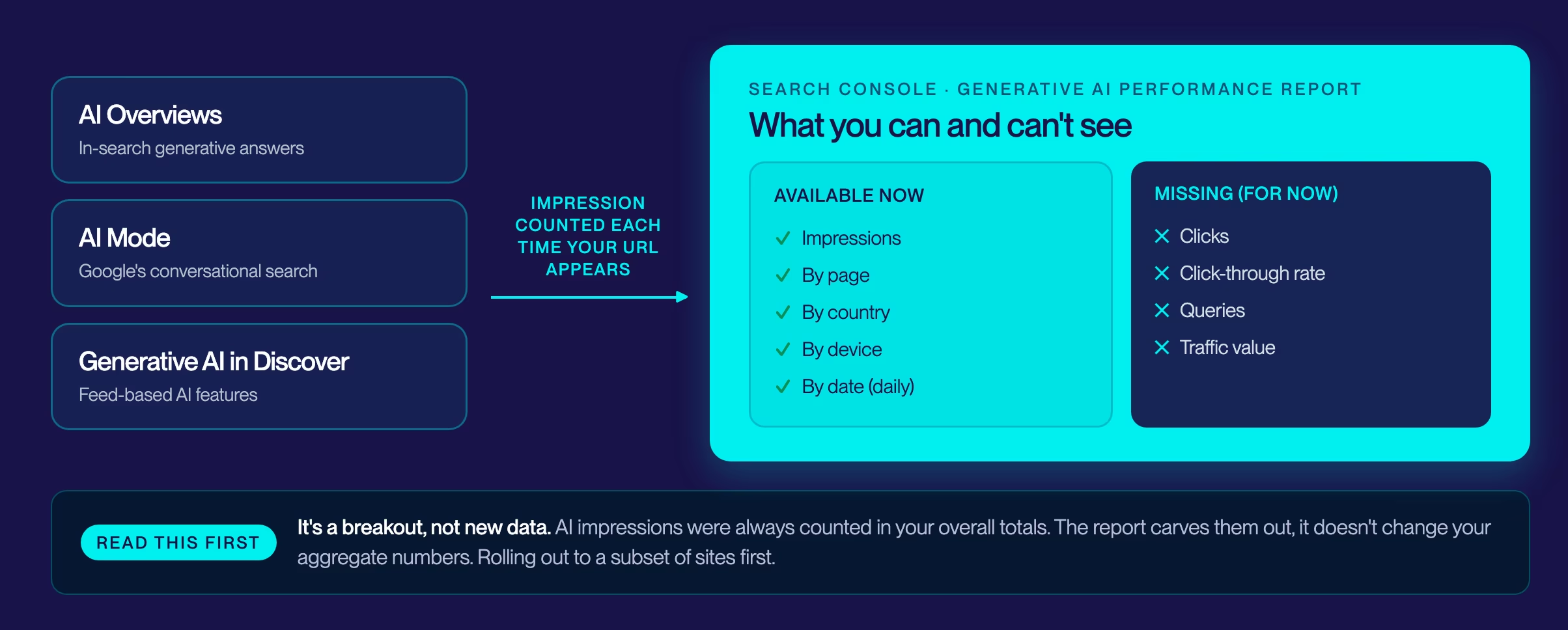
Google Search Console’s new Search Generative AI performance reports, launched June 3, 2026, show how often your pages appear inside AI Overviews and AI Mode, broken down by page, country, device, and date. They report impressions only. There are no clicks, click-through rate, or query data yet, so you can see your AI's visibility but not its traffic value.
This is the measurement update most SEO and content teams have been waiting two years for, so it’s worth being precise about what it does and doesn’t do.
What the reports cover
Two surfaces: generative AI features in Search (AI Overviews and AI Mode), and generative AI features in Discover. An impression counts each time a URL from your site appears inside one of those AI features.
What you get
Impressions, segmented by page, country, device, and date down to daily granularity. That’s enough to see which of your pages AI features draw from, and to watch that visibility trend over time.
What you don’t get (yet)
No clicks, no CTR, and no queries. As SEO consultant Brodie Clark put it in his early review, “the key elements that are lacking here are related to the queries and clicks received, which are effectively the most important metrics.” Google has signaled that click data may follow, which would finally let teams calculate the traffic value of an AI appearance.
It’s a breakout, not new data
Google confirmed that AI impressions were always included in your overall Search performance totals. The new report carves them out so you can see them separately; it doesn’t change your aggregate numbers. If your total impressions looked inflated over the past year, that is part of the reason.
Rollout is staged
The reports went first to a subset of sites, with UK properties prioritized amid regulatory pressure, before a wider rollout. If you don’t see the report in your property yet, that’s expected. Data in the early reports goes back to mid-May 2026.
The honest takeaway
This is a real, overdue signal, but on its own, it’s not yet actionable. Impressions tell you that AI is reading your content. They don’t tell you whether that visibility produced a visit, a lead, or a deal. For that, you still have to connect AI engagement to your CRM, which is exactly the gap the next section addresses.
How to connect AI mentions to pipeline and revenue
Connecting AI mentions to revenue means capturing the visits AI tools do send, tagging them as AI-sourced inside your CRM, and combining that data with self-reported attribution to credit the influence that never produced a click. AI visibility metrics prove you’re being read; CRM attribution proves you’re being paid.
This is where most AI measurement stops short. Citation rate and share of voice are awareness metrics. They’re important, but a CFO doesn’t fund awareness; a CFO funds pipeline. The teams winning in 2026 close the loop between the two.
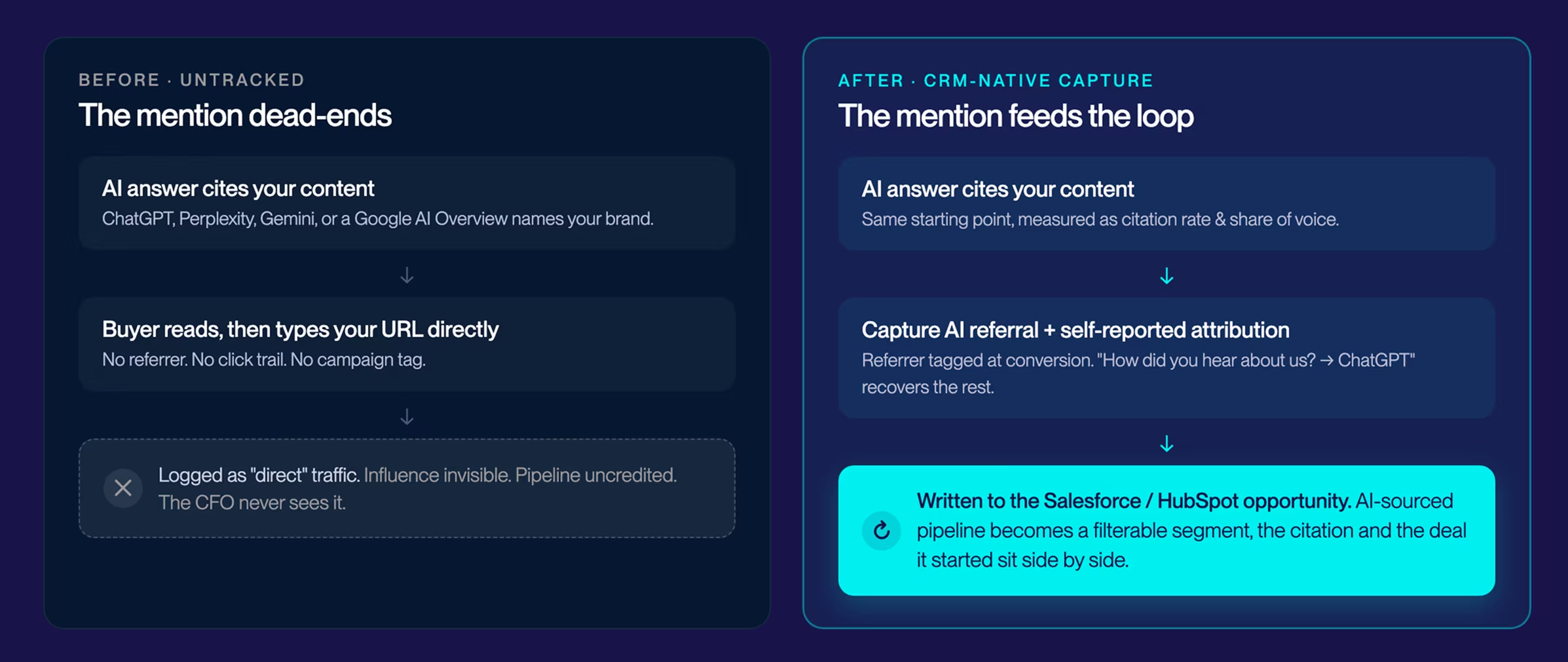
There are three practical ways to do it:
Capture and tag AI referral traffic
When an AI tool sends a visit, the referrer is often identifiable (chatgpt.com, perplexity.ai, gemini.google.com). A CRM-native attribution layer captures the referrer at the moment of conversion and writes it to the lead and opportunity records, so the AI-sourced pipeline becomes a filterable segment rather than an anonymous blob in “direct” traffic. This matters because AI referral traffic tends to convert at well above the rate of standard organic search, so even small volumes can punch above their weight.
Heeet’s data comparing lead journeys from AI search vs. paid search showed that there was a :
- +68% higher conversion rate
- +141% higher close rate
- 3x faster time to revenue
- 17% less content consumed before conversion
- And 90% of those AI-sourced visitors are landing on your site for the first time.
Lean on self-reported attribution
The buyer who read about you in an AI Overview and typed your URL directly leaves no digital trail. A single “How did you hear about us?” field on your demo form recovers that signal. When a prospect answers “ChatGPT” or “saw you in a Google AI answer,” you’ve captured influence that no tracking pixel could. Combine the self-reported answer with the tracked journey on the opportunity record, and you get the fullest picture available.
Account for the dark funnel
Up to 70% of the B2B buyer journey now happens off your property, in private Slack messages, podcast mentions, peer recommendations, and AI conversations. Your tracking platform captures the digital journey. Self-reported attribution captures what planted the seed. Sales conversations reveal why the story played out the way it did. AI mentions are simply the newest channel feeding into that dark funnel, and they deserve the same closed-loop treatment as any other channel.
Heeet was built for exactly this stitch. Its cookieless JavaScript tracking captures the referrer and full content journey, writes it natively into Salesforce or HubSpot, and rolls every touchpoint, including AI-sourced visits and self-reported answers, up to the opportunity. The result is a single record that shows an AI Overview citation and the $80,000 deal it helped start, side by side, in the system where revenue already lives.
How to connect content to pipeline and revenue
Tracking which content assets influence deals requires technical infrastructure. The payoff is transforming vague content metrics into concrete revenue proof.
- Implement tracking: Cookieless JavaScript tracking across all pages captures content engagement without relying on third-party cookies, which browsers increasingly block. UTM parameter capture and form field integration pass source data through to your CRM.
- Connect to CRM: Push content engagement data into lead and opportunity records where revenue lives. This is where CRM-native solutions provide a distinct advantage. Data sent directly to your Salesforce or HubSpot instance means no external servers storing your data, no export/import workflows, and no reconciling conflicting numbers between systems.
- Track post-MQL content influence: One of the biggest blind spots in content analytics is what happens after the MQL handoff. Marketing teams consistently describe a “black box” once sales takes over. But prospects continue engaging with content throughout the sales cycle: reading blog posts, viewing pricing pages, and downloading case studies. Capturing these post-acquisition touchpoints is often the moment when content analytics shifts from “interesting” to “essential.”
- Set attribution windows: Define how far back to credit content (typically 90-180 days for B2B). Longer enterprise sales cycles often require longer windows.
- Build reports: Create dashboards that show the pipeline influenced by content assets. CRM-native platforms include pre-built dashboards and enable custom reporting during onboarding.
CRM-native solutions eliminate data silos by keeping everything in Salesforce or HubSpot. No exporting to external platforms, no reconciling conflicting numbers. When sales and marketing see the same attribution data inside the CRM, finger-pointing decreases and collaboration increases.
Lead quality analytics for content marketing
Lead volume means nothing if leads don’t convert. Content that attracts unqualified traffic wastes resources and frustrates sales.
Quality analytics examines whether content attracts your ideal customer profile. Do content-sourced leads score higher? Which content produces leads that become opportunities? Does content engagement correlate with faster sales cycles?
Segment analysis by ICP, persona, and deal stage reveals patterns. Maybe your technical deep-dives attract qualified engineers while your overview content attracts students researching for papers.
CRM-native content tracking makes this analysis straightforward. As demonstrated in Heeet client demos, you can see exactly how many leads engage with each piece of content on your website, how many of those leads convert, and how much revenue each content piece ultimately influences, broken down by persona. This level of granularity tells you which content attracts your ICP versus which content generates noise.
Top content marketing analytics tools and platforms
Tool selection depends on your tech stack, budget, and attribution requirements. Each category has tradeoffs.
Google Analytics 4
Free and powerful for traffic and engagement. Limited ability to connect to revenue without significant integration work. Good starting point but not sufficient for proving content ROI. GA4 tells you sessions happened. It doesn’t tell you which sessions became pipeline. It’s also where you’ll first spot AI referral traffic, by filtering referrals from chatgpt.com, perplexity.ai, and similar domains, though it won’t connect those visits to closed revenue on its own.
HubSpot content analytics
Built-in reporting for HubSpot users. Full revenue attribution requires Marketing Hub Enterprise at $3,600+ monthly. Solid for mid-market teams already in the HubSpot ecosystem.
Semrush, Ahrefs, and SEO/AI-visibility tools
Strong for organic content performance, keyword tracking, and competitive analysis. Ahrefs Brand Radar and similar tools now also track brand mentions and citations across AI engines. Useful alongside revenue attribution, not as a replacement for it, since they measure visibility rather than pipeline.
CRM-native analytics platforms
Solutions that embed analytics directly inside Salesforce or HubSpot keep data in one place and enable revenue attribution without exporting to external tools. CRM-native platforms eliminate the “which number is right?” debates that plague teams using multiple disconnected platforms.
Heeet, for example, installs as a native Salesforce or HubSpot package with cookieless JavaScript tracking. Implementation takes hours, not months. It tracks multi-touch attribution across all marketing channels (paid ads, organic content, events, webinars, and AI-sourced visits), connects every touchpoint to pipeline and closed revenue, and delivers pre-built dashboards showing ROI, CAC, and CPL by channel and content asset. Because the data lives natively inside the CRM, there’s no security concern about data leaving your environment and no conflicting numbers between platforms.
What makes CRM-native content analytics particularly powerful is content-level tracking: you see which specific blog posts, landing pages, and resources each lead engaged with throughout their journey, and that engagement data flows directly into the opportunity record. Sales teams use this to personalize outreach. Marketing teams use it to identify top-converting content. Leadership uses it to justify investment with numbers they already trust.
How to build a content marketing performance analytics dashboard
Dashboards turn raw data into actionable insights. The key is to focus on revenue-related metrics rather than vanity numbers.
1. Define your key performance indicators
Start with business outcomes and work backward. Pipeline influenced, revenue attributed, cost per opportunity by content. KPIs connect to what leadership cares about.
The most impactful dashboard for executive alignment centralizes revenue, marketing spend, acquisition cost, and payback period in a single view. You should be able to tell your CFO exactly how much you spent on every channel and content type, how much each generated, and whether they’re profitable.
2. Connect your data sources
Integrate website analytics, marketing automation, CRM, and ad platforms into a unified view. Disconnected data creates conflicting reports and erodes trust.
CRM-native attribution platforms dramatically simplify this step. Instead of building complex data pipelines between separate systems, the attribution data lives where the revenue data already exists. Paid platform data syncs automatically (Google Ads, LinkedIn, Meta), content engagement flows in from your website, and event/webinar attendance connects through campaign membership. Everything converges in one place.
3. Create revenue-focused visualizations
Build charts showing content contribution to business outcomes. Pipeline by content asset. Revenue by content type. Conversion rates by funnel stage.
Sankey diagrams can show exactly which channels and content pieces your converted leads engaged with from first touch to closed deal, revealing the most successful content paths and where prospects drop off.
4. Automate report scheduling
Set up recurring reports for stakeholders. Monthly for trends, quarterly for strategic reviews. Automation ensures consistent visibility without manual effort.
Content marketing reporting best practices
Data collection is only half the battle. Presenting findings effectively determines whether insights drive action.
Speak in revenue language
Frame reports around pipeline and revenue, not clicks and impressions. “Our blog influenced $1.8 million in pipeline” resonates more than “we got 50,000 pageviews.” CFOs don’t care about engagement rates. They care about return on investment.
As Heeet’s team consistently sees in client engagements, the moment marketing can speak the same revenue language as sales and finance, budget conversations transform from “why are we spending this?” to “how do we scale what’s working?”
Segment reports by funnel stage
Show how each content type performs at each stage. Awareness content generates reach. Consideration content drives engagement. Decision content influences conversions. Comparing them directly misses the point of each content type.
Include content-level attribution data
Go beyond channel-level reporting. Which specific blog posts influenced deals? Which ebooks generated the most pipeline? Asset-level data enables precise optimization.
This is where multi-touch attribution reveals hidden contributors. A blog post that never generated a form fill might have touched 30 opportunities as a mid-journey content piece. Single-touch models would give it zero credit. Multi-touch models reveal their true influence on pipeline.
Blend quantitative data with qualitative insights.
The best content analytics programs combine CRM tracking data with self-reported attribution (“How did you first hear about us?”) and insights from sales conversations. Up to 70% of the B2B buyer journey now happens in the “dark funnel”: private Slack messages, podcast mentions, WhatsApp forwards, AI chatbot conversations, and real-life conversations. Your tracking platform captures the digital journey. Self-reported attribution captures what planted the seed. Sales conversations reveal why the story played out the way it did. Combining all three gives you the complete picture.
Most useful content analytics reports for marketers
Concrete report examples help you build your own analytics practice.
Content influence report
Shows which content pieces touched leads before they became opportunities. Reveals hidden contributors that single-touch models miss entirely.
Pipeline by content asset report
Ranks individual content pieces by pipeline influence. Identifies top performers worth replicating and underperformers worth retiring or updating. This is the report that powers the content flywheel: find what’s generating revenue, double down, and recycle winning content across the channels your audience lives in.
Content ROI report
Compares content creation cost against attributed revenue. Proves return on content investment in terms that finance teams understand. When this data comes from your CRM, finance trusts the numbers because that’s where deals live.
Journey path analysis report
Visualizes common content sequences that lead to conversion. Reveals optimal content paths and identifies where prospects drop off. CRM-native tools can surface journey patterns without complex data engineering.
Content velocity report
Measures whether content consumption accelerates or decelerates deal cycles. Do prospects who engage with more content close faster? Which content types appear in the fastest-closing deals? This reveals whether your content is actually reducing sales friction or just creating noise.
How to choose the right content marketing analytics company
Vendor evaluation involves several criteria beyond feature lists:
- Native CRM integration: Does the tool live within your existing CRM, or does it require data export? Solutions that keep data inside Salesforce or HubSpot eliminate security concerns and ensure sales and marketing see the same numbers. Heeet, for instance, passed Salesforce’s security review and is available on the AppExchange, meaning all data stays within your CRM environment.
- Attribution model options: Can you choose models that match your sales cycle? Look for platforms that let you configure weightings (first-click, intermediary, last-click, post-acquisition) directly in your CRM.
- Content-level tracking: Does the platform track engagement with individual content assets and connect that data to pipeline? This is the feature that separates content analytics from general marketing attribution.
- AI-channel capture: Can the platform identify and segment AI-sourced visits, and combine them with self-reported attribution? As AI search grows, this is fast becoming a requirement rather than a nice-to-have.
- Data privacy: Where does your data get stored? Is tracking cookieless? Cookie deprecation and consent rules make a growing share of journeys untrackable with traditional methods. Cookieless, first-party data approaches ensure you retain visibility regardless of browser settings.
- Account-level attribution: Enterprise B2B deals involve multiple contacts within an account, each doing independent research. The platform should roll up touchpoints from all contacts to the opportunity level, not just track individual journeys. This was consistently the strongest positive reaction in Heeet’s enterprise demos.
- Implementation time: Days or months? CRM-native platforms can typically go live in hours with pre-built dashboards and minimal technical lift.
- Reporting flexibility: Can you build custom reports? Pre-built dashboards get you started; custom reporting lets you answer the specific questions your leadership asks.
Stop guessing and prove content drives revenue
Content marketing analytics transforms content from a cost center into a measurable revenue driver. The shift from “we published content” to “our content influenced $2.3 million in pipeline” changes how leadership views content investment.
The teams winning the content game in 2026 aren’t measuring output volume. They’re measuring pipeline and revenue influence. They’re measuring where their content shows up in AI answers, not just where it ranks. They’re building content flywheels where each winning piece of content fuels the next. They’re connecting engagement data, including AI-sourced visits, to CRM opportunities. And they’re using that data to have fundamentally different budget conversations.
For teams using Salesforce or HubSpot, CRM-native analytics provides content attribution without data exports or complex implementation. All touchpoints, all attribution, all reporting lives where revenue data already exists.
Book a demo to see how CRM-native content attribution works in practice.
Other articles
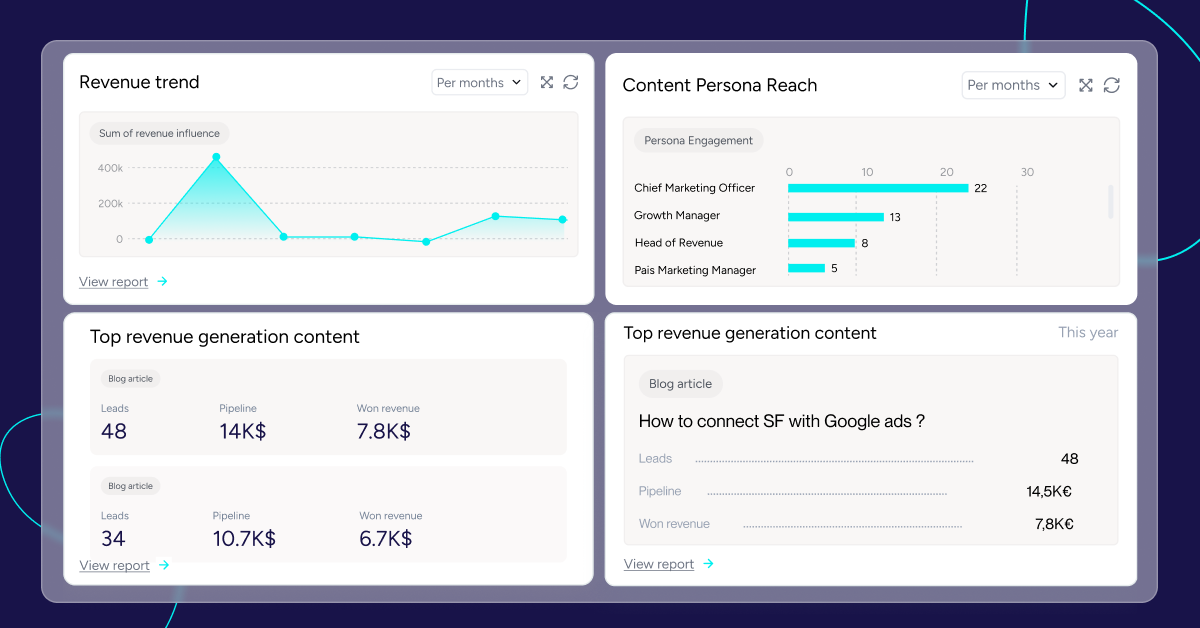
10 Best Content ROI Tools to Prove Content Drives Revenue
Compare 10 tools that connect blog posts and assets to pipeline. Features, pricing and how each handles multi-touch attribution for content teams.
AI Search Visibility: How to track the revenue impact of brand mentions
Learn to track and measure AI search ROI with proven GEO strategies. Complete guide to LLM mentions attribution, revenue tracking tools, and conversion optimization for B2B success.
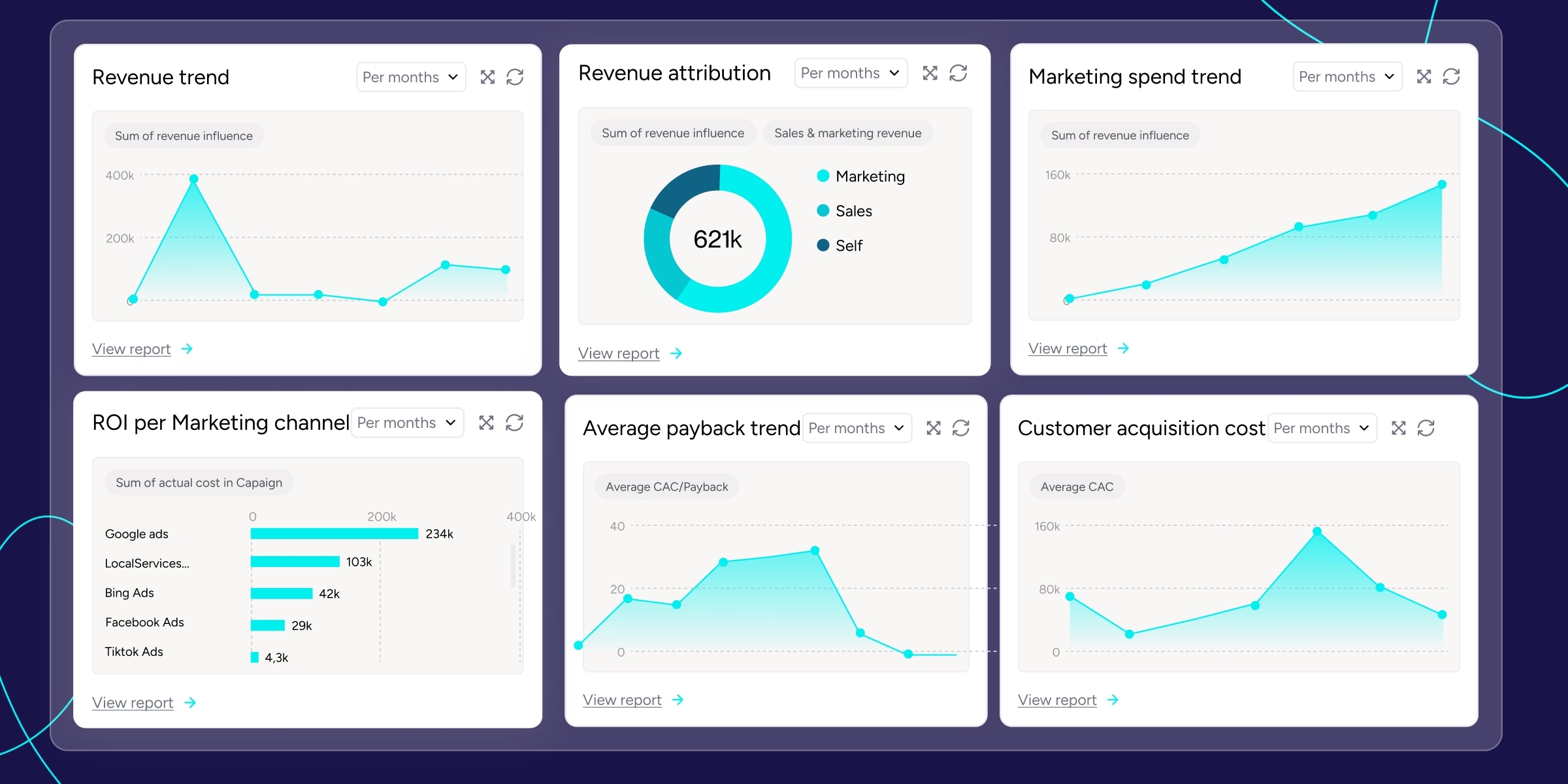
B2B SaaS Revenue Metrics That Align Marketing & Sales
Learn the B2B SaaS revenue metrics that align marketing and sales: ARR, CAC, pipeline velocity, retention, and multi-touch attribution.
.svg)
Ready to track prospects from lead to close with Heeet?
Heeet gives marketers and sales professionals at IT & Security firms turn geuss work intro informed decisions that drive revenue while meeting the same secruity technical standards you provide your clients.