

Read time :
Inbound Marketing for SaaS: A Practical B2B Playbook
Your team publishes useful content, but the CRM still makes it hard to explain which work helped create pipeline. Start with a focused audience, a clear job for each page, and a measurement approach your team can explain. This guide walks through a SaaS inbound marketing strategy, a 90-day plan, and practical ways to connect discovery, engagement, and revenue without overstating what attribution can prove.



In this guide: What inbound means for SaaS · Inbound vs. outbound · Build your strategy · Choose content · Distribute it · Convert interest · Measure pipeline · Your first 90 days · FAQs
What is inbound marketing for SaaS?
Inbound marketing for SaaS helps potential customers discover, evaluate, and choose your software through useful content and relevant experiences. It combines channels such as search, educational content, email, and communities. The goal is to help suitable buyers move from a problem they recognize to a next step your team can support.
For a B2B SaaS team, that journey rarely belongs to one person. A practitioner might find your guide, a manager might compare options, and a finance lead might ask how the investment pays back. Your content needs to answer those different questions without treating every reader as ready for a demo.
Start with the problem your product solves. A finance operations platform could explain how to reconcile payments before asking readers to compare software. A marketing analytics team could explain how to connect content engagement to opportunities before introducing an attribution tool.
That sequence makes content useful even when a buyer isn't ready to speak to sales. It also gives you a clearer job for each page: answer a question, reduce uncertainty, or help someone take an appropriate next step.
How do inbound and outbound marketing work together?
Inbound attracts people who encounter your content or seek an answer; outbound starts a conversation with selected prospects. B2B SaaS teams can use both. An educational guide can support search discovery and give a salesperson a useful resource to share. Choose the combination around your audience, sales motion, and available capacity.
| Factor | Inbound Marketing | Outbound Marketing |
|---|---|---|
| Time to results | Discovery can build gradually; timing varies | Direct outreach can start conversations quickly |
| Cost structure | Production, distribution, and ongoing maintenance | Research, outreach, tools, and follow-up |
| Lead quality | Buyer interest varies by topic and buying stage | Account fit and interest need qualification |
| Scalability | Assets can reach more buyers but need upkeep | Reach depends on targeting and team capacity |
| Best for | Questions buyers already research | Selected accounts and problems worth introducing |
Don't expect content to become a free source of demand. Research, distribution, maintenance, and measurement all take time. Equally, don't assume an outbound conversation starts from zero: a prospect may already know your company through a colleague, an event, or something they've read.
Use one shared definition of a qualified account across both motions. Otherwise, marketing can optimize for readers who never become customers while sales pursues a different audience. Review the accounts that progressed and the ones that stalled, then use those patterns to adjust both content and outreach.
How do you build a SaaS inbound marketing strategy?
Build a SaaS inbound marketing strategy by choosing one customer segment, identifying its buying questions, mapping those questions to useful content, and defining the next action for each page. Agree on qualification and measurement before production. Start with a manageable set of connected assets, then use buyer feedback and pipeline evidence to expand it.
1. Choose a segment you can serve well
Describe the company, the people involved, the trigger for change, and the constraints that shape a purchase. “B2B companies” is too broad to guide a writer. “Small marketing teams using Salesforce that struggle to connect campaigns to opportunity revenue” gives you a problem to investigate and a reader to write for.
Use recent sales calls, support questions, and interviews to test the description. Record the language buyers use. Keep an assumptions column so your team can separate something a customer said from something you hope is true.
2. Map questions to buying decisions
List the questions a buyer needs answered before progressing: How does this problem affect our team? What are our options? Will a solution fit our systems? What will implementation require? Which evidence would make the investment credible?
Assign each question a page or asset. A how-to guide can help someone understand the problem. A comparison can explain tradeoffs. An implementation guide can reduce uncertainty for the team that will operate the software. Avoid publishing several nearly identical pages for slight keyword variations.
3. Give each asset a job and an owner
Write a brief that includes the intended reader, search intent, key question, evidence required, next action, and success measure. Assign someone to verify product details and someone to maintain the page. A small team can combine those roles, but neither responsibility should disappear after publication.
Set a production limit you can sustain. One useful guide supported by distribution and sales follow-up is a better starting experiment than a calendar full of articles with no clear purpose. Expand when you understand which questions and formats help the right accounts progress.
What content should a B2B SaaS team create first?
Create content around problems buyers already bring to your team, especially questions that prevent them from evaluating or adopting your product. Prioritize a small group of connected guides, comparisons, and implementation resources. Search demand helps you choose language and scope, but it shouldn't replace evidence that the topic matters to potential customers.
- Problem guides: Explain a specific challenge and show the reader how to investigate it. Include a worked example or a practical checklist.
- Evaluation content: Explain approaches, selection criteria, limitations, and tradeoffs. Keep competitor claims current and cite the source for factual comparisons.
- Implementation resources: Show prerequisites, steps, ownership, and common failure points. Make it easier for buyers to picture the work involved.
- Customer evidence: Use approved examples with a clear baseline, timeframe, and method. If you don't have a verified result, use a labeled hypothetical example instead.
For each page, answer the main question early. Use descriptive headings, short explanations, and examples with enough context to stand alone. Google's people-first content guidance emphasizes useful, reliable information created for readers. A keyword repeated in every heading doesn't make an answer more useful.
Refresh existing material before creating an overlapping article. Check whether it still answers the intended question, whether instructions and links work, and whether its examples support the argument. Replace outdated claims with verified evidence or remove them. Updating a date without improving the page doesn't solve a content problem.
How do you get useful content in front of the right buyers?
Distribute content where your intended buyers already look for help, and adapt it to the channel. Search can capture existing questions; email can continue a conversation; social posts, communities, and webinars can explain ideas in a different format. Choose a few channels your team can maintain and connect each asset to a clear audience.
A practical distribution plan starts before publication. Give each asset a short list of uses: a search landing page, an email to a relevant segment, a LinkedIn post built around one example, and a sales follow-up resource. Reuse the underlying expertise while changing the format and context.
On LinkedIn, share a useful finding or decision rather than only a link. Respond to questions and capture them for future updates. Heeet's LinkedIn engagement tracking describes how engagement can be connected to CRM leads and opportunities. Treat an interaction as context for understanding an account, not proof that it is ready to buy.
In communities, answer the question being asked and follow the community's rules. Share a resource when it adds something the answer needs. AirOps' research on community content in AI search is useful background for this channel, but community participation should first help the people in the discussion.
For AI search, keep answers accessible and specific, and make supporting sources easy to identify. Google's guidance for AI features says the familiar SEO foundations still apply and no special AI schema is required. Clear structure can help readers use your content; it doesn't guarantee a citation or inclusion.
How do you turn inbound interest into qualified conversations?
Match the next step to the reader's task and level of interest. Someone learning about a problem may want a checklist or another explanation; someone checking implementation requirements may want a product walkthrough. Make the action specific, explain what happens next, and agree with sales on which signals warrant personal follow-up.
Review each important page as if you were its intended buyer. Is the next action relevant to the question? Does the form ask for information your team will use? Does the confirmation explain delivery and timing? Can someone reach the material they expected without a confusing detour?
For example, a measurement guide could offer a worksheet to map content touches to CRM stages. An implementation page could offer a conversation about the buyer's existing setup. Those actions require different follow-up. A worksheet download alone shouldn't be treated as a demo request.
Use nurture emails to answer the next question, not simply repeat the sales pitch. Agree on entry criteria, exits, and ownership so a prospect doesn't receive an irrelevant sequence after booking a meeting or becoming a customer. Respect consent and communication preferences throughout.
CRM context can also help you manage audiences. Heeet's audience activation feature describes using CRM information to build advertising audiences. Define the business rules first, including who should be excluded, then confirm that your integrations and permissions support the intended setup.
How do you measure whether SaaS inbound marketing creates pipeline?
Measure inbound marketing across discovery, engagement, qualification, and revenue, using consistent definitions and a stated attribution model. Connect identifiable interactions to CRM records where your setup permits, then review opportunity quality and progression. Report missing data and model limitations alongside the result. Attributed revenue is a measurement convention, not proof that one interaction caused a sale.
Start with a small reporting set your team can explain:
- Discovery: Search impressions, clicks, relevant queries, and visits to the intended pages.
- Engagement: Meaningful actions such as a resource request, product evaluation, or return to an implementation page.
- Qualification: Suitable accounts, accepted leads, and opportunities created under your agreed definitions.
- Commercial outcomes: Pipeline, stage progression, closed revenue, and the costs included in your analysis.
Keep sourced and influenced pipeline separate. A sourced view uses a defined rule to identify where a lead or opportunity originated. An influenced view asks whether a qualifying interaction occurred within a defined period. The same opportunity can interact with several assets, so summing page-level influenced pipeline can double-count it.
Consider a hypothetical buyer who discovers a guide, later attends a webinar, and then requests a demo. First-touch attribution gives credit to the guide. Last-touch attribution may credit the demo interaction, depending on your rules. A model that distributes credit across touches would produce another view. None of those models observes what would have happened without the marketing activity.
Google's GA4 attribution documentation explains how attribution models assign conversion credit. Check the model, channel definitions, identity coverage, and reporting window before comparing analytics with CRM results. Different systems can answer different questions even when both are configured correctly.
Here is a separate hypothetical ROI calculation. Suppose a defined model attributes $30,000 in revenue to a content program that cost $10,000. Revenue-based ROI is ($30,000 − $10,000) ÷ $10,000 × 100 = 200%. That figure isn't profit-based ROI, and it isn't incremental lift. State whether costs include production, distribution, tools, and internal time; use a consistent revenue window and disclose the attribution method.
When traffic rises but qualified pipeline doesn't, inspect intent, conversion paths, qualification, and tracking before concluding that the channel failed. When pipeline rises, check sales-cycle timing and cohort maturity before crediting the latest article. Review examples of actual journeys alongside the totals.
What should a small SaaS team do in its first 90 days?
Use the first 90 days to establish a baseline, publish or refresh a focused set of assets, and learn how suitable buyers respond. Give each phase a concrete deliverable and a named owner. This is a suggested operating plan, not a promise of rankings or revenue within a fixed period.
- Days 1–30: choose and prepare. Select one customer segment, review sales questions, audit relevant existing pages, and agree on qualification. Record baseline metrics and check tracking. Produce briefs for a core guide and two supporting resources, adjusting the volume to your team's capacity.
- Days 31–60: publish and distribute. Refresh the strongest existing page or publish the missing guide. Add the supporting resources, check their next steps, and distribute them through the channels you selected. Have sales flag unanswered questions and poor-fit responses.
- Days 61–90: review and refine. Check which queries and accounts arrived, where readers stopped, and whether qualified conversations progressed. Improve the highest-friction step. Decide whether to expand the topic, revise the offer, or gather more evidence before investing further.
A simple weekly review can keep this manageable: what shipped, what buyers asked, what broke, and what one change comes next? Keep a decision log with the evidence behind each adjustment. You'll have a more useful record than a dashboard of numbers nobody can connect to a decision.
What else should you know about SaaS inbound marketing?
The right inbound program depends on your category, audience, resources, and sales cycle. These questions help a small team set expectations and avoid common measurement shortcuts. Use the answers as starting points for decisions, then check them against your own customer evidence and the limits of your current tracking setup.
Is inbound marketing the same as SEO?
No. SEO helps people discover and use your content through search. Inbound marketing also includes the content itself, distribution, conversion paths, nurture, and the handoff to sales. A page can attract search traffic while the wider program still needs work to generate qualified conversations.
How long does SaaS inbound marketing take to work?
There is no reliable universal timeline. Existing authority, demand, competition, distribution, content quality, and your sales cycle all affect results. Track early signals such as relevant discovery and engagement, then evaluate qualified opportunities and revenue over a period that reflects how your buyers purchase.
Can a small team run an inbound program?
Yes, if it limits scope and assigns ownership. Start with a segment you understand and a few buying questions you can answer well. Budget time for review, distribution, and maintenance as well as writing. Increase output when the current process produces useful evidence and remains manageable.
Should every SaaS article include a demo call to action?
A demo can be an appropriate option, but it doesn't have to be the only next step. Match the primary action to the reader's question. Educational content may work better with a practical resource, while evaluation and implementation pages can support a more direct product conversation.
How do you avoid overstating content's contribution to revenue?
Define sourced and influenced outcomes, state the attribution model and window, and avoid adding overlapping opportunity values together. Explain missing interactions and identity limits. Use attribution to guide questions and decisions; use suitable experiments when you need stronger evidence about incremental impact.
Does clearer formatting guarantee visibility in AI answers?
No. Clear headings, direct answers, and accurate sources make content easier to use, but they don't guarantee selection by an AI system. Maintain technical accessibility and useful content, then monitor the prompts and markets that matter to you without treating isolated citations as a revenue result.
If your team can see content engagement but struggles to connect it to CRM outcomes, book a Heeet demo to discuss your Salesforce or HubSpot setup. Bring one journey you can't currently explain; it gives the conversation a concrete place to start.
Other articles
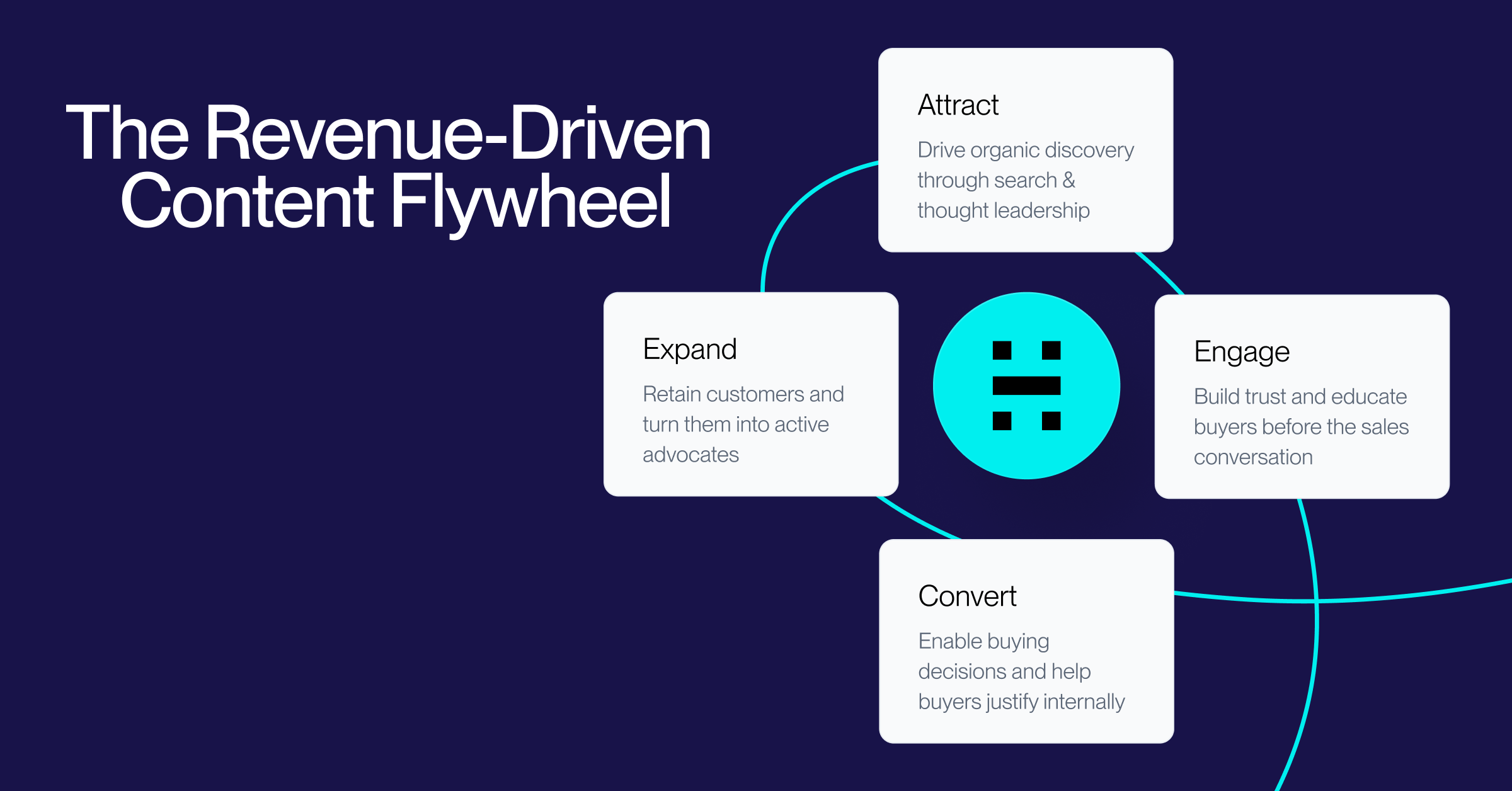
Creating the Revenue-Driven Content Flywheel: A Framework for B2B Content That Drives Pipeline
Learn how to build a revenue-driven content flywheel that connects content to pipeline and revenue. Replace the outdated funnel model with a compounding system that turns every asset into measurable ROI.
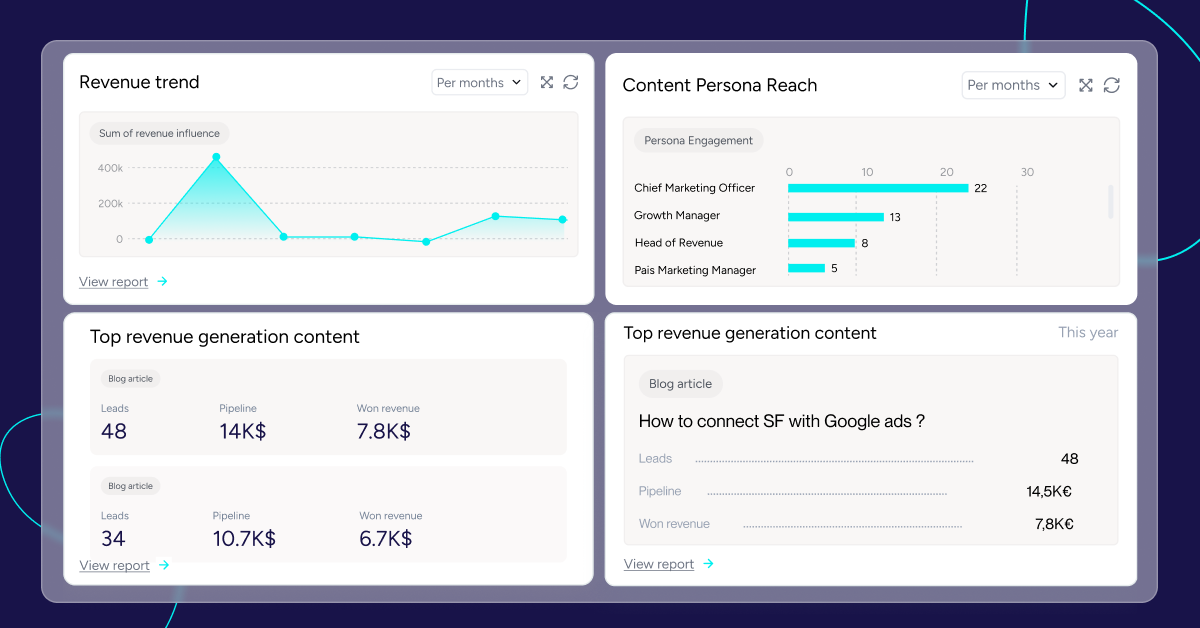
10 Best Content ROI Tools to Prove Content Drives Revenue
Compare 10 tools that connect blog posts and assets to pipeline. Features, pricing and how each handles multi-touch attribution for content teams.
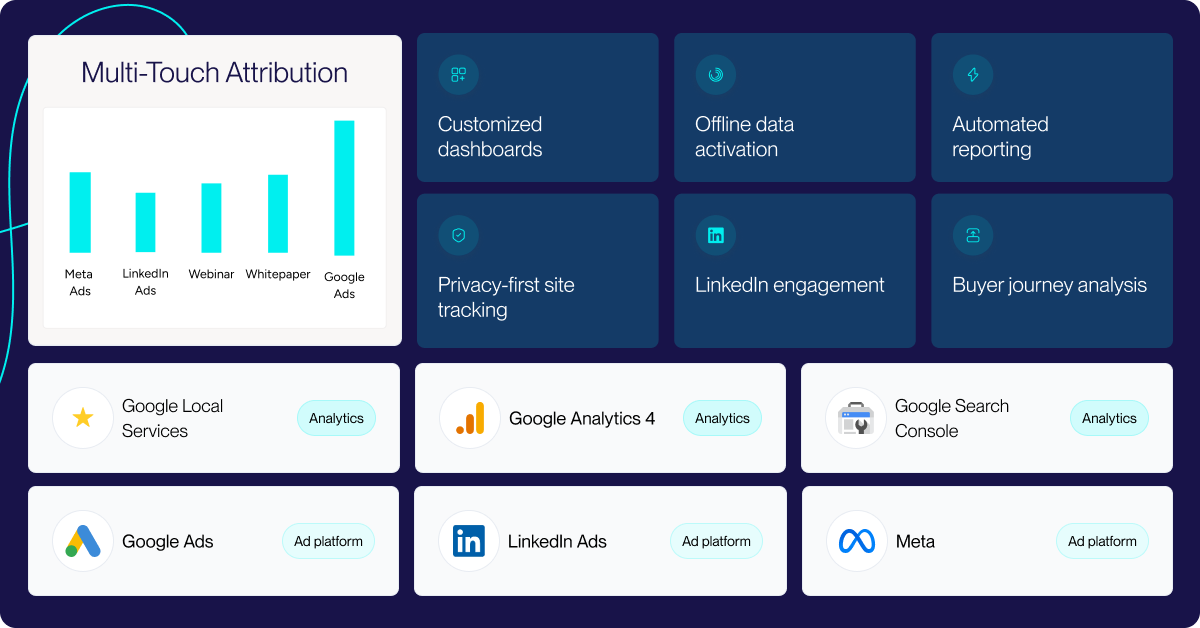
15 Best Marketing Attribution Software Compared (2026)
An honest comparison of 15 attribution platforms: real pricing, Salesforce and HubSpot depth, cookieless tracking. No vendor fluff, scored side by side.
.svg)
Ready to track prospects from lead to close with Heeet?
Heeet gives marketers and sales professionals at IT & Security firms turn geuss work intro informed decisions that drive revenue while meeting the same secruity technical standards you provide your clients.