
Read time :
Agentforce vs Claude: What Sales and Marketing Can Do Today
Did you scroll past Marc Benioff's eleven-word post on X: "The era of Super Intelligence is here. Well, "AIForce is officially SIForce." If you did, you were one of about 2.1 million people who saw it, and almost as many people have an opinion.



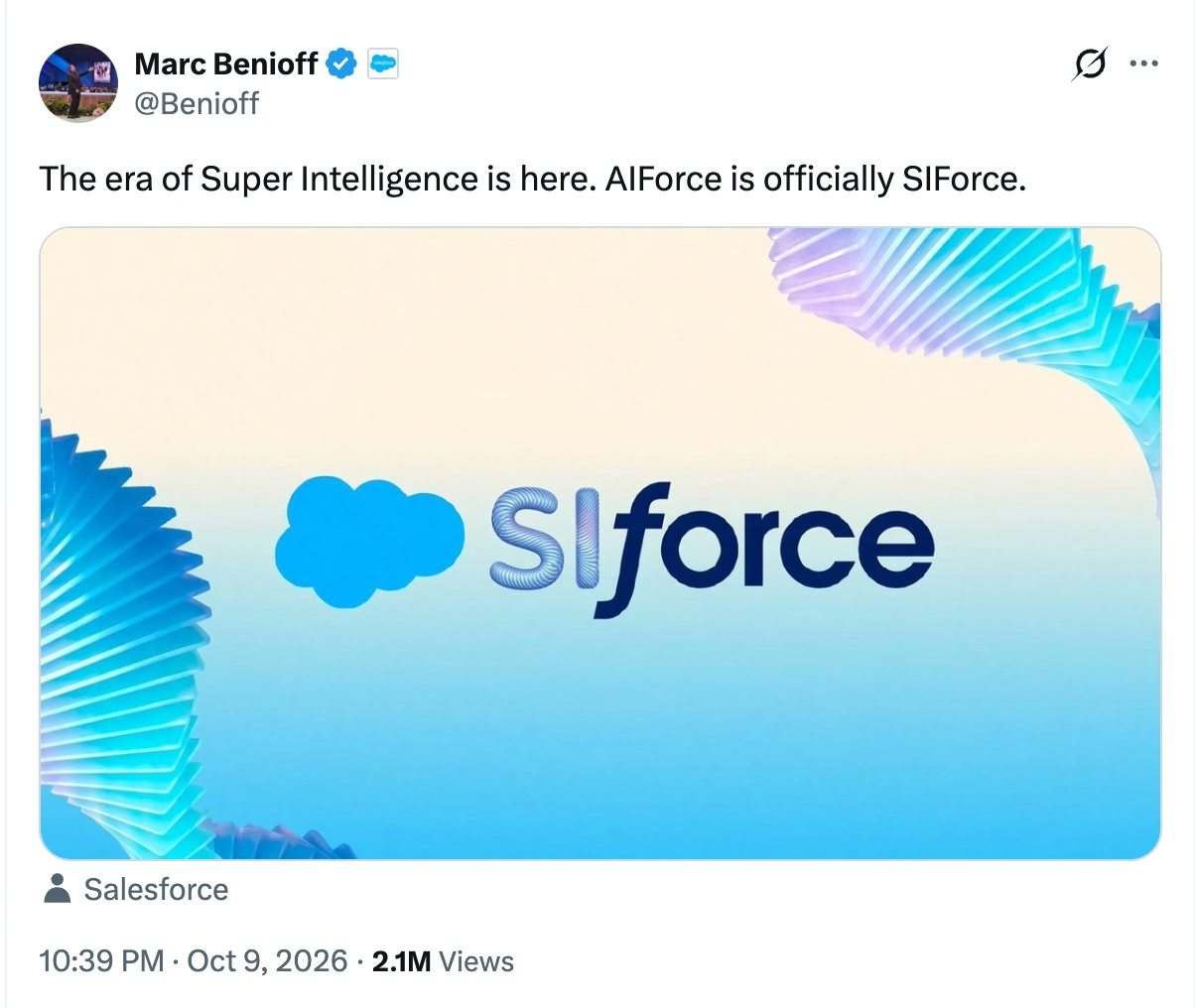
Leaving our two cents about product naming aside, we wanted to explain where AIForce, or SIForce, stands today, how it fits into the AI-powered Salesforce universe for sales and marketing teams, and whether they can start leveraging it reliably in their org.
That post came at the tail end of a crowded six-week announcement period; here's the timeline:
- Salesforce and Anthropic announced Claudeforce on 26 August.
- Salesforce put the Claude connector into beta 11 days earlier, on the 15th, with 37 prebuilt sales skills.
- Two days later, Salesforce published a notice describing future Flex Credit charges for registered agents accessing its platform through MCP or APIs.
So a revenue leader looking to get started this quarter has a fair question. How much will the agent calls cost for a month's worth of work without putting limits on the team, and if Claude can read the pipeline, update the opportunity and draft the follow-up, why pay for Agentforce? Is ClaudeForce considered an agent call?
It's hard to wrap your head around all the changes and come up with a plan of action.
My answer is that you wouldn't pay for Agentforce for most of the work your team does by hand today. A few jobs still belong to Agentforce. We argue that they're fewer than the keynote suggested.
What do Agentforce, SIforce and Claudeforce each mean in October 2026?
Agentforce is Salesforce's agent platform, and it hasn't been renamed, even though Salesforce has dropped the branding in certain places, such as Sales Cloud and Service Cloud. SIforce is the new name for AIforce, which Benioff recently introduced on a whim; it's the layer that lets outside agents access Salesforce data and actions. Claudeforce is the name of the Salesforce and Anthropic partnership. Salesforce in Claude is the plugin teams install, hoping it will minimize their interaction with the Salesforce interface.
SIForce is the name Benioff announced for AIForce, the enterprise harness that exposes Salesforce data, workflows and actions to outside agents. Claudeforce is the name of the Salesforce and Anthropic partnership. Salesforce in Claude is the plugin teams install, hoping it will minimize their interaction with the Salesforce interface.
At least that's what I'm hoping for.
That's five different names, and three of them date from the last ten weeks. In short, Salesforce product naming is rarely straightforward. Nonetheless, here's a breakdown in the table below
The Salesforce rename follows a 29 September executive order telling US federal agencies to say "super intelligence" where they used to say "artificial intelligence."
Looking at the last two rows, we see that Claude sits inside Agentforce, and Salesforce sits inside Claude. It seems a bit like the Spider-Man meme pointing at himself.

For a lot of orgs, the model doing the reasoning is the same in both. What differs is where the work happens and who starts it.
That does not guarantee the same model version, context, tools, instructions or results. The more useful distinction is where the work happens, what tools are available, and how execution is controlled.
What can sales teams do today with Agentforce and with Claude?
Sales teams can use Agentforce to run agents that prospect, nurture and score deals inside Salesforce without a rep starting each task. They can use Salesforce in Claude to prepare for meetings, review the pipeline, and update records by asking, with the rep approving each change. The first is automation. The second is assistance.
Salesforce in Claude caters to sales reps preparing meeting briefs, reviewing the pipeline, and updating records by in plain language, with the rep approving each change.
Agentforce is positioned as the automation living in Salesforce. The Claude plugin is sold as assistance that lives where people work day-in and day out today.
What Agentforce does for sales
Sales Cloud has carried the name Agentforce Sales since October 2025, and Winter '27 added an agent side. According to Salesforce Ben's release roundup and partner write-ups, the release includes:
- A prospecting agent you can now schedule, with an activity log of what it did.
- Agentforce Engagement (the renamed Lead Nurturing agent), where you choose whether a human reviews every email, only the first one, or whatever a custom Flow decides
- Opportunity scoring that reads conversation data and engagement signals alongside the standard fields.
- Pipeline Forecasting, formerly Forecasts, shows deal risks and agent activity next to the number.
Check the status of each with your account executive. The write-ups I read don't say which of these are generally available and which need an add-on.
What these have in common is the trigger. A schedule fires, a lead arrives, a stage changes. No reps had to type anything to do it all.
What Claude does for sales
Salesforce in Claude gives a seller 37 skills in a chat window. Anthropic's documentation groups them into account research, call prep, pipeline review, and CRM updates, including renewal prep, a QBR deck draft, and turning call notes into a follow-up message plus proposed Salesforce changes.
Three details decide how far you can take it:
It sees only what the signed-in user's Salesforce permissions allow.
Claude proposes each write and waits. The rep picks "Allow once," "Always allow," or "Deny"
It's a beta that Salesforce has to approve your org for, and the documentation says nothing yet about usage limits.
Outside Salesforce, Claude also reads Slack, calendar and email if those connectors are on. Agentforce doesn't assemble a renewal brief that pulls from all four as easily.
What can marketing teams do today with Agentforce and with Claude?
Marketing teams get more from Agentforce than from Claude right now. Agentforce Marketing ships agents that plan campaigns, create content and build journeys inside Marketing Cloud. Salesforce in Claude ships no marketing skills at all. Marketers can still query campaign and pipeline records through Claude, with answers limited to what those records contain.
Does Agentforce fill the marketing skill gap?
Winter '27 reporting describes two agents worth knowing by name. The Marketing Goals Agent takes a goal, a budget and a target audience and proposes the campaign, channel and timing. The Content Agent drafts campaign content in your brand voice. Account Engagement customers also get a campaign built from a single prompt, audiences described in ordinary language, and completion actions that now run in Flow Builder.
All of that ends in execution: an email sent, an SMS queued, a journey started. Claude can draft the email. It can't send it to 40,000 contacts with consent checks and an exclusion list.
What Claude does for marketing
Currently, Claude has no marketing skills dedicated to Salesforce. Sales got 37 to start, and marketing has to wait it out, but dedicated skills will come, and I assume you can replicate agents in the near future.
What useful data can a marketer access from the comfort of Claude? A marketer with a Claude seat and Salesforce access can still ask questions of the Campaign, Campaign Member and Opportunity objects through the plugin's connector or Salesforce's hosted MCP server. That means you can get ad hoc analysis done in seconds. Just ask which channels touched open opportunities this quarter, and you'll get a paragraph summary, with no report to build.
However, the quality of that answer depends on the data Claude can access from your CRM. If you don't adequately track the customer journey and attribute marketing interactions, no agent or frontier model can answer the question for you.
We'll touch on that more below.
How does Agentforce compare in cost to working in Claude?
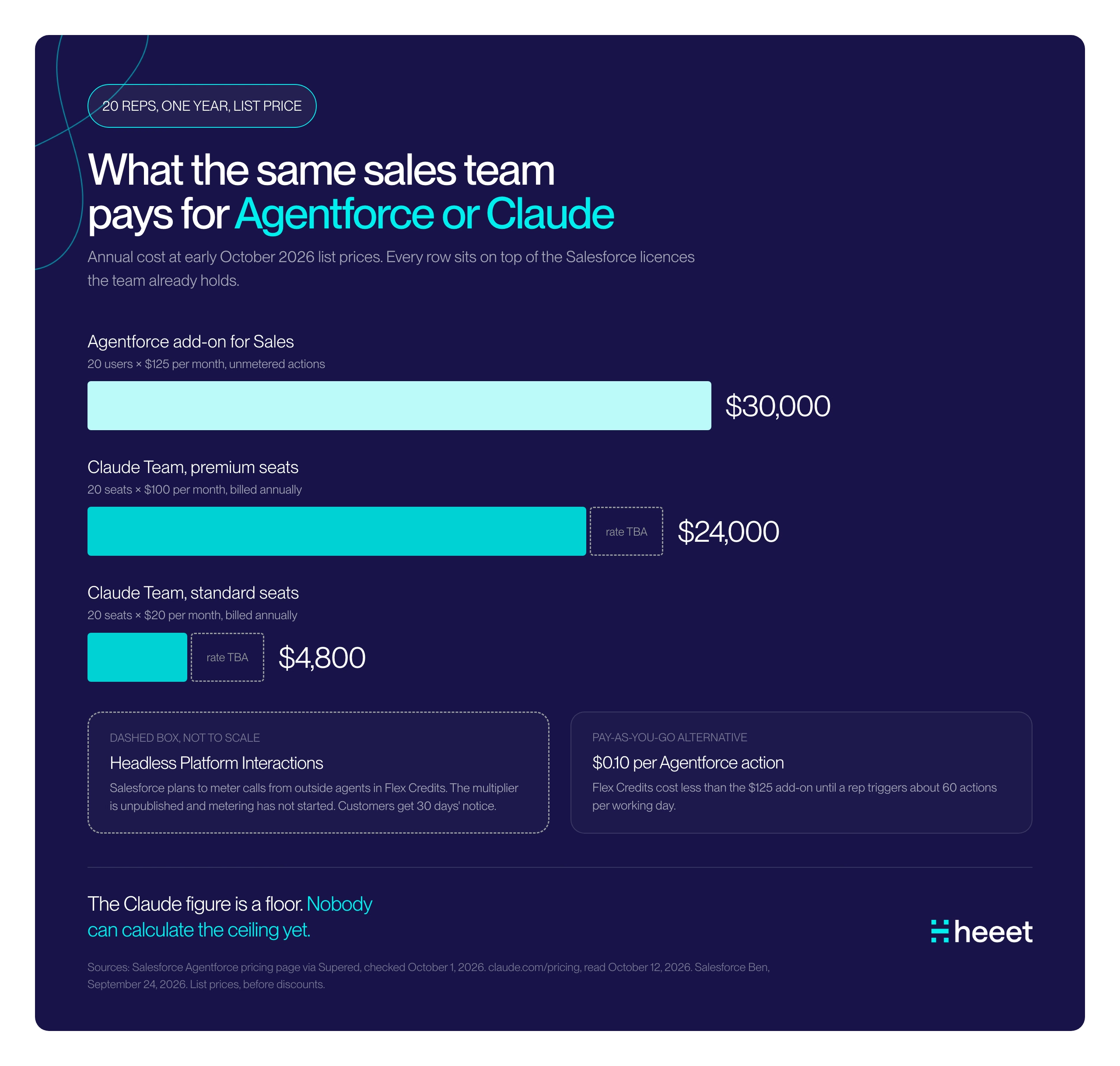
Agentforce is priced by action or by user: $0.10 per standard action through Flex Credits, or $125 per user per month for unmetered use. Claude is priced by seat: $20 per user per month on a Team standard seat billed annually. How much you can get done with the $20 seat depends on the type of work you're doing; it may be enough for most reps, but if they're pending Salesforce charges on outside agent calls, that will certainly increase the cost to get work done.
List prices, as published or reported in early October 2026:
Even with the costs on outside agent calls to Salesforce, I'm not sure that teams will get the dollar value they need from Agentforce today.
Take a 20-rep team for at least one year.
- Agentforce add-on for Sales: 20 × $125 × 12 = $30,000
- Claude Team standard seats: 20 × $20 × 12 = $4,800
- Claude Team premium seats, for heavy users: 20 × $100 × 12 = $24,000
Pay-as-you-go Flex Credits beat the add-on until a rep triggers about 60 actions per working day. That's when 15,000 actions a year at $0.10 equals the $1,500 annual licence.
Before anyone forwards the $4,800 figure to finance, keep two things in mind.
Both columns sit on top of the Salesforce licences you already pay for. And Salesforce published a help notice on 17 September saying successful calls from registered agents over MCP or the API will be metered as "Headless Platform Interactions" and paid for in Flex Credits. Salesforce Ben reported that the multiplier is still unpublished, that metering hasn't started, and that customers get 30 days' notice before it does. Whether Salesforce in Claude traffic falls under that meter hasn't been stated.
So the Claude number is the floor. How far above that you'll land is unknown because of the opaque pricing.
Why would you use Agentforce when you can work in Claude?
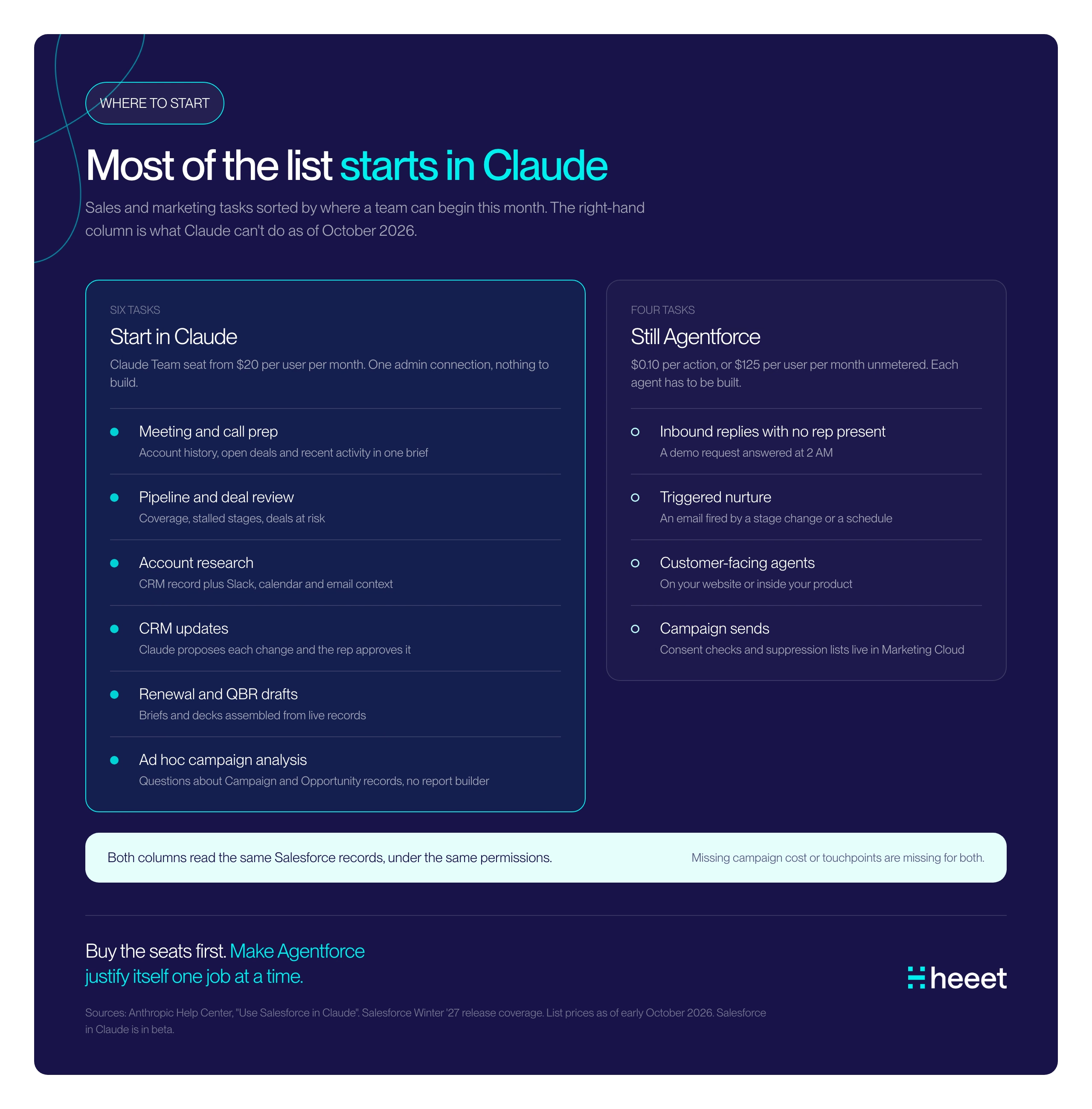
For most day-to-day sales and marketing work, you wouldn't. Claude reaches the same Salesforce records, often runs on the same model, costs about a sixth as much per seat, and needs no agent built first. Agentforce still proves its worth by running without someone involved for customer cases and campaign sending. How effective either use case is still up for debate. Do a quick Reddit search, and you'll see where the autonomous agents start to struggle.
But let's get back to pricing comparisons. Start with the models you get in Claude and Agentforce.
Claude is the default reasoning engine behind Agentforce Coworker and Slackbot. You can also select it in Atlas. A team whose Agentforce agents run on Claude is paying Salesforce $125 a month per user for reasoning that Anthropic sells for $20. And let's not forget, you can't always choose which model Agentforce uses. Are you getting frontier Opus 5.5 and Fable when you need them? Are you being charged for a lesser model that delivers weaker results? Or maybe the opposite is true: you're paying for frontier reasoning when you need a simple task done with the fewest tokens possible.
That per-conversation choice of model, and during setup of an agent as well, is what sets my use of Salesforce and other connectors in Claude apart from interfaces that are essentially wrappers that don't show me what exactly is happening under the hood,
Then there's the complexity of the build. An Agentforce agent has to be designed: topics, actions, guardrails, testing. Custom agent builds in Heeet's customer base have taken three to nine months. Salesforce in Claude takes one admin connection, after which a rep types a question.
Claude also sees more of the working week. Slack threads, calendar, email and documents sit next to the CRM record in one conversation. Most deal context never made it into Salesforce in the first place.
Now look at what Salesforce itself did this autumn. It built the plugin that puts its CRM inside Claude. It made Claude the default model in Slackbot. Everyone's read is that Salesforce knows much of this work will leave its interface and intends to charge a fee at the door when it does. That's a rational plan. It's also an admission about where people want to work.
So what's left for Agentforce? Three jobs, as of October 2026:
- Work that starts with no person: an inbound demo request answered at 2 AM, followed by a nurture email fired by a stage change.
- Anything customer-facing on your website or in your product
- Marketing execution. Claude can draft the campaign, but the send, the consent check and the suppression list live in Marketing Cloud.
Those are real features that seem to be bringing in revenue. Salesforce reported Agentforce ARR above $1.5 billion for the quarter ending 31 July, up more than 240% year over year, so somebody is buying them. Analysts did note the metric was widened that quarter to include Slackbot and Headless 360.
If I were starting from zero this quarter, I'd buy Claude seats first. Then I'd make Agentforce justify itself one job at a time, with an action count attached to each.
What do Agentforce and Claude both need before they can answer a marketing question?
Both tools need the full marketing journey written into Salesforce as records they can read to make strategy and allocation decisions: every touchpoint a buyer had, what each paid touch cost, and how much revenue credit it earned.
Without that data coming from a single source, neither tool can tell you where to allocate next quarter's budget, which leads are likely to convert, or which content, and webite pages show up in deals that close faster.
Both read the same Salesforce records, so they interpret the same gap-riddled data. A frontier model doesn't change that, nor does working in Claude with every other connector setup. If ad cost, anonymous web sessions and multi-touch credit were never written to the CRM, Opus 5.5 can't link them to closed-won revenue and thus reason about them any better than a report can.
Regardless of whatever update ships in Claude or Agentforce, the same questions keep landing in my inbox:
- Why does this lead have three different sources depending on which report I open?
- Why can't we reproduce last quarter's pipeline number?
- Why does Campaign Influence say one thing while the opportunity report says another?
You need to answer the questions above before you can ask any agent where your budget should go.
Every team wants to be able to ask something along the lines of "Should we move $40,000 from LinkedIn to Google Ads next quarter, and what happens to pipeline if we do?
But those questions also need the most data, from several sources. Here's what an agent has to read to answer it, next to what a standard Salesforce org usually holds:
The revenue attribution mentioned in the graph is where most agents fall short. Salesforce Campaign Influence relies on reps adding Contact Roles to opportunities, and we hear the same story in nearly every demo: reps skip the step, and marketing loses the credit.
In the orgs we audit during onboarding, completion runs between 30 and 50 percent. Ask Claude or Agentforce which campaigns influenced Q3 pipeline in an org like that, and you'll get an answer built from fewer than half the deals. Then someone makes a budget decision on the flawed results.
This is the work Heeet does natively in Salesforce.
It writes every touchpoint, along with ad cost and revenue credit, into Salesforce as native records, calculating influence at the account level so a missing Contact Role doesn't erase the campaign. Because those records live in the org, they're available to whichever agent your team works with:
- Agentforce agents you build yourself, which read Heeet objects like any other Salesforce data.
- Heeet's Analyst Agents. They answer questions like CPL and ROAS by campaign or pipeline velocity by source inside Salesforce, and post scheduled summaries to Slack and email.
- Claude queries Heeet objects directly through Salesforce in Claude or the hosted MCP server, within the signed-in user's permissions.
The answers change once you have the right data. Ringover is our clearest example. With ad cost and revenue in Salesforce, Heeet sent revenue-based conversions back to Google Ads, and Ringover's ROAS improved 14%, according to their case study. The same journey data showed that 33% of leads who visited the pricing page became opportunities, and that visitors landing on pages cited by AI assistants converted twice as fast. A marketing team needs exactly those inputs to decide which leads sales should call first and which content deserves the next dollar.
The question that pays for all of this is which content shows up on winning journeys, and which of those journeys close fastest. Native Salesforce can't answer it, because stage history isn't linked to marketing activity. With Heeet, every touch is timestamped against the opportunity's stage changes so that you can hand Claude or an Analyst Agent a prompt like this:
Compare closed-won opportunities from the last two quarters that closed in under 60 days with those that took longer. Which content, ads and events appear on the faster journeys and not on the slower ones? Show the spend behind each and the stage each touch landed in.
The answer tells you which content and ads to push, when, and where. Marketing sees which case study, webinar or retargeting ad sits on the deals that close in half the time, what it cost, and where in the sales cycle it does its work. Budget moves toward those assets and away from the ones that only appear on stalled or lost deals.
Sales reaps the benefits as well.
A rep working a new opportunity can see which of those assets the account has already seen and send the next one the fast deals had in common. Heeet's Lead Intelligence puts that journey on the lead and account record, with a recommended next step and talking points, so the same history is there whether the rep opens Salesforce or asks Claude before a call.
How should a sales or marketing team get started this month?
Start with the Claude seats your team may already have, but test marketing questions against your own data before you trust any answer with budget. Pick the questions next quarter's plan depends on, run them, and check how many deals each answer covered. The gap between that number and your total pipeline is your first finding.
Here's a test run for the month:
Write three to five questions that will concern budget. For example:
- What's the CAC by paid channel for the first six months of the year?
- Which campaigns influenced closed-won revenue?
- Which content appears on the deals that closed fastest?
Ask them in Claude, and in Agentforce if you have it. Ask each tool to list the opportunities and cost records it used.
Check the common denominator. Most likely gaps in touchpoints recorded and contact roles logged.
That could result in an answer that only covers 140 of 400 closed-won deals, or reports ROAS with no cost data behind it, pointing to a data problem, not a model problem.
Pull two numbers: your Contact Role completion rate, and whether ad spend reaches Salesforce at all. Together they explain most of the gaps from step 3.
Keep a list of what neither tool could do. Some of it will be Agentforce work, because of its deeper integration with Service Cloud and Marketing Cloud sends. The rest is usually missing journey and attribution data, which no agent can fill in.
Also, find out what your Salesforce edition already includes. Salesforce Foundations is listed at $0 and gives access to Agentforce Builder and Prompt Builder. Newer Sales editions are reported to include a pool of Flex Credits per org. Ask your account executive for both numbers in writing.
For each workflow you test, record:
- The job completed and the quality of the result.
- The tools and data sources accessed.
- How many opportunities, campaigns and cost records the answer drew on.
- The human review required.
- The actions or other consumption units used, and the license and usage charges they triggered.
- Failures, missing data and operational limits.
The first month may cost more than the steady state will. What you get for it is an evidence-based split: which workflows belong in Claude, which justify Agentforce, and which need the marketing journey and ad cost in Salesforce before either tool should touch a budget decision. If step 3 shows the data is the gap, see how Heeet writes that journey into Salesforce.
Ready to track prospects from lead to close with Heeet?
Heeet gives marketers and sales professionals at IT & Security firms turn geuss work intro informed decisions that drive revenue while meeting the same secruity technical standards you provide your clients.