

Read time :
Are you measuring post acquisition marketing activities?
Understand how post-acquisition marketing attribution reveals the true impact of marketing activities throughout complex B2B sales cycles, beyond simple lead creation.

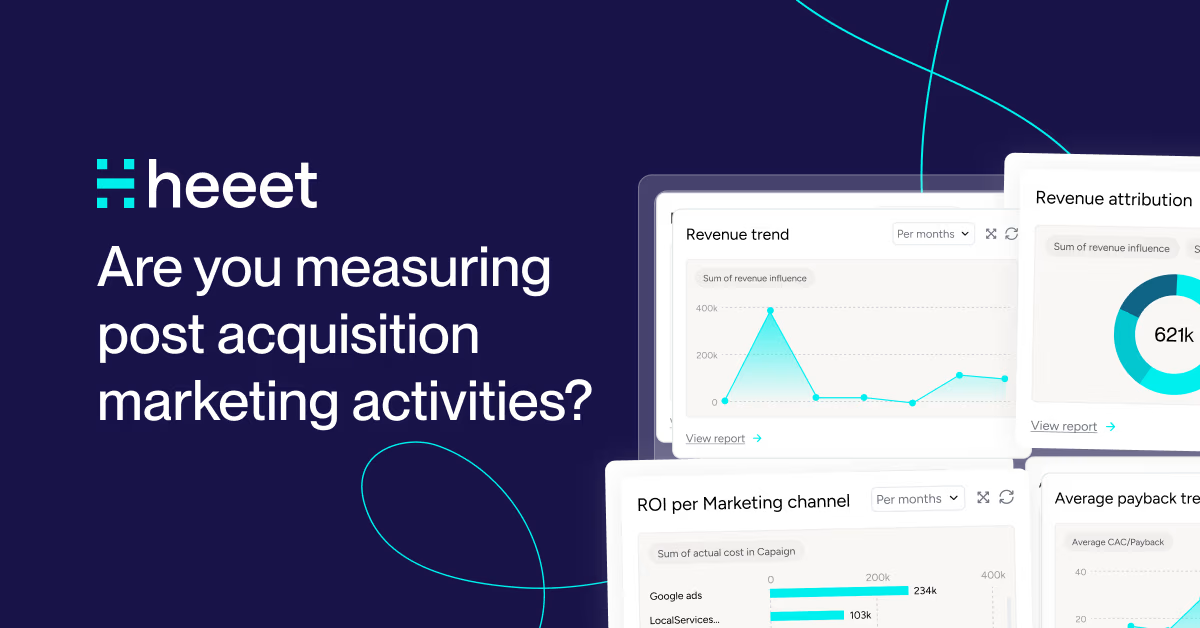

Pre vs. Post-Acquisition Marketing Activities
In B2B marketing, attribution often focuses on the activities that happen before a lead is created in CRM. While this “pre-acquisition” phase is critical, it only tells part of the story. In reality, many of the most influential marketing interactions happen after a lead already exists in Salesforce — during the sales cycle itself.
Pre-acquisition activities are all marketing interactions happening before a lead, contact, or opportunity is created in Salesforce. These activities typically include SEO visits, paid campaigns, webinars, social media engagement, referrals, or direct traffic that ultimately drive a prospect to convert.
Post-acquisition activities are all marketing interactions happening after the prospect already exists in Salesforce. Once a lead or opportunity has been created, marketing continues to influence the buying journey through nurture campaigns, webinars, retargeting ads, product announcements, events, white papers, and many other touchpoints.
This distinction becomes especially important for companies with long and complex sales cycles. Measuring only first-touch or lead creation attribution ignores a large portion of marketing influence that happens while deals are actively progressing through pipeline.
The challenge for modern RevOps and marketing teams is no longer simply identifying how opportunities are created, but understanding how marketing contributes to opportunity progression, stakeholder engagement, and ultimately revenue generation.
Post-Acquisition Use Cases and How They Impact Marketing Metrics
2.1 Long Sales Cycles
Consider a prospect who first discovers your company through a LinkedIn social post. They leave your website, later return through an external referral link, and eventually convert after a direct visit by filling out a form. At this stage, the prospect becomes a lead in Salesforce and is associated with a $1,000 opportunity.
For many attribution models, the story would stop there.
However, during the sales cycle, the prospect continues interacting with your marketing channels. They revisit your website directly multiple times, are later exposed to a Google Ads campaign promoting a white paper, and finally download that white paper after returning through an organic SEO visit.
Without post-acquisition tracking, all of these later interactions remain invisible from a revenue attribution perspective. Marketing teams may only credit LinkedIn, direct traffic, or the original conversion source while ignoring the role played by retargeting campaigns, SEO, and content marketing during the actual buying process.
With post-acquisition attribution, every interaction during the opportunity lifecycle becomes measurable. Marketing teams can finally understand how channels and content contribute not only to lead creation, but also to pipeline acceleration and revenue influence.
2.2 Multiple Stakeholders
Complex B2B deals rarely involve a single buyer.
Imagine everything starts with John Doe, an evaluator at Acme. John fills out a demo form on your website and an SDR converts him into an “Acme New Logo” opportunity in Salesforce.
During the sales process, John brings Sarah and Mike into a pre-sales meeting. Your sales representative creates both Sarah and Mike as contacts directly in Salesforce, with a contact source marked as “Sales.”
A few weeks later:
- Mike attends one of your webinars
- Sarah submits a LinkedIn Lead Gen form after engaging with one of your campaigns
This is where post-acquisition tracking becomes critical.
Even though Sarah and Mike were initially created by sales, their later marketing interactions provide valuable buying signals. Webinar attendance and LinkedIn engagements should not remain isolated at the contact level. These touchpoints should automatically enrich every layer of the CRM:
- Sarah and Mike contact records
- The Acme account record
- The “Acme New Logo” opportunity
This unified visibility allows marketing and sales teams to understand how different stakeholders engage throughout the buying journey. It also enables more accurate attribution models by recognizing the influence of marketing across the entire buying committee — not only the original lead source.
2.3 Sales and Marketing Alignment
Post-acquisition tracking also plays a major role in aligning sales and marketing teams.
Imagine Tom, an SDR at PiedPiper, receives a list of target accounts loaded into Salesforce by the RevOps team. One of his targets is John Doe at Acme. Tom starts his outbound outreach sequence using calls, emails, and LinkedIn messages.
Like many modern B2B buyers, John is not immediately willing to engage with sales before doing his own research. Instead, he begins his buying journey independently. He visits the PiedPiper website multiple times through different channels such as SEO and direct traffic, explores several content pieces, and researches potential vendors.
Eventually, after comparing solutions and validating options through ChatGPT and other research sources, John returns to the website and submits a demo request form.
Without post-acquisition tracking, sales outreach and marketing engagement remain disconnected. Marketing may only see an inbound demo request, while sales may believe the opportunity was entirely outbound-generated.
In reality, both teams contributed to the conversion.
Outbound prospecting initiated awareness and account targeting, while marketing channels educated and nurtured the buyer throughout the decision-making process. Post-acquisition attribution bridges this gap by giving both teams a shared understanding of how buyers actually move through modern B2B journeys.
Rather than competing for attribution, sales and marketing can finally operate with a unified view of pipeline influence and revenue contribution.
Measuring Post-Acquisition Influence on Revenue in Salesforce
With Heeet, marketing teams can finally measure the true impact of their activities beyond simple lead creation. By applying customizable attribution models directly in Salesforce, Heeet allows marketers to include all “post-acquisition” touchpoints — webinars, retargeting campaigns, content downloads, paid campaigns, events, nurture emails, and more — into pipeline and revenue attribution.

This means that every interaction happening during the sales cycle can contribute to opportunity influence and revenue reporting, not just the original acquisition source. Whether a prospect engages with marketing after becoming a lead, or additional stakeholders interact with campaigns after being created by sales, Heeet automatically connects those touchpoints across contacts, accounts, and opportunities.
As a result, marketing teams gain broader target coverage, more accurate attribution reporting, and a complete view of how marketing contributes throughout the entire customer journey. Instead of losing visibility on critical engagement happening after lead creation, teams can ensure no marketing activity is left behind when measuring pipeline generation and revenue influence.
Other articles
Are you separating marketing driven VS sales driven acquisition costs and interactions?
CAC (Customer Acquisition Costs) a metrics calculating how much you spent to acquire customers by dividing marketing + sales costs per the number of customers within a specific period of time
.svg)
Ready to track prospects from lead to close with Heeet?
Heeet gives marketers and sales professionals at IT & Security firms turn geuss work intro informed decisions that drive revenue while meeting the same secruity technical standards you provide your clients.