

Read time :
Account Prioritization: How to Build a Framework Beyond ICP and Target Lists
Access to information and tracking tech have made account prioritization a science that allows every B2B team to find the right blend of data and signals to prioritize account’s closest to a sale. Between your own revenue and client data from the CRM and outisde intention signals and firmagraphics you can create the prioritization framework built to pinpoint your next target.

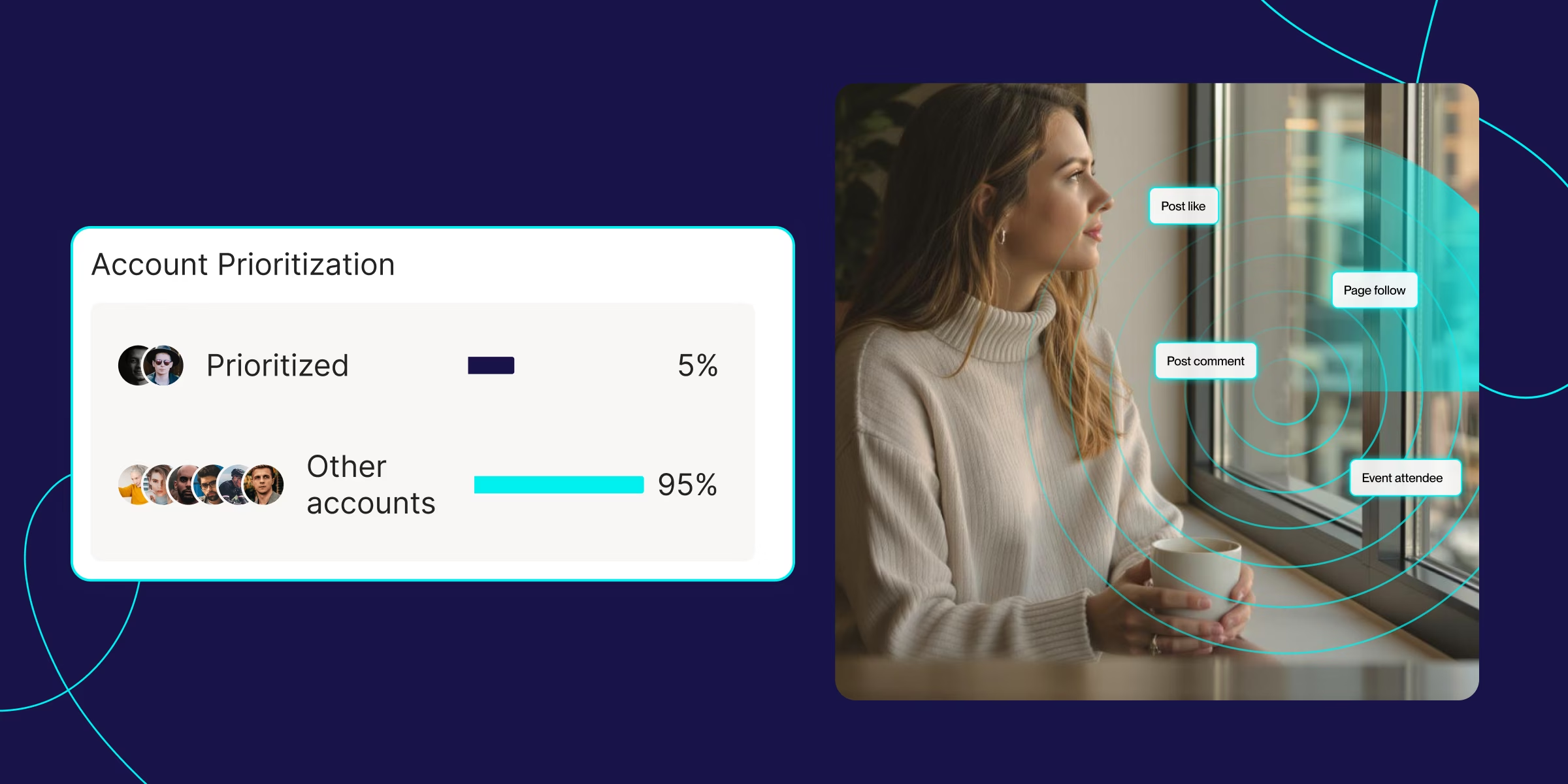

That still doesn't change the fact that we speak to several B2B teams a week that still focus on their enterprise account dream list without the data to support their strategy.
A list of 300 named accounts is not an account prioritization strategy.
It's a wishlist. Sales drew it up during quarterly planning, marketing went along with it, and everyone agreed to call it a plan.
I myself, as a head of marketing, have fallen victim to saying yes to a wishlist without questioning the accounts sales puts on a whiteboard.
Prioritization starts far too often from here. A single list of big names that you need to sign ASAP. Every account treated the same, regardless of category, product fit, prior wins, and without any indication that the accounts are currently in the market for your solution.
Let's look at that list of 300 shiny names. There's no way to say which fifteen deserve real attention this quarter and which 285 don't. Why 15? I've stated the rule before, but the age-old 5% rule of companies in your category actually in market versus the 95% that are not currently in search, or have never heard of you, not only brings sales and marketing back to reality, it helps you truly focus on the 5% of companies that fit your ICP that are showing all the signs you're likely to close.
If you're making tailored campaigns and assets for the 95%, you're spreading the budget and precious time across companies that won't convert this quarter, however sharp the creative.
This article is the framework I use to fix that. It shows you how to take one largely arbitrary account prioritization list and split it into three, based on fit, awareness, engagement, and hard evidence of buying intent, so marketing and sales stop guessing and start agreeing on where the effort goes. No opinions. No "leadership says we need to sign this logo", just criteria you can defend in front of a sales leader.
Why isn't a target account list an account prioritization strategy?
Because one is looking at what you want to close, and the other is showing you the accounts you should prioritize because they're likely to close. Prioritization is about research, sequencing and intensity: deciding who gets the 1:1 attention now versus who gets nurtured for later. A static list of logos can't make that call.
Don't fall into the same trap I fell into as a head of marketing: sales hands marketing a long list of accounts per market without the research done to justify their inclusion on said list.
You'll end up running campaigns that aren't focused on personalizing messaging and overall strategy for the 5%, and you'll end up with copy and paid strategies built for demand generation, not capture. Months will go by without pipeline closing, and expectations left unfulfilled. Why does the program end up stalling, despite defining the ICP, building buyer personas, and mapping pain points?
The likely answer is you treated every account on a list that was far too long the same.
Those 300 accounts sit at wildly different stages. A large percentage may have never heard your name. Some downloaded a guide last quarter and went quiet. A handful have three buying-committee members reading your pricing page right now.
When you run a single motion across for the bunch, you underserve the few that are ready to purchase and waste the limited time of sales associates on unqualified leads.
As repetitive as it may seem, alignment is what saves both marketing and sales time and ensures they're working towards a shared goal. When you both work on creating the focused list, there's no room to blame marketing for weak awareness or sales for creating an ambitious list based on what they want to close versus what is closer to close.
The prioritization framework you need to keep both teams on the same page maps the 5% of accounts that are in market and showing signs of intention, while warming up the other 95% that will eventually be looking in the future.
What is an account prioritization framework?
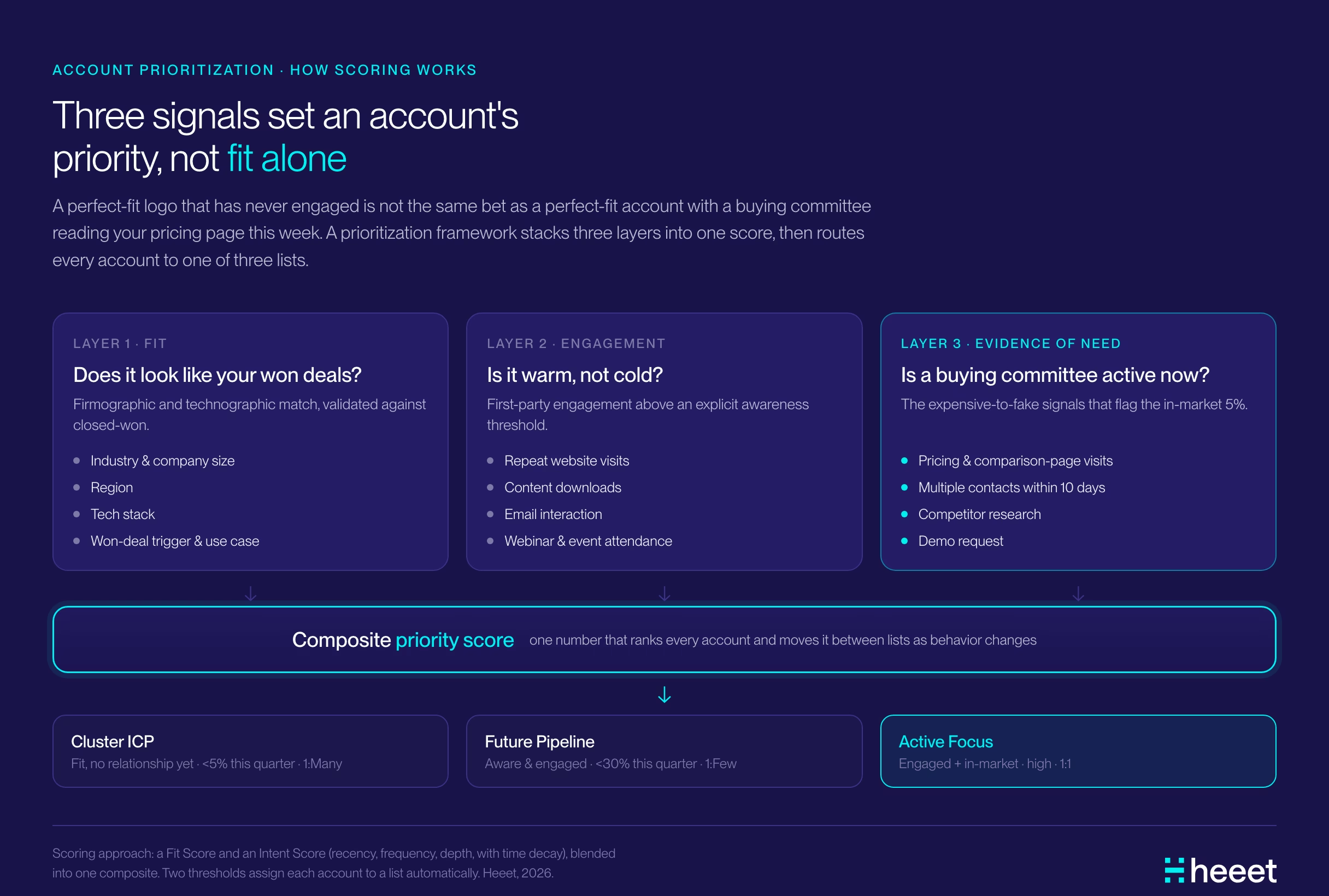
It’s your shared and documented method for ranking your ICP accounts by readiness, not just fit, so marketing and sales agree on where to spend time, budget and effort. It replaces subjective wishlists with criteria drawn from three inputs: how well an account fits your best customers, how engaged it is, and whether there's real evidence it's ready to buy.
The shift is from one dimension to three. Most teams prioritize fit alone, the classic ICP filter: right industry, right size, right region, right tech stack. Fit is necessary. It's not enough.
A perfect-fit account that's never opened an email from you is not the same bet as a perfect-fit account whose VP of Marketing just booked a demo. Your framework has to tell them apart.
A rigorous framework scores accounts on three layers:
Fit: does this account look like the deals you win? We’re talking a well-developed ICP, not just a big name matching a category
Awareness and engagement: does it know you exist, and has it engaged in ways that matter? This is where you leverage the first-party data you’ve collected from leads.
Evidence of need: are there signals a buying committee is active right now? This is the alarm that goes off internally telling sales it’s time to pick up the phone.
Score all three, and your one list naturally falls into tiers. That's the account tiering most ABM programs are missing. It's the backbone of the three-list model below.
What are the three account prioritization lists?
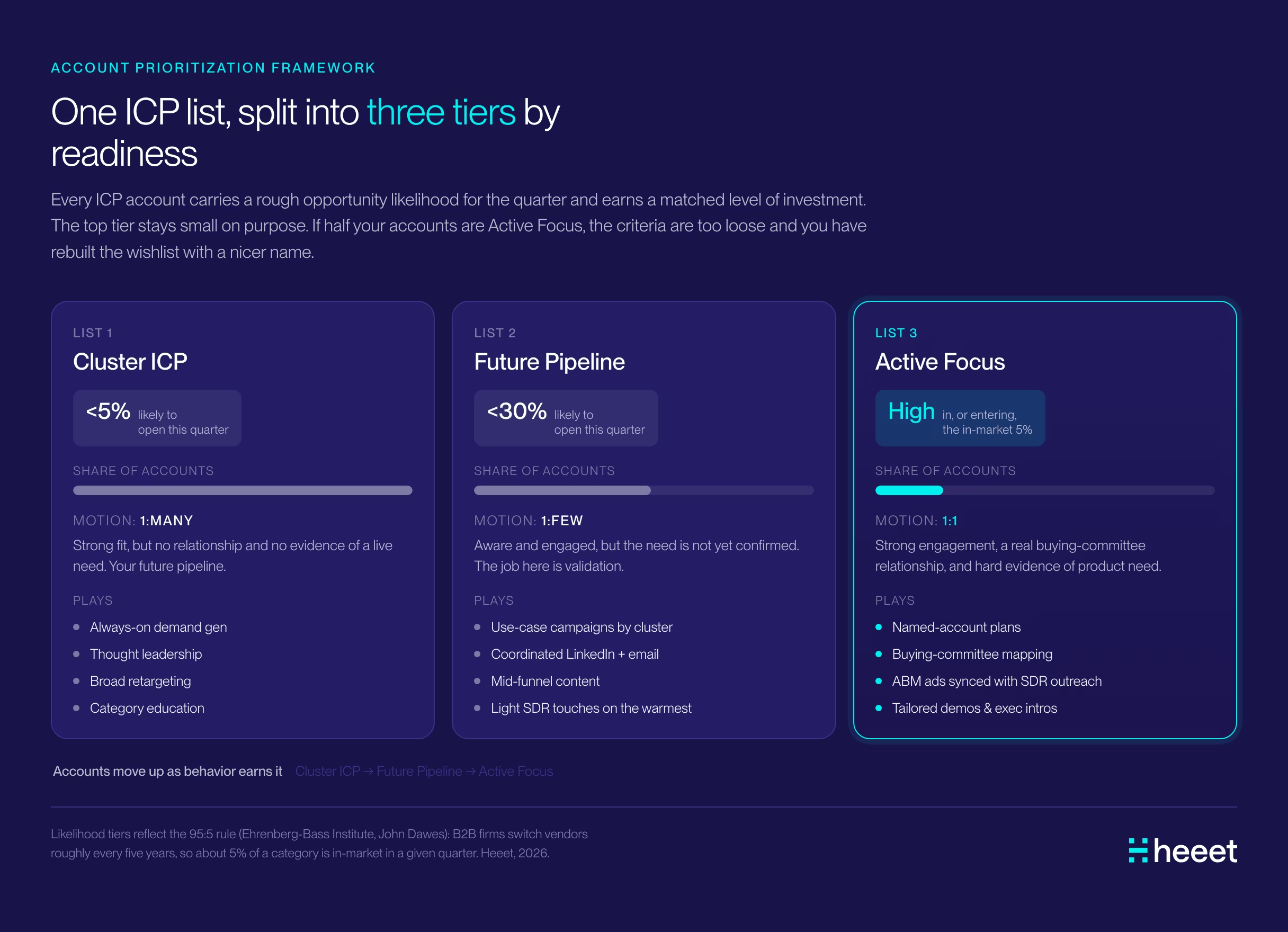
The framework segments every ICP account into three lists, based on awareness, engagement, and relationship with your brand. Each list carries a rough opportunity likelihood for the current quarter and a different level of investment. This is the account tiering that turns a flat target account list into a plan.
Cluster ICP: strong fit, no relationship yet
These accounts match the qualification criteria you pulled from your best closed-won deals, but they don't know you. There's no clear evidence they have the problem you solve, and none that they're buying now. Opportunity likelihood this quarter: under 5%.
You don't run 1:1 plays here. You run efficient 1:Many programs: always on demand gen, thought leadership, retargeting, the work that builds familiarity so that when an account does enter a buying window, you're already a name they trust. This is your future pipeline, the biggest of the three lists by far.
Future Pipeline: aware and engaged, not yet qualified
These accounts hit your awareness criteria and have engaged with your brand. You can't yet confirm they have a live need. They've been to the site, opened emails, maybe attended a webinar. Something's warming up; opportunity likelihood this quarter: under 30%.
This is 1:Few territory. Cluster these accounts by shared trigger or use case and run tailored programs that push for a clear signal of intent. The job here is validation: turn "engaged" into "engaged and demonstrably in need," which promotes them to the third list.
Active Focus: engaged, connected, and showing need
These accounts show strong engagement, an established relationship with the buying committee, and real evidence of product need. They are, or are about to be, in the 5%. Opportunity likelihood is high enough that they earn 1:1 attention from marketing and sales together, coordinated account by account to create and progress opportunities.
This list should be small. If half your accounts are "Active Focus," your criteria are too loose, and you've rebuilt the wishlist with a nicer name. Discipline here is the entire point.
How do you set the criteria for each list without relying on opinion?
You set them with data you already own: closed-won and closed-lost deals, engagement history, and buying-intent signals. Each of the three lists needs its own entry criteria, and every criterion should trace back to evidence, not to "this feels like a good account." Here's how to build each one.
Extract Cluster ICP criteria from your closed deals
Don't define your ICP in a strategy offsite. Define it from your CRM. Your won and lost deals already know who your best-fit accounts are; the work is to make that knowledge explicit.
Pull your last 20 to 40 closed-won deals in Salesforce or HubSpot. Note firmographics (industry, employee count, region, recent fundraising, office openings, SOC 2 certifications, evidence they adopted a competitor's tool, recent hiring of a position that manages your tool; for us, that would be a head of marketing), the tech they run, the trigger that opened the deal, and the use case that closed it.
This is where a combination of your own first-party data complemented by outside sources like LinkedIn Sales Navigator, Clay, and Apollo comes in handy. There's no need to reinvent the wheel, and luckily the saturated market of data and waterfall enrichment tools is consolidating. This is just the combination we use here at Heeet; feel free to use what works for you.
Once you have the outside data, pull a matched set of closed-lost deals and disqualified opportunities. Look for the attributes that correlate with losing: wrong company size, missing integration, budget mismatch.
Compare the two sets. The attributes that show up in wins and are absent from losses are your real Cluster ICP criteria. Write them down as filters, not vibes.
Do this once, and you'll usually find a couple of "obvious" ICP traits that don't predict wins at all, and one or two you'd never listed that do. That surprise is the point. It's the difference between account selection built on assumption and ABM account selection built on evidence.
Define an awareness and engagement threshold
Fit puts an account on the list. Engagement decides whether it's warm. You need an explicit line between the two, or every account looks vaguely promising and nothing gets prioritized, and they all get treated with the same untargeted marketing or overly zealous sales approach.
Set a threshold from first-party engagement: repeat website visits, LinkedIn engagement, content downloads, email interaction, webinar attendance, event conversations. A useful anchor from our own data: an account with three pricing-page visits in a single week is engaged in a way that a one-time whitepaper download isn't.
Weight recent, high-intentactions above old, low-intent ones. Let older activity decay so a burst of interest last spring doesn't keep an account looking hot forever.
Identify in-market accounts with evidence-of-need signals
This is the layer that finds the 5%. In-market accounts show buying behaviour across multiple signals in a tight window, not one isolated click. The strongest first-party data signals are pricing-page and comparison-page visits, multiple contacts from the same account engaging inside ten days, competitor-comparison research, and a demo request.
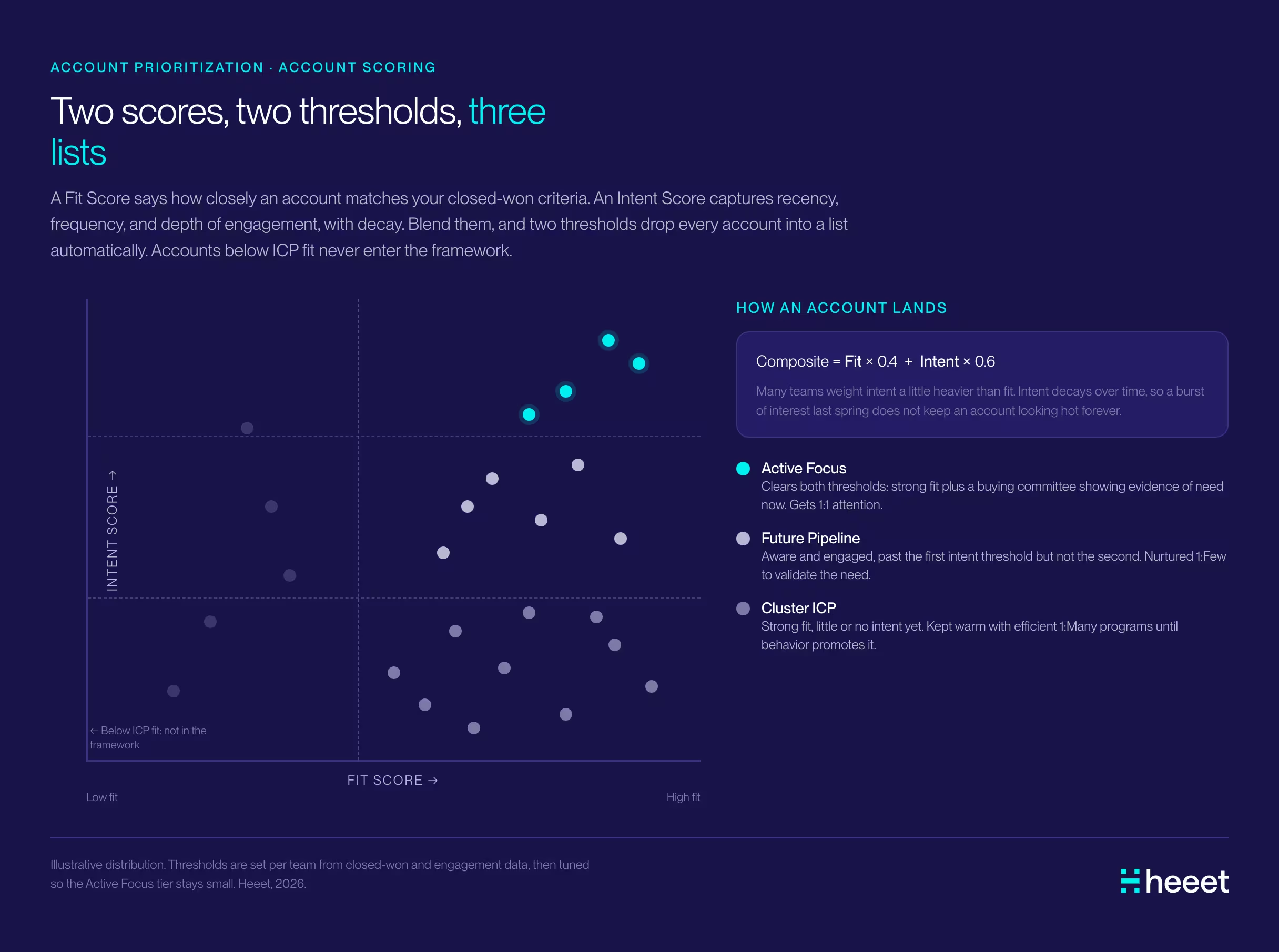
A simple, defensible account scoring model combines two numbers. A Fit Score captures how closely an account matches your Cluster ICP criteria. An Intent Score captures recency, frequency, and depth of engagement, with decay. Blend them (many teams weight intent a little heavier than fit, around 60/40), and you get one number that ranks accounts and, with two thresholds, drops each one into Cluster ICP, Future Pipeline, or Active Focus automatically. The workshop version of this fits on a whiteboard. The production version runs in your CRM and updates itself.
What playbooks do you run for each list?
Each list gets a different motion matched to its readiness. The mistake is running Active Focus intensity across all three, which burns budget, or running Cluster ICP air cover across all three, which starves your best opportunities. Match the play to the tier:
The tighter play is coordination inside a tier. When an Active Focus account's champion opens your pricing page, the SDR sends a relevant note that afternoon while a LinkedIn ad reaches two other stakeholders that week. Same account, same message, different channels, one window. That surround-the-account coordination is what separates account-based marketing from just running the same nurture sequence on a focused list.
The next best action is always a function of the signal. A swarm of pricing page visits calls for an ROI conversation and a mention of a customer reference. An integration-docs binge calls for technical validation resources. The framework doesn't just tell you who to prioritize; paired with your signals, it tells you what to do and what content to send next for each account.
How do you get sales to buy into the account prioritization framework?
You build it with sales, not for them, and tie it to KPIs both teams own. A framework marketing invents in isolation gets ignored the moment it contradicts a rep's gut. A framework sales helped define, with criteria drawn from deals they closed, becomes the shared language of every pipeline review.
Three things earn the buy-in:
Run the closed-won and closed-lost analysis with sales in the room. When a rep watches their own won deals produce the qualification filter, they stop arguing with it.
Write down what "Active Focus" means in signals, not adjectives, so both teams assign accounts to the same list without a debate.
Set one joint account-to-pipeline KPI both teams are measured on. Share a number and the "no pipeline" blame spiral has nowhere to go.
Bring this to a sales leader as a way to make their team's quarter more predictable, not as a marketing reporting project. Show them the framework concentrates 1:1 effort on the accounts most likely to convert and stops everyone chasing cold logos. That's a pitch a VP of Sales says yes to.
Where does the account prioritization data come from?
It comes from the touchpoints and outcomes already flowing through your CRM, once something connects them. The reason most teams default to a wishlist isn't laziness. It's that the signals needed to prioritize properly (anonymous web visits, ad engagement, event attendance, closed won patterns) live in separate tools and never reach the account record where sales and marketing do their work.
This is the part Heeet handles. Heeet tracks every touchpoint across your marketing, from Google and LinkedIn Ads to webinars, events, and organic content, and connects it, natively and cookielessly, to pipeline and closed revenue inside Salesforce or HubSpot. That does two things for your framework. It gives you the closed-won and closed-lost attribution history to extract Cluster ICP criteria from real deals. And it feeds live engagement and intent signals to the account record. Hence, an account moves from Future Pipeline to Active Focus the moment its behaviour earns it, instead of the next time someone manually reviews the list.
A framework is only as good as the data underneath it. When the signals are stuck in five disconnected tools, prioritization decays back into opinion within a quarter. When they land on the account in your CRM, the framework stays alive.
How to start building your account prioritization framework
You don't need a new platform to begin. You need a workshop and a willingness to let your data overrule your assumptions. In a couple of hours, a marketing and sales team can:
Analyze their best closed-won and closed-lost deals to extract real Cluster ICP criteria instead of building from guesses.
Set the awareness and engagement threshold that separates warm accounts from cold ones.
Define the evidence-of-need signals that flag in-market accounts.
Assign playbooks to each of the three lists.
Agree on the joint KPI that makes both teams accountable to the same pipeline number.
Start there. Get the three lists on a whiteboard, agree on the criteria with sales in the room, and run one quarter against it. Then wire the signals into your CRM so the lists maintain themselves. The teams that do this stop spreading themselves thin across 300 lukewarm logos and start winning the accounts that were ready all along.
Other articles
MQL vs SQL: The Handoff, Benchmarks, and Attribution
MQL vs SQL explained: the real difference, a sourced conversion-rate benchmark by industry, and how to prove marketing's influence after the handoff.
Prove Marketing Impact on Sales-Sourced Deals
Learn how to prove marketing’s impact on sales-sourced deals by tracking post-MQL touchpoints in the CRM and reporting influenced pipeline and revenue.
B2B Customer Journey Mapping 2026: AI to Revenue
Learn how B2B customer journey mapping changes in 2026 as AI reshapes research—plus frameworks to connect touchpoints to pipeline, velocity, and revenue.
.svg)
Ready to track prospects from lead to close with Heeet?
Heeet gives marketers and sales professionals at IT & Security firms turn geuss work intro informed decisions that drive revenue while meeting the same secruity technical standards you provide your clients.