
Read time :
How we prove marketing Influence on revenue automatically with attribution reports built by Analyst Agents
Scaling businesses and enterprise teams track hundreds of campaigns across a growing number of channels, but still draw a blank when leadership needs to know how marketing influenced revenue. See how we shifted attribution reporting and analysis from a manual task into scheduled automatic reports that agents analysts place directly in Salesforce, your inbox or Slack.

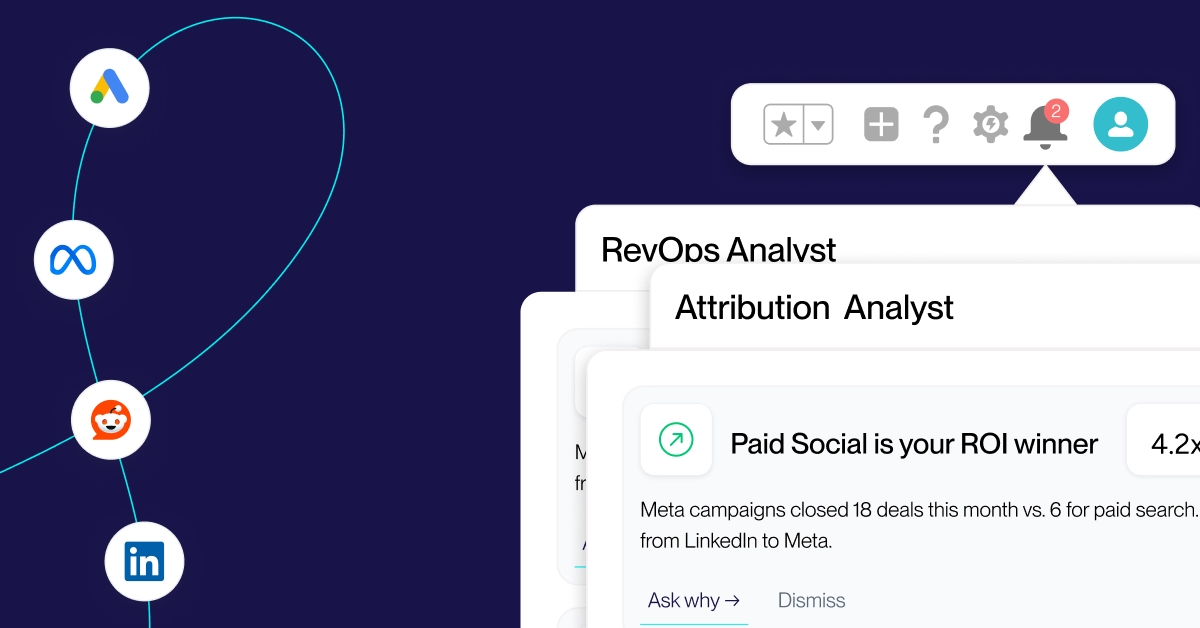

Heading into your quarterly business review with slides that focus on impressions, clicks, and leads doesn’t address how marketing campaigns influenced pipeline, deals and revenue.
Leadership expects reports that point to the exact campaigns across channels that actually influenced closed-won outcomes and show where you need to shift budget to optimize growth. That's exactly what attribution reporting makes abundantly clear when leadership asks the revenue questions. They draw a credible line from each campaign to the deals that closed. That line is, unfortunately, what most B2B marketing teams still can’t draw when finance needs an answer.
This is the moment the whole job comes down to. Not the campaign performance. The revenue proof based on reliable attribution.
The data exists; the issue in too many orgs boils down to it being spread across 5 tools. Those silos ensure credit is argued rather than measured. Attribution reports remedy this by centralizing the outcomes from your marketing data in a single report that connects the dots and credits B2B marketing teams throughout the entire buyer journey, not just before the handoff to sales.
Even with the right tools in place to centralize data and dashboards, you’ll need to produce the report. But what if we told you you could automate your attribution reporting for every QBR and year-end review?
In this article, we go over the attribution clarity we’ve built for B2B brands across industries in Salesforce, and the agents we’ve now implemented that save marketers time and resources by automating reporting. Marketers should focus on optimizing their strategy rather than wasting time putting together reports. Agents make that a reality.
What does “campaign influence on revenue” actually mean?
Campaign influence on revenue is the measurable contribution each marketing campaign makes to closed-won deals across the full buying journey, not just the first or last click. Multi-touch attribution distributes credit across every touchpoint a campaign created, so you can show which programs influenced revenue rather than which ones generated activity.
The distinction matters because B2B deals don’t convert on a single touch. A buyer reads a blog post, clicks a LinkedIn ad, attends a webinar, talks to an SDR, then closes nine months later. Single-touch models hand all the credit to one of those moments and erase the rest. Multi-touch attribution keeps the whole chain visible.
Nel, an energy company and Heeet customer, lived with this pain. Before, their team could see ad clicks; the issue was tying them to outcomes 12 months later. After moving attribution into Salesforce, Russell Morgan, their Digital Communications Specialist, could “trace million-dollar opportunities back to a specific Google ad we placed.” That’s campaign influence on revenue, stated as plainly as it gets.
Why can’t native CRM reporting prove campaign influence?
Native Salesforce and HubSpot reporting capture the touchpoints your team manually logs, but it misses most of the buying journey. The CRM was built to track deals and contacts, not to stitch together every ad, page view, and event a buyer interacted with before the opportunity was created.
GTM data lives in silos
Your data is fragmented and can’t be reliably analyzed without being brought together in a single hub. Marketing and sales have their own set of tools to get the job done of carrying leads to the finish line, but none of the data is being sent to a single place. That leaves you without the full B2B buyer journey.
CRM data quality and tracking gaps
Without the right systems in place to collect interactions and an attribution model to distribute credit, the result is a credit debate every revenue team knows. In demos, we constantly hear teams say their team “wants to know, on deals attributed to sales, how much influence we had on the marketing side,”. Or maybe they've put together the report but feel it’s not reliable because they can’t string together every touchpoint in a single journey at the lead or account level that shows both marketing and sales interactions.
Unreliable credit is worse than no credit. It turns the QBR into a negotiation. Multi-touch attribution and cookieless tracking resolves the issue with data rather than seniority.
How multi-touch attribution proves campaign influence on revenue
Multi-touch attribution proves campaign influence by tracking each touchpoint across the journey, tying them to an opportunity in your CRM, and distributing revenue credit across the campaigns involved. The output is a single, defensible view of which programs contributed to pipeline and closed-won revenue.
When Ringover moved this into Salesforce, the numbers got specific:
- 24% increase in marketing-generated revenue attribution accuracy
- 80% increase in paid media’s measured contribution to revenue
- 3x more pipeline traced to paid media than their previous tracking showed
Saniya Chainani, their Growth Marketing Manager, framed the why: “We can track tens or even hundreds of marketing KPIs, but without a clear link to pipeline and revenue, they remain surface metrics and can lead toward biased decisions.” The KPIs weren’t wrong. They just weren’t connected to the number leadership cared about.
How to answer the campaign-influence question with the Analyst Agent
Heeet has always provided teams with attribution dashboards and opportunity records, including journey and attribution numbers, but we heard the collective need of our clients and prospects for reports with scheduled analysis. Heeet’s Analyst Agents let a CMO ask the campaign-influence question in plain language and get a revenue-grounded answer straight from Salesforce, with the source records attached. No report build, no analyst ticket, and before their QBR.
You can get the answer in a few ways. Here’s how you can get it done in a few steps by chatting with an agent in Salesforce:
Step 1: Ask the chat the revenue question the CFO will ask.Type it directly into the Analyst Agent:
“Which campaigns influenced closed-won revenue last quarter, and how much pipeline did each one touch?”
The agent reads your campaign, opportunity, and ad-spend data in Salesforce and returns the breakdown with records you can click into.
Step 2: Pressure-test the answer.Ask the follow-ups a skeptical board member would:
- “How many of those deals would still count if we used last-touch only?”
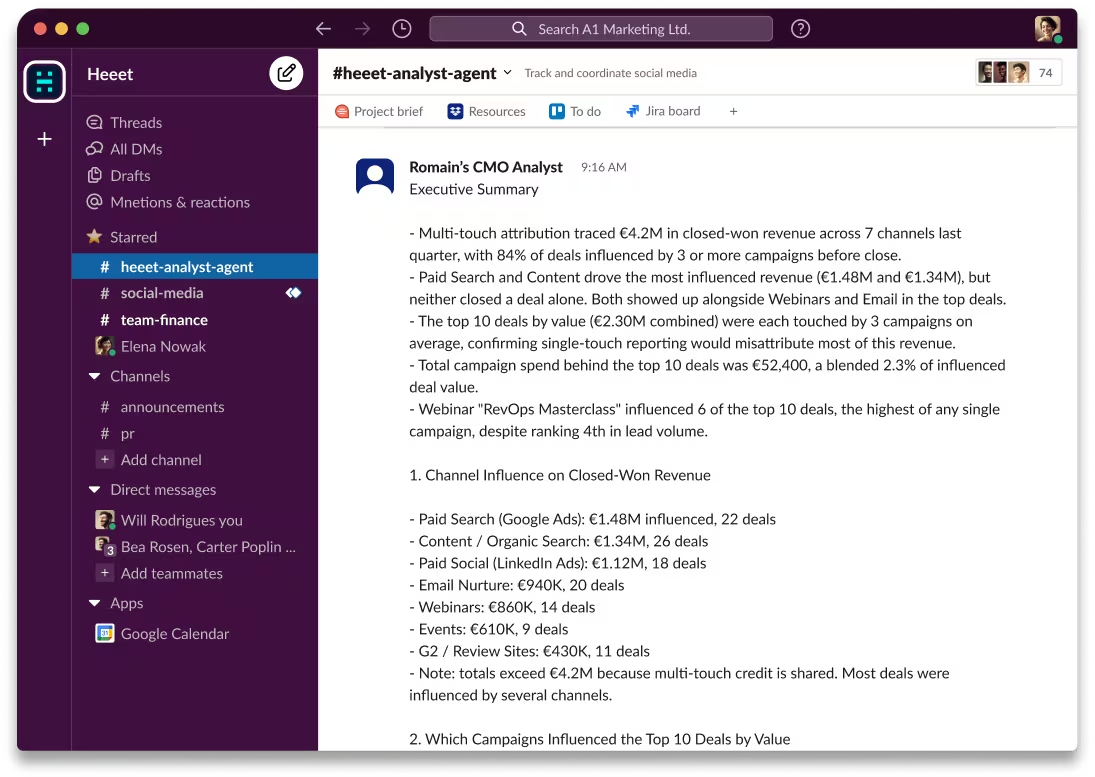
- “Which campaigns influenced our top 10 deals by value?”
- “What did each influenced deal cost us in campaign spend?”
Now it’s time to plan ahead and schedule the same report and analysis on whatever timely basis. Let’s stick to the QBR example.
Schedule the board-ready summary.Have the agent send a monthly campaign-influence summary to your marketing-leadership Slack channel and into Salesforce, formatted around revenue rather than leads. When the QBR comes, the slide is already built and already defensible.
Your scheduled report is in place, and the chat is at your disposal. What if we see attribution shifts dramatically before you receive the automated report? That’s where alerts come into play.
Set an alert on contribution shifts.In Salesforce, you can set an alert that tells you when a campaign’s influenced revenue drops or spikes. You’ll catch a fading program while there’s still budget left to reallocate.
Because the Analyst Agent runs on Agentforce inside Salesforce, the answer comes from the same records sales and finance already trust. That shared source is what ends the credit argument.
What changes when marketing can prove revenue influence?
When a CMO can prove campaign influence on revenue, the budget conversation stops being defensive. You invest in programs that clearly move deals and cut the ones that only move metrics. You walk into the QBR with the answer, rather than bracing for the question.
Ringover’s marketing team stopped reporting activity to finance and started reporting revenue contribution. The arguments about credit faded, because everyone was reading the same Salesforce records. That’s the quiet win here. Not a prettier dashboard. A shared truth.
With analyst agents, we can now share that shared truth with the org in the channels they work in. When you and your team need to dig deeper, the dashboard will still be there, as well as the chat to back and forth with.
Frequently asked questions
What is multi-touch attribution in simple terms?It’s a way of crediting every marketing touchpoint a buyer interacted with on the way to a deal, instead of giving all the credit to the first or last one. It reflects how B2B buying actually works, across many touches and many weeks.
How is campaign influence different from lead attribution?Lead attribution credits the source that created a lead. Campaign influence measures every campaign that touched the deal across the journey, including ones that helped after the lead was created. Influence is the fuller, more honest picture.
Which attribution model should a CMO use?For most B2B teams with long, multi-stakeholder cycles, a multi-touch model beats first-touch or last-touch. The right model depends on your cycle, but the principle holds: spread credit across the journey, not onto a single moment.
Can I see campaign influence without a data team?Yes. The Analyst Agent answers the question in plain language from your Salesforce data, so a marketing leader can get a revenue-grounded breakdown without writing a report or filing an analyst request.
Does this work with paid channels like Google, LinkedIn, and Meta?Yes. Heeet connects ad-platform data to what happened after the click inside Salesforce, so paid campaigns get credited for the pipeline and revenue they actually influenced.
The campaigns aren’t the hard part. Proving what they drove is. When the link between each program and closed revenue lives in the same system as the deal, agents and revenue teams can use the centralized GTM data to ensure the QBR stops being a debate.
Other articles

What Is an Analyst Agent? Heeet's AI for Revenue Insights, Inside Salesforce
An analyst agent is an AI that reads your Salesforce revenue data and tells you what's working. See what Heeet's analyst agents do, the use cases, and setup.

Pipeline Velocity by Source: How to See Which Channels Move Deals Fastest
Pipeline velocity by source shows which channels close deals fastest. Learn the formula, why velocity varies by source, and how to measure it in Salesforce.
.avif)
Proving and Protecting SEO ROI in the Age of Scaled AI Content with Agents
SEO ROI means proving organic search drives pipeline, and catching drops before Google Core Updates or AI-content tanks erase it. Measure organic revenue influence in Salesforce.
.svg)
Ready to track prospects from lead to close with Heeet?
Heeet gives marketers and sales professionals at IT & Security firms turn geuss work intro informed decisions that drive revenue while meeting the same secruity technical standards you provide your clients.