

Read time :
ABM Marketing Attribution: How Account-Level, Multi-Contact Attribution Works for Complex B2B Buying Committees
Understand the need for ABM marketing attribution that credits every touchpoint from each member of a buying committee to a single account record, then connects that account’s engagement to pipeline and closed-won revenue. This is how B2B GTM teams measure marketing’s influence on the entire company you’re selling to, not just the one contact who happened to fill out a form.


Twenty minutes into a demo with an enterprise security company last month, their VP of Marketing stopped our sales rep and asked plainly, “Can we see activity at the account level?” He described the pain of filtering through the engagement of 10+ people from a single prospect account in their CRM. Six of them found the company on their own. How do I prove marketing touched that deal when my rep tagged only one of them in the account?”
That question is why this article exists. It’s really a question about ABM marketing attribution, and some version of it comes up in roughly half the demos we run at Heeet. The honest answer I give every prospect is: your Salesforce instance wasn’t built to answer that on its own.
Here’s the version I trust, because I’ve watched it land. Ringover, a Heeet customer, migrated its attribution to Salesforce in 2024, lifting Google Ads ROAS by 14% and improving the accuracy of marketing-sourced revenue by 24%. Vincent Coulondres, their Head of Growth, didn’t get there by counting leads and filtering through interactions at the lead level. He got there by counting accounts and rolling every interaction into a single view that shows the buying committee's journey.
That shift, from the lead to the account, is the whole game in B2B. Below is how account-level, multi-contact attribution actually works, why your CRM struggles with it out of the box, and how to close the gap.
What is ABM marketing attribution?
ABM marketing attribution is the practice of crediting every touchpoint from every member of a buying committee to a single account record, then tying that account’s engagement to pipeline and closed-won revenue. It measures marketing’s influence on the entire company you’re selling to, not just the one contact who happened to fill out a form.
Standard attribution asks “which campaign converted this lead?” Account-based attribution goes beyond a single elad record and asks a more useful question: “Which campaigns carried the committee to the final purchase decision?”
The different perspectives matter because B2B doesn’t buy the way the lead-based model assumes they do. A single person rarely signs. A group does. Especially at the enterprise level, when companies are in the market for high-ticket tools that call for a lengthy procurement process. The buying group leaves its fingerprints across dozens of touchpoints that the form-fill never captures, and thus, most teams can’t register them at the lead or account level.
Put the models side by side, and the benefit is clear:
A lead-level model credits whoever filled the form. An account-level model credits the account's journey, which credits the channels that actually closed the deal.
Why does lead-level attribution break for B2B buying committees?
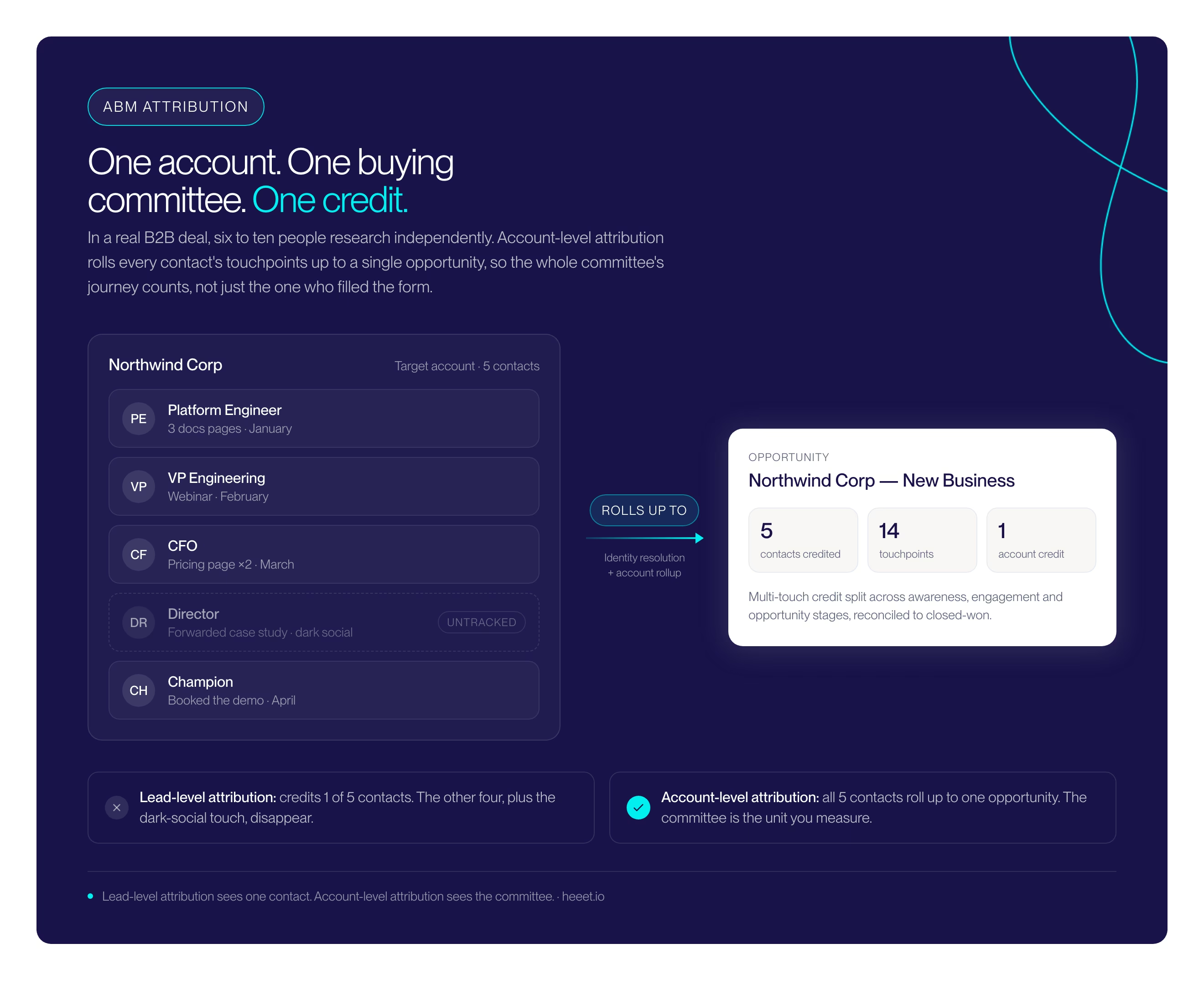
Lead-level attribution breaks down because it credits one person, usually your champion on the inside, for a decision made by six to ten people. In a typical B2B deal, a technical evaluator, an economic buyer, a champion, and a procurement lead each research independently and then come together to make a decision. Crediting only the contact who booked the demo erases most of the journey.
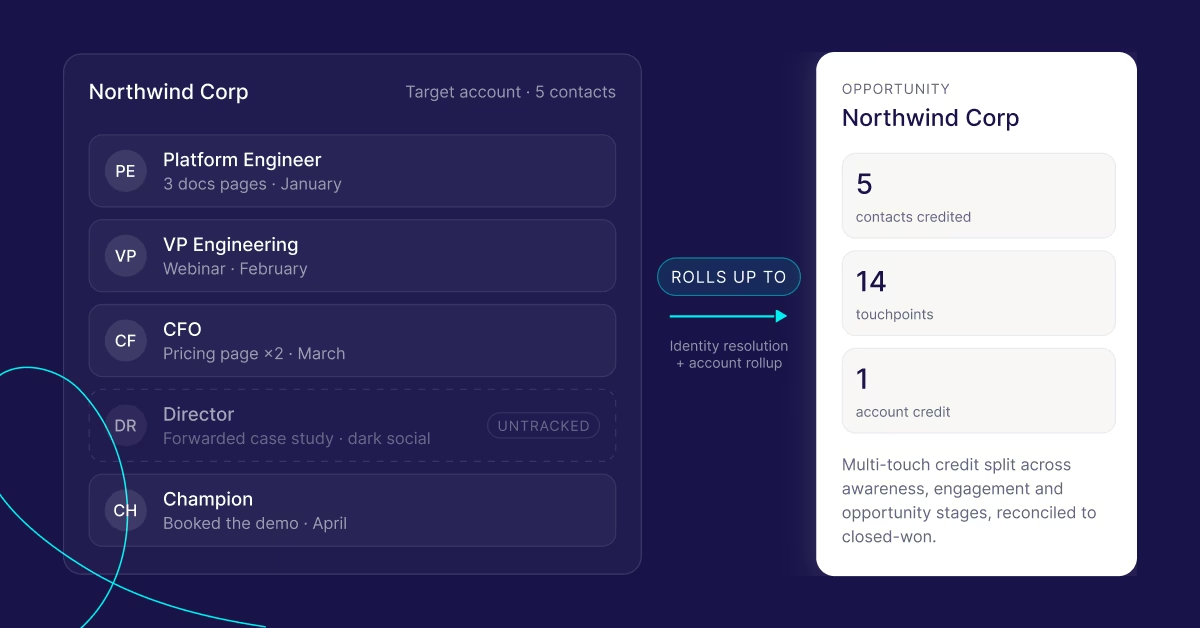
Picture your biggest account. The journey may have followed a similar path and included even more stakeholders. The platform engineer reads three of your doc pages in January. The VP of Engineering catches a webinar in February. The CFO opens your pricing page twice in March. A director nobody logged forwards your case study in a Slack channel you’ll never see. Then a fifth person, the one who finally books the call, becomes the “source” of the whole opportunity.
That’s five different people influencing one deal. You only tagged the one lead who raised their hand, and left out four invisible profiles that are not visible at the account level.
This is a clear gap that ensures marketing keeps losing credit for deals it genuinely influenced, and the reason finance keeps asking why the attribution deck never corresponds to the pipeline report. The committee is the unit that buys, so the account is the unit you measure.
Why can’t GTM teams capture the full journey in their CRM today?
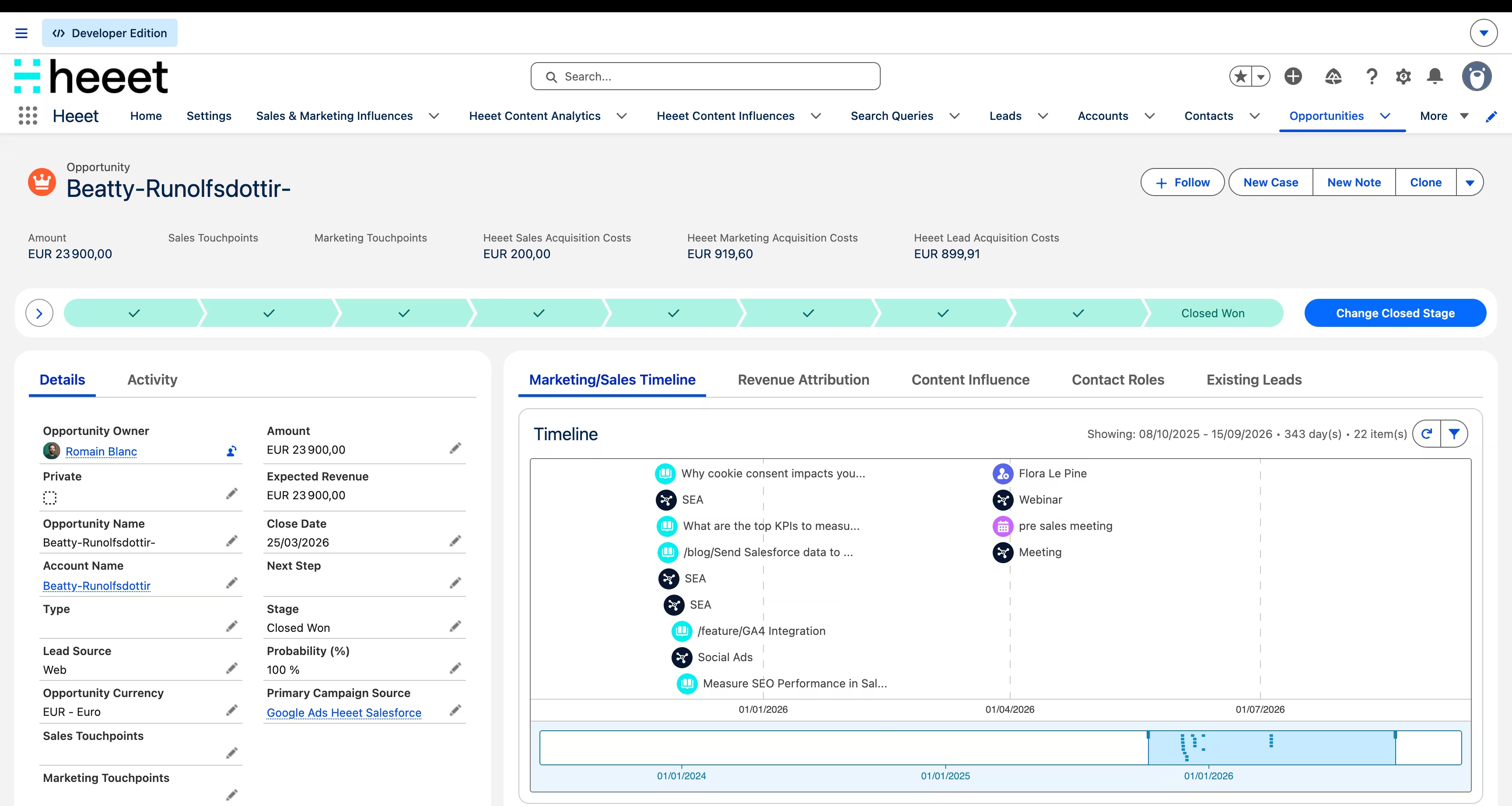
Most GTM teams can’t capture the full journey because the touchpoints are scattered across tools that never talk to each other, and the CRM only sees the few that produce a form fill. The buyer journey runs across paid ads, organic content, webinars, events, review sites, and sales conversations. The CRM sees a fraction of it.
Look at the stack that a marketing team actually runs and the fragmented nature of the data they amass. Google Ads reports clicks inside Google Ads, LinkedIn reports engagement within LinkedIn, and its documentation says it tracks individuals, not accounts, over a 90-day window. Your webinar data also lives on another platform, and physical event leads arrive in your CRM from a spreadsheet that was hopefully compiled after the event. Tool fragmentation creates silos that keep engagement data in its own format and on its own timeline. There’s no centralized hub to collect interactions and trace the journey of multiple stakeholders researching a single account in your CRM.
Now add the dark social touches that no pixel reads. The podcast on which a buyer heard you. The peer recommendation in a private community. The “I’ve been following your stuff for months” that opens a sales call. Gartner and others have been pointing at the same reality for years: most of the B2B journey happens in places you can’t directly track.
So the CRM ends up with a thin, lead-shaped record of a wide, account-shaped journey. RevOps inherits the cleanup: exporting CSVs, reconciling UTM tags, and stitching contacts to campaigns by hand. That work eats days every month, and the answer it produces still doesn’t hold up when finance pushes on it.
This is the first half of the problem. The data never fully arrives. The second half is what happens to the data that does.
Why does account-level attribution break inside Salesforce and HubSpot?
Account-level attribution breaks inside Salesforce and HubSpot because both were built to attribute at the lead or contact level, and the rollup to the account depends on manual steps that quietly fail. The most common point of failure in Salesforce is Contact Roles. No role, no credit, no error message.
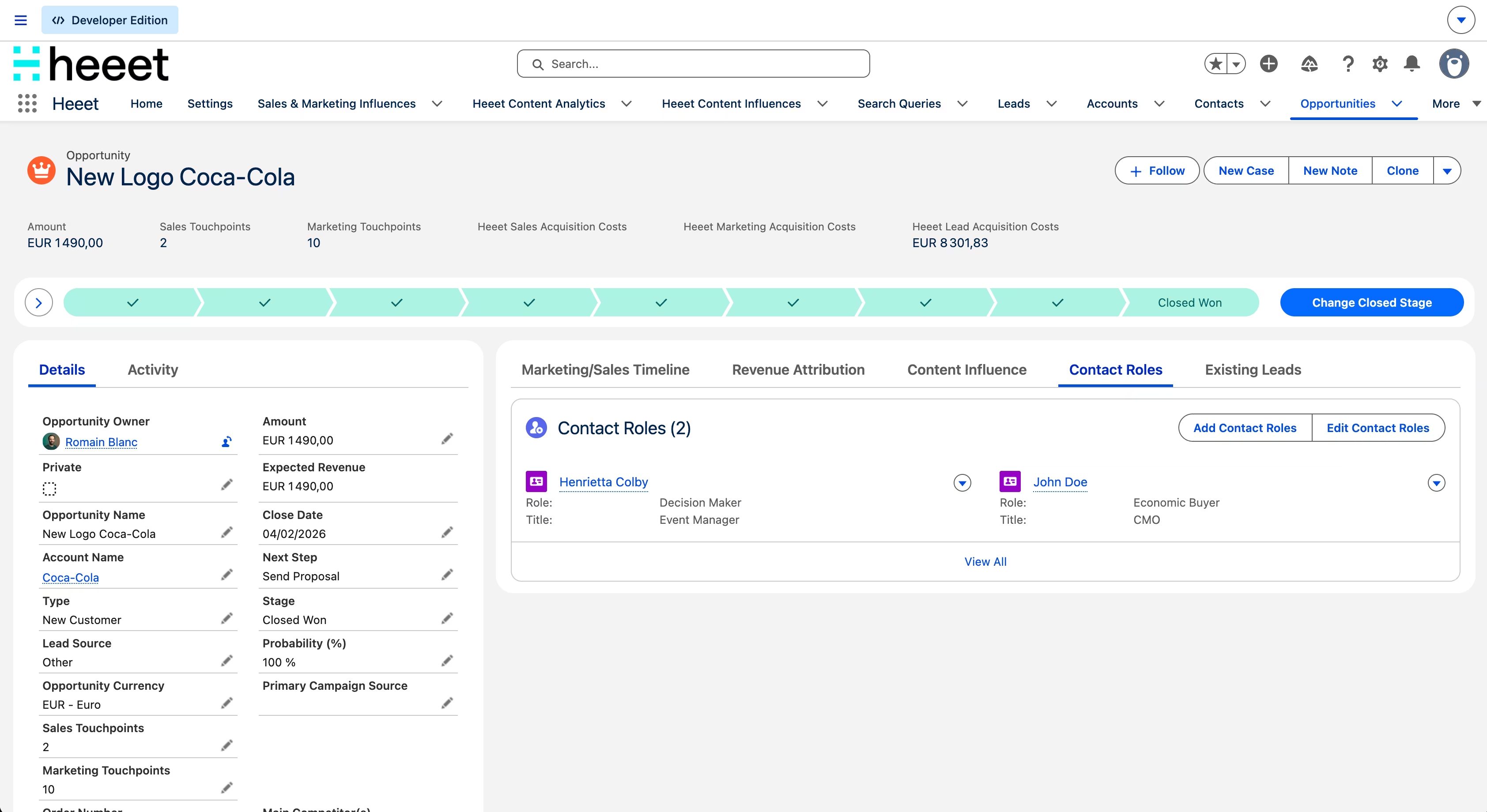
Here’s the failure mode we see most. In native Salesforce, attribution flows through Contact Roles on the opportunity. If a rep forgets to add a contact to the opportunity, that person’s entire journey vanishes from the report. The system doesn’t flag it. It just shows nothing, and nobody notices until the numbers look wrong when presented in a QBR or to the board.
Sara, who ran reporting at Nel for almost six years, lived this. Before Nel moved tracking into Salesforce, an opportunity with no Contact Role simply produced no attribution, silently. She spent a week a month exporting thousands of rows out of Pardot, stripping duplicates, and rebuilding it all into a deck she didn’t fully trust. “For the first time in almost six years here, I trust what I’m putting out there,” she told us after the switch. “I’ve gotten days back.”
HubSpot has its own version of the gap. Marketing Attribution Reports exist, but they’re gated behind the Enterprise tier, and they still struggle with offline channels, account-level rollup, and sending revenue signals back to ad platforms. Both CRMs can store an account-based structure. Neither one fills it in for you.
The native route to fixing this in Salesforce runs through Customizable Campaign Influence, which Salesforce’s own documentation calls an admin-and-developer feature. Translation: someone writes Apex. Carl Kiessig at Red & Yellow priced out building it in-house and found the job needed senior Java engineering, which he wasn’t set up to staff. “Why try to invent it yourself when somebody has already pre-packaged the solution?” he told us.
The point is, currently, the solutions from Salesforce just don’t meet the mark for teams that don’t have the means to hire consultants to set up and manage their ABM marketing attribution.
It helps to see what Salesforce gives you natively, and where each piece stops short for ABM.
Contact Roles are the linchpin. Account-level attribution counts only the stakeholders actually attached to the opportunity, so a forgotten role quietly undercounts the whole committee. Computing weighted account-level credit takes custom report types, a BI layer, or Apex again. This is the work most teams would rather not staff, and it’s the gap Heeet closes.
How does account-level, multi-contact attribution actually work?
Account-level, multi-contact attribution works in five steps: capture every touchpoint from every contact, resolve identities so the right touches map to the right people, roll those contacts up to a single account and opportunity, apply a multi-touch model across the journey, then reconcile the credit against closed-won revenue. Done in order, it turns a scattered journey into one account story.
This is the part that the top-ranking articles on this topic skip. They describe buying committees and then stop. The mechanics are where the value sits, so here’s the sequence in plain steps.
- Capture across channels: Track touchpoints from paid, organic, content, webinars, events, and sales activity, online and offline, beyond the few that fire a form.
- Resolve identity: Match anonymous behaviour (clicks, page views, downloads) to known contacts with server-side cookieless tracking, then associate each contact with the right target account. This is what saves the six self-directed researchers from disappearing.
- Roll contacts up to the account: group each contact’s touchpoints under one account and its opportunity, so engagement from 11 people reads as one coherent journey instead of 11 fragments.
- Apply a multi-touch model: Distribute revenue credit across the stages the committee moved through, using a model that fits your journey shape (more on that below).
- Make sure the revenue numbers add up: ensure the sum of attributed credit equals the actual closed-won revenue for the period. If your attribution shows marketing drove $2M, and the CRM closed $1.2M, the math is double-counting, usually because multiple contacts within a single account each took full credit.
That last step is what separates attribution you can defend from attribution that falls apart the moment finance audits it. Reconcile at the account level, and the double-counting problem mostly solves itself.
How do you read buying intent across the committee?
Account-level intent is the pattern you get when you read every committee member's behaviour together instead of one contact at a time. One pricing-page visit tells you almost nothing. Four people from the same account hitting pricing, docs, and a comparison page inside two weeks is a signal worth a sales call.
There are two kinds of intent, and they aren't interchangeable. First-party intent is behaviour on channels you own: page views, whitepaper downloads, ad clicks, webinar attendance, all tied to known contacts and their account. Third-party intent comes from outside your walls, things like review-site activity or syndication networks that flag an account researching your category somewhere you can't see.
Both have a place. Third-party intent tells you an account is in-market. First-party intent tells you what they did with you, and it's the half that survives a finance audit, because every signal already maps to a real account in your CRM. Heeet reads first-party intent natively for that reason. The behaviour is already on the record.
Watch the gap between explicit and implicit signals too. Explicit is loud: a pricing page, a comparison page, a demo request. Implicit runs quieter and is often more honest. A second and third visit to the same feature page. A case study that gets forwarded into a channel you'll never see.
Here's the trap. Score intent per lead, and one curious intern looks identical to a buying committee. Score it per account, and the picture sharpens. What predicts a deal is engagement spread across roles, not depth from any single person.
How account-level attribution works in Heeet
Heeet fills the gap Salesforce and HubSpot leave by specializing in account-level attribution: it rolls up touchpoints from every stakeholder in the buying committee into a single account record, natively and without a custom build. Because the data already lives in the CRM, sales, marketing, and finance read the same numbers. Here’s what that looks like across the four pieces that matter most.
Identity resolution. Heeet matches anonymous, cross-device behaviour (clicks, page views, whitepaper downloads) to known contacts using cookieless, first-party tracking, then associates those contacts directly with their target account. The researcher who reads four blog posts on their phone before ever filling a form stops being a ghost and starts being a tracked member of the account.
Buying committees. B2B deals run on six to ten decision-makers. Heeet aggregates the digital footprints of every stakeholder within a single company into a single complete account view, so RevOps can see the whole committee’s engagement on a single record instead of chasing individual lead histories. No dependence on a rep remembering to set Contact Roles.
Multi-touch models. Heeet lets you build custom multi-touch models, including W- and U-shaped models, that distribute revenue credit across awareness, engagement, and opportunity stages. You choose how credit splits across the journey, rather than accepting the last-touch default that both CRMs lean on.
Dark social and offline tracking. Heeet links marketing and sales data to capture dark social (word of mouth, dark traffic, untracked referrals) and offline engagements at the account level, so the touchpoints that usually go uncredited still roll into the account’s story.
The identity resolution benefit is the one Red & Yellow noticed. When the data lives in the CRM, leadership, sales, and finance stop arguing over three versions of the same report and start agreeing on the budget fast enough to act on it mid-quarter.
What should you measure once attribution runs at the account level?
Once credit rolls up to the account, the metrics worth watching change. You stop counting MQLs and start tracking account engagement, influenced versus sourced pipeline, win rate by engagement depth, and the cost to win an account. These are the numbers a CFO signs off on.
Lead-based reporting rewards volume: more forms, more MQLs, a bigger top of funnel. Account-based reporting rewards the thing that pays salaries, which is closed revenue tied to the accounts you chose to chase. Different question, different scoreboard.
Here's the short list I'd put on the dashboard first.
Account engagement
The committee's combined activity, weighted by recency and role, on one record. Not a single contact's lead score.
Marketing-qualified accounts, not MQLs
An account with six engaged stakeholders is a stronger buy signal than one contact who downloaded a guide. Count accounts.
Influenced versus sourced pipeline
Sourced credits the first touch. Influenced credits every campaign that warmed the committee. Report both, because a board shown only sourced revenue will underfund the channels that quietly move deals.
Win rate by engagement depth
Split won and lost deals by how many committee members marketing actually reached. The gap is usually the most persuasive slide in the QBR.
Pipeline velocity
How fast engaged accounts move stage to stage against cold ones.
Cost per account won
Spend divided by accounts closed, not leads generated. It's the acquisition number that maps to how ABM teams actually target.
None of this is about adding metrics for their own sake. It's about reporting numbers finance can reconcile to closed-won, the test the lead-based deck kept failing. Ringover's switch improved marketing-sourced revenue accuracy by 24% for exactly that reason. The credit finally matched the revenue.
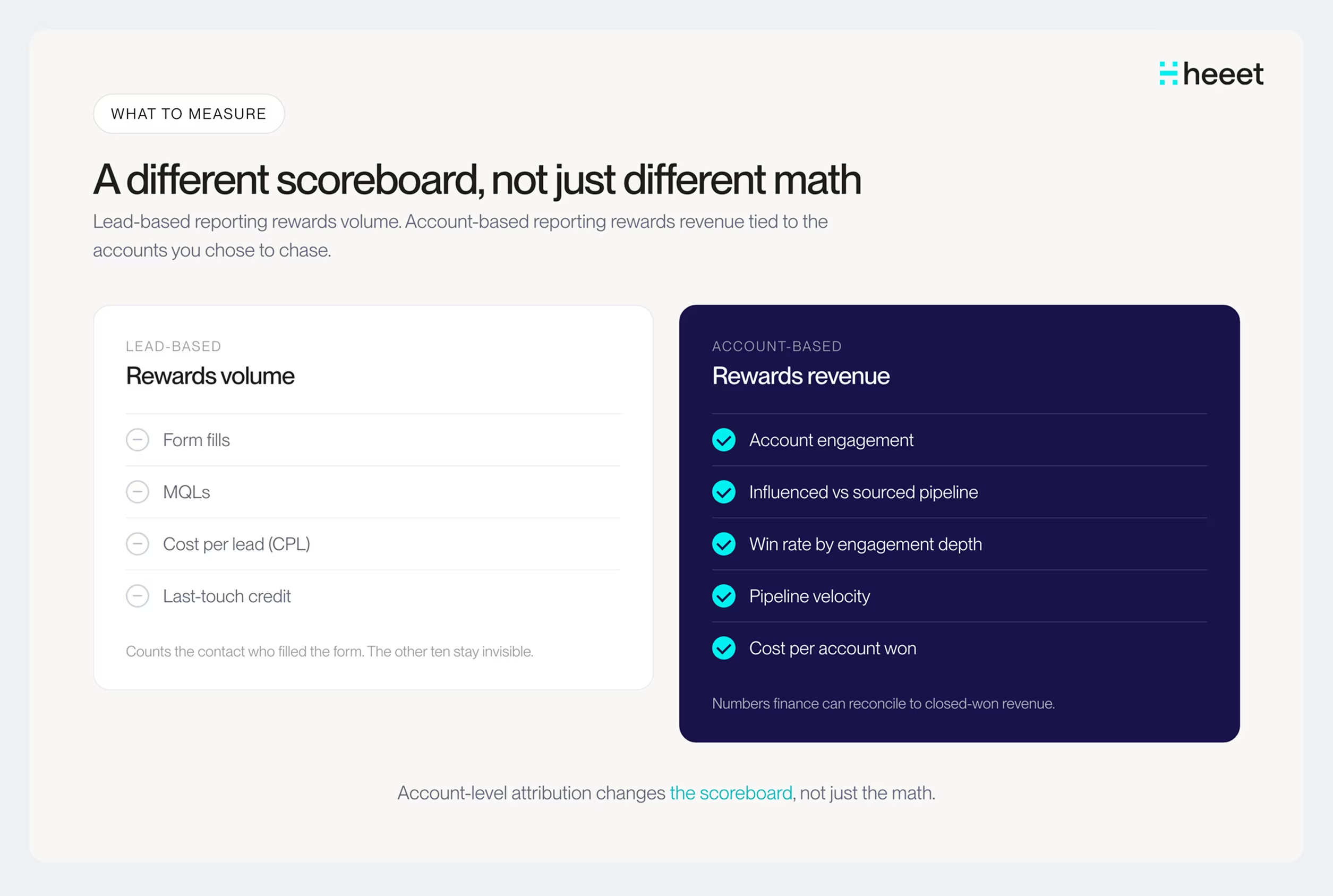
Zoom out, and those numbers align with the account lifecycle. Mapping each KPI to the stage an account is in, rather than a generic funnel, makes the scorecard readable to sales and finance at the same time.
Two of these are pure ABM and invisible to lead-level reporting. Marketing-qualified accounts (MQAs) replace MQLs as the qualification unit. And multi-threading, the count of stakeholders engaged per account, is an early tell that a committee is forming long before anyone fills a form.
Why time to revenue is the metric long ABM cycles need
Time to revenue is the number of days from an account’s first tracked touch to closed-won. It matters in ABM because committee deals run six to eighteen months, and if you grade a campaign before that window closes, you cut the ones that work and keep the ones that only look good early.
Lead-level tracking can’t accurately measure this. Every new contact resets the clock, and the typical 90-day attribution window expires long before a committee signs. The account clock is different. It starts at the first committee touch and runs to the signature, however many months that takes.
Two ways to use the number once you have it.
First, set honest evaluation windows. If your average account takes 210 days to close, judging a January campaign in March tells you nothing real. You’re reading noise and calling it performance. Wait for the window the data gives you.
Second, budget for the lag. A twelve-month average journey means the spend you approve this quarter shows up as revenue next fiscal year. Plan around that gap, or you’ll pull budget from a channel just as it was about to pay out.
There’s a setting that quietly decides whether any of this works: your attribution window. Most analytics tools default to 7 or 30 days, which silently discards the early committee touches that opened the deal. Set the window to your actual cycle, usually between 90 and 365 days, and those opening touches stop disappearing from the report.
One blended average hides as much as it reveals, so benchmark by segment. Enterprise committees take longer than mid-market. Regulated deals, longer still. The team that knows its real-time to revenue per segment stops apologizing for pipeline that was always going to take three quarters to close.
Which ABM attribution approach should you start with?
Start with the simplest approach your data can support, then graduate. The spectrum runs from cohort lift analysis to marketing-influenced pipeline to account-level multi-touch to data-driven models. Most teams should run two at once: a coarse headline number for the board and a granular model for optimization.
The most underrated of these is also the simplest. Cohort analysis measures outcomes, not credit, so it sidesteps the need for perfect tracking. Compare your treated target accounts against a holdout and read the lift in win rate, deal size, and cycle length. For teams whose data isn’t ready for multi-touch, it answers the question leadership is actually asking: Is this working at all?
Marketing-influenced pipeline is the other easy win. Count any pipeline where a committee member touched marketing before the opportunity existed. It doesn’t weigh the touches. It’s also hard to argue with, which is what makes it a good executive headline.
One caution before you reach for a tool. A platform won’t fix messy account-to-contact mapping; it will automate inaccurate attribution at scale. Clean the data first, prove value with the simplest approach that holds up, and add sophistication only when a specific limitation forces the upgrade.
best fits a buying
Which attribution model best fits a buying-committee journey?
For most buying-committee journeys, a W-shaped or U-shaped multi-touch model is the right starting point, because both credit the key moments across a long, multi-person cycle: first touch, lead creation, and opportunity creation. The key to any multi-touch strategy is ensuring you have visibility after the handoff. With 12+ month buyer journeys, marketing needs to document their influence well beyond the form fill.
Graduate to a data-driven model once you have enough closed-won volume to make the math trustworthy.
U-shaped works well when first touch and conversion matter most. W-shaped adds credit at the opportunity-creation stage, which fits longer committee deals where the mid-journey moment carries weight. Save data-driven modelling for when you’re closing a few hundred deals a year with a consistent journey shape. Before then, it needs more data than you have to produce numbers that anyone will believe.
For the full breakdown of how the seven models behave over a year-long sales cycle, see our B2B marketing attribution guide.
How do you set up ABM attribution? An eight-step framework
Setting up ABM attribution is less about the model and more about the foundation under it. Decide what the measurement is for, commit to the account as your unit, fix the data, then layer the models on. Here’s the order that holds up.
- Start with the decision, not the dashboard. Name the calls attribution has to inform: budget by account tier, channel mix, the sales-marketing SLA. Measurement with no decision attached is just decoration.
- Commit to the account as your unit of truth. Decide how contacts roll up to accounts, and hold to it. Everything downstream depends on that one choice.
- Define your account lifecycle stages. Target, engaged, marketing-qualified, opportunity, closed, expansion. Agree the entry and exit criteria with sales, not in a marketing vacuum.
- Lock a short glossary. What counts as a target account, an MQA, an engaged account, an influenced pipeline? A few definitions everyone shares beat a long list nobody opens.
- Fix CRM data quality before you model anything. Deduplicate, refresh stale records, and clean up account-to-contact mapping. Phantom engagement produces confident, wrong numbers.
- Capture touchpoints consistently. Pull every channel into the CRM for the account: ads, web, content, webinars, events, and the sales and CS activities that usually never get logged.
- Pick your approaches and set the window. Run a coarse headline metric alongside a granular model. Set the attribution window to your real cycle length, 90 to 365 days.
- Run a weekly cadence and audit quarterly. Build a scorecard leadership trusts, review it weekly, and run deal retrospectives every quarter to catch what the data missed.
Notice that four of these eight steps happen before a single model runs. That order is deliberate. The teams that skip it end up automating their data problems instead of fixing them.
What account-level attribution looks like on one deal
Take a hypothetical six-figure deal to see why the choice of approach matters. One target account, a roughly nine-month cycle, and a committee that never moved in a straight line.
- The CMO sees a LinkedIn ad. First account engagement.
- A demand gen director downloads a benchmark report.
- The VP of Sales attends a webinar.
- A RevOps lead reads a case study a colleague forwarded, a dark-social touch nobody logged until it surfaced in a sales call.
- The CMO requests a demo. The opportunity is created.
- Procurement joins the late-stage calls, and the deal closes.
Now watch how each approach reads that same deal.
Only the account-level views capture that this revenue took several people, three channels, and the better part of a year working together. A last-touch model would have credited the closing call, and might have talked you into cutting the LinkedIn program that opened the account in the first place.
ABM attribution best-practices checklist
If you take one page to your next planning session, take this one. The teams whose attribution survives a finance audit tend to have all of these in place.
- The account, not the lead, is the explicit unit of analysis
- Account-to-contact mapping is clean and deduplicated
- Attribution windows are set to your real cycle, 90 to 365 days
- Account lifecycle stages have entry and exit criteria, sales agreed to
- A short glossary of shared definitions exists: target account, MQA, influenced pipeline
- Contact roles are required on every opportunity
- Sales and CS activity is logged against the account consistently
- A coarse headline metric and a granular model both run
- Multi-threading and MQAs sit on the dashboard, with MQLs no longer the headline
- Attribution output drives budget-by-tier decisions instead of sitting in a report
Frequently asked questions
How is ABM attribution different from lead-based attribution?
Lead-based attribution credits individual contacts for conversions. ABM attribution rolls every contact at a company into a single account, so you can see which campaigns warmed the entire buying committee, rather than whoever filled out the form.
Do I need Salesforce Contact Roles for account-level attribution to work?
Native Salesforce attribution depends on Contact Roles, and missing roles silently produce zero attribution. An account-level layer that automatically associates contacts to opportunities removes that dependency, so an ignored role no longer erases someone’s journey.
How do you avoid double-counting when several people at one account convert?
Reconcile credit at the account level and enforce that total attributed credit equals actual closed-won revenue for the period. Account-level rollup deduplicates touchpoints across contacts so the same deal isn’t counted multiple times.
How many people are usually in a B2B buying committee?
Most B2B buying committees include six to ten stakeholders, often more in enterprise and regulated deals. Each tends to research independently, which is why account-level attribution captures a more complete picture of the real journey than lead-level tracking.
Can account-level attribution track offline and dark social touchpoints?
Yes, when marketing and sales data are linked at the account level. Events, sales conversations, word of mouth, and dark traffic can be associated with the account even when no form fill or pixel captures them directly.
Does this work for a 12-month sales cycle?
It’s built for it. Long cycles are exactly where lead-level, 90-day attribution windows fail, because the early committee touches expire before the deal closes. Account-level tracking captures the full journey, regardless of its length.
Do I need to replace Salesforce or HubSpot to do this?
No. Account-level attribution works as a native layer inside your existing CRM, writing touchpoints and credit directly onto the records you already own, so teams read the same numbers without learning a new tool.
Closing the gap between the committee and the credit
The VP from that demo didn’t have a dashboard problem. She had eleven people, one tagged contact, and no way to connect the two. That’s the gap account-level attribution exists to close, and it’s a gap your CRM leaves open by default rather than one you created.
Start with the account as your unit of measurement, capture every committee member’s journey, and reconcile the credit to real revenue. Do that, and the question “did marketing influence this deal?” stops being an argument and becomes a record anyone can open.
If you want to see your own accounts mapped this way, book a demo and bring a deal with a messy committee. Those are the ones worth looking at.
Other articles
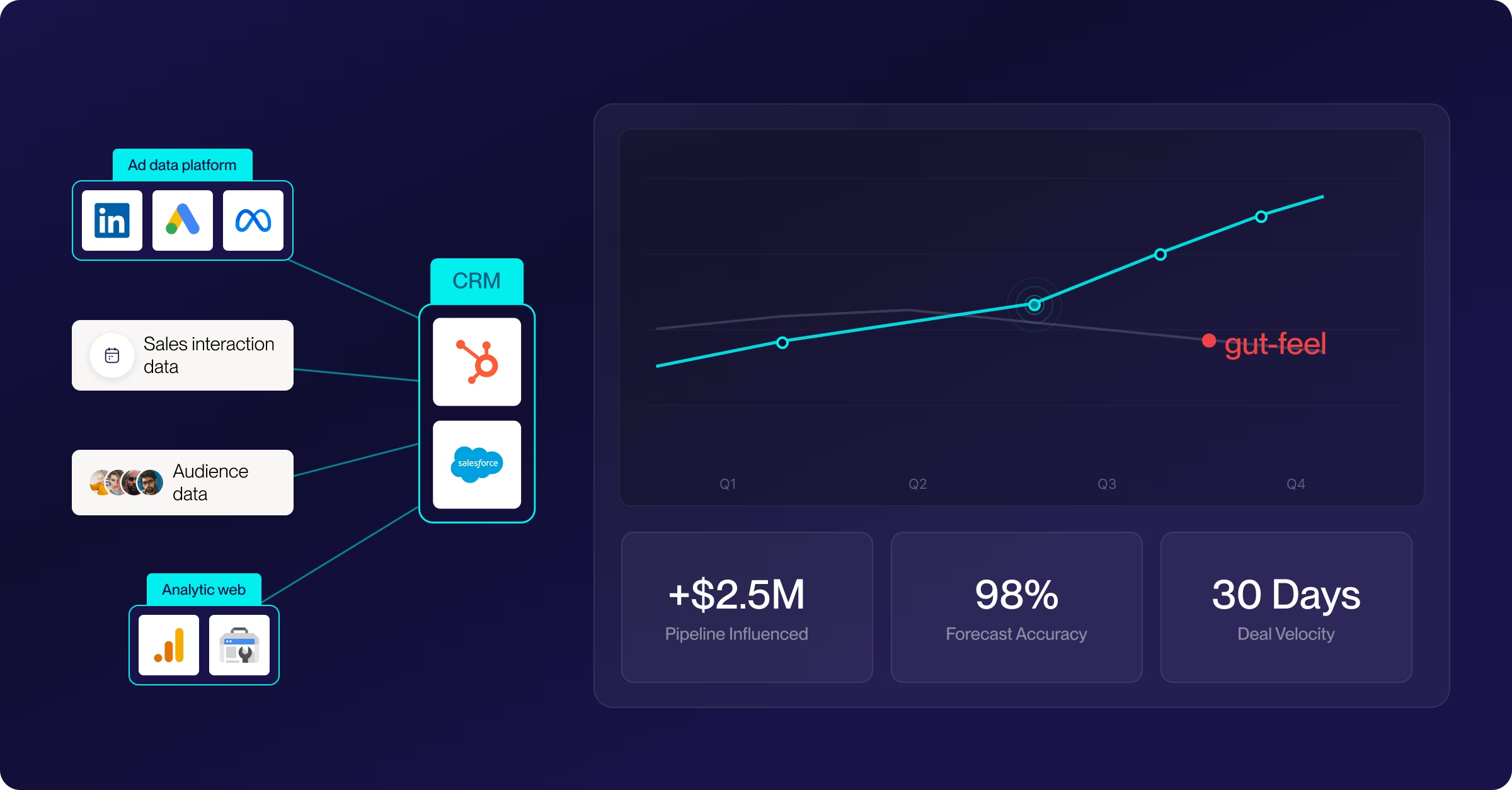
Revenue Intelligence for B2B: Data-Driven Forecasting
Learn how revenue intelligence unifies CRM, sales, and marketing data to replace gut-feel forecasts with trustworthy deal signals and actionable insights.
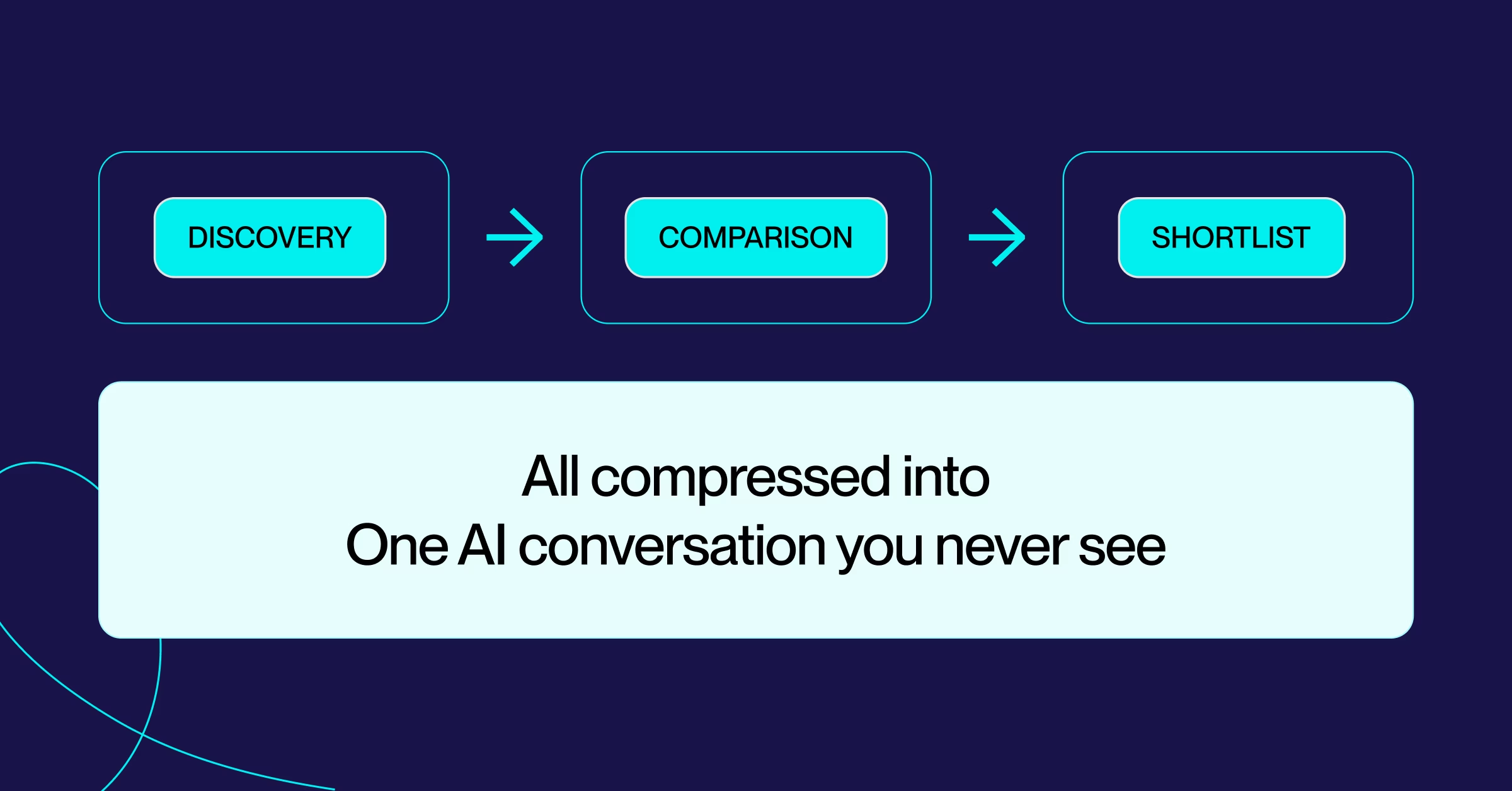
B2B Customer Journey Mapping 2026: AI to Revenue
Learn how B2B customer journey mapping changes in 2026 as AI reshapes research—plus frameworks to connect touchpoints to pipeline, velocity, and revenue.
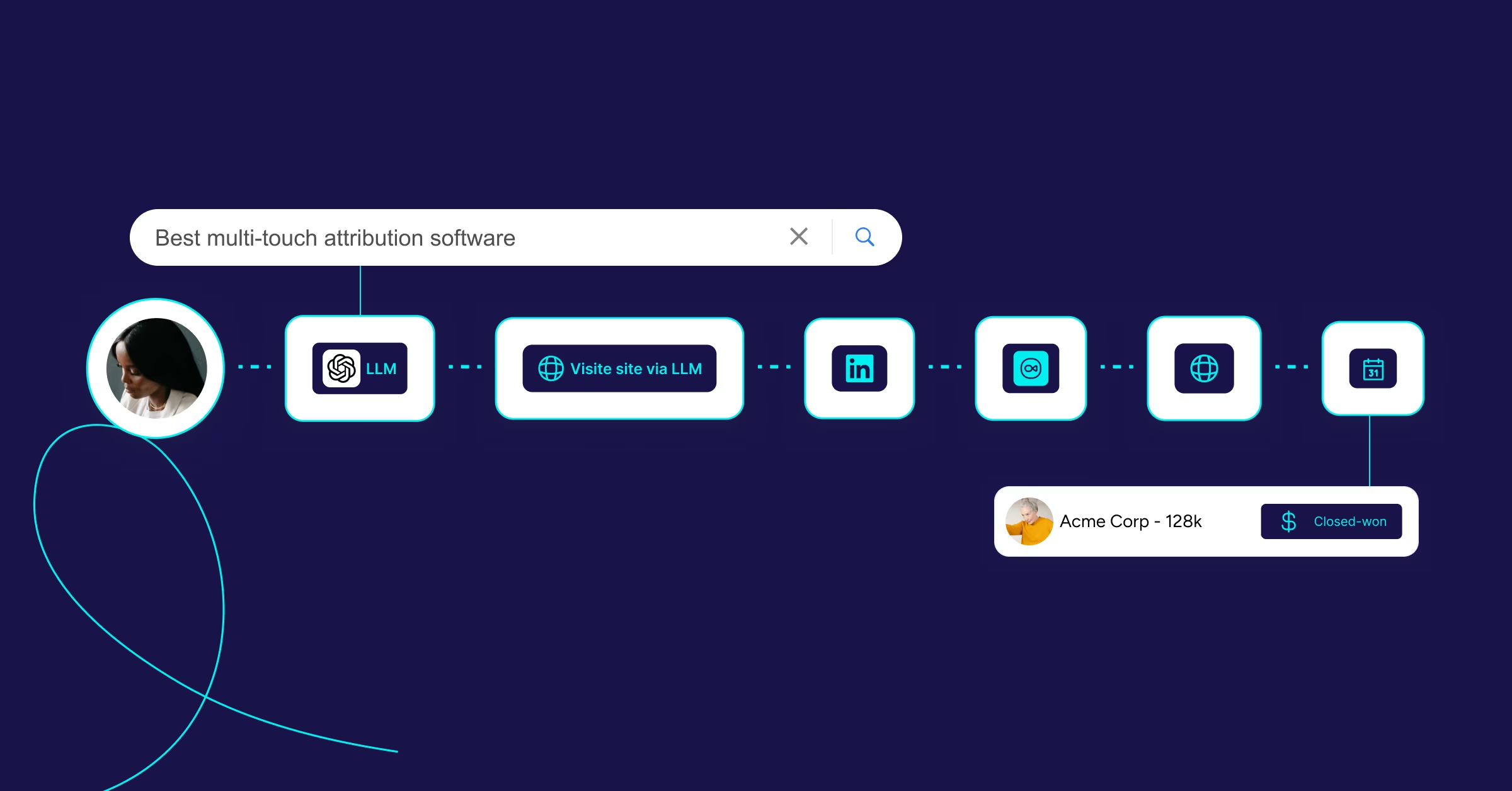
AI Search Marketing: Why Marketing Owns More of the Deal
AI search marketing is reshaping B2B buying. Learn how LLM discovery shifts influence to marketing—and how to measure AI visibility in your CRM.
.svg)
Ready to track prospects from lead to close with Heeet?
Heeet gives marketers and sales professionals at IT & Security firms turn geuss work intro informed decisions that drive revenue while meeting the same secruity technical standards you provide your clients.